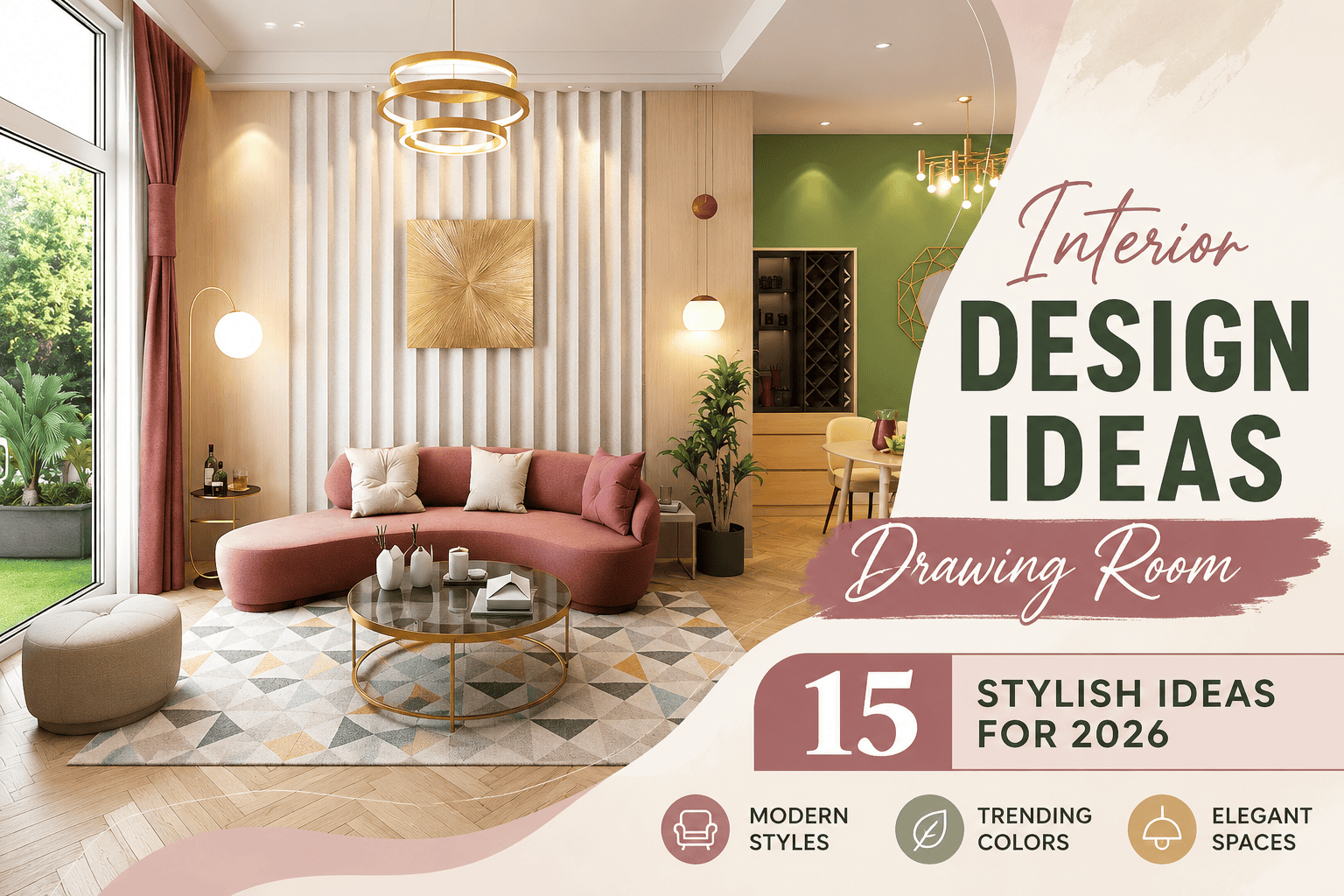
Explore 25 types of furniture for living room spaces, from sofas and sectionals to coffee tables, storage, and media pieces, with practical tips.
Choosing furniture for a living room can feel surprisingly complicated. A sofa may be the first piece that comes to mind, but a comfortable and functional living room usually needs more than one type of furniture. Depending on the size of your space, lifestyle, storage needs, and decorating style, you might consider a sectional, accent chair, coffee table, side table, ottoman, media console, bookcase, cabinet, or several other pieces.
Understanding the types of furniture for living room spaces makes the decorating process much easier because you can decide what your room actually needs before you start shopping. Instead of filling an empty room with random pieces, you can choose furniture according to function, proportion, comfort, and the way you use the space.
In this guide, we will explore the most useful types of furniture for living room spaces, explain what each piece does, and show you how to choose the right options for small rooms, large rooms, open-concept layouts, families, entertaining, and everyday relaxation.
What Are the Main Types of Furniture for Living Room Spaces?

The major types of furniture for living room spaces can be organized into four basic categories: seating, tables, storage and display furniture, and entertainment furniture. Common examples include sofas, sectionals, loveseats, accent chairs, recliners, ottomans, coffee tables, end tables, console tables, bookcases, cabinets, sideboards, TV stands, and media consoles.
The right combination depends on the room. A living room used mainly for reading may need comfortable chairs and a side table, while a family room used for movie nights may benefit from a sectional and media console. Current furniture guides similarly group living room pieces into seating, tables, storage, and entertainment categories, but the most useful approach is to go one step further and consider how each piece functions in a real home.
25 Types of Furniture for Living Room Spaces
Below are 25 practical types of furniture for living room areas, ranging from essential pieces to flexible and specialty options.
1. Sofa
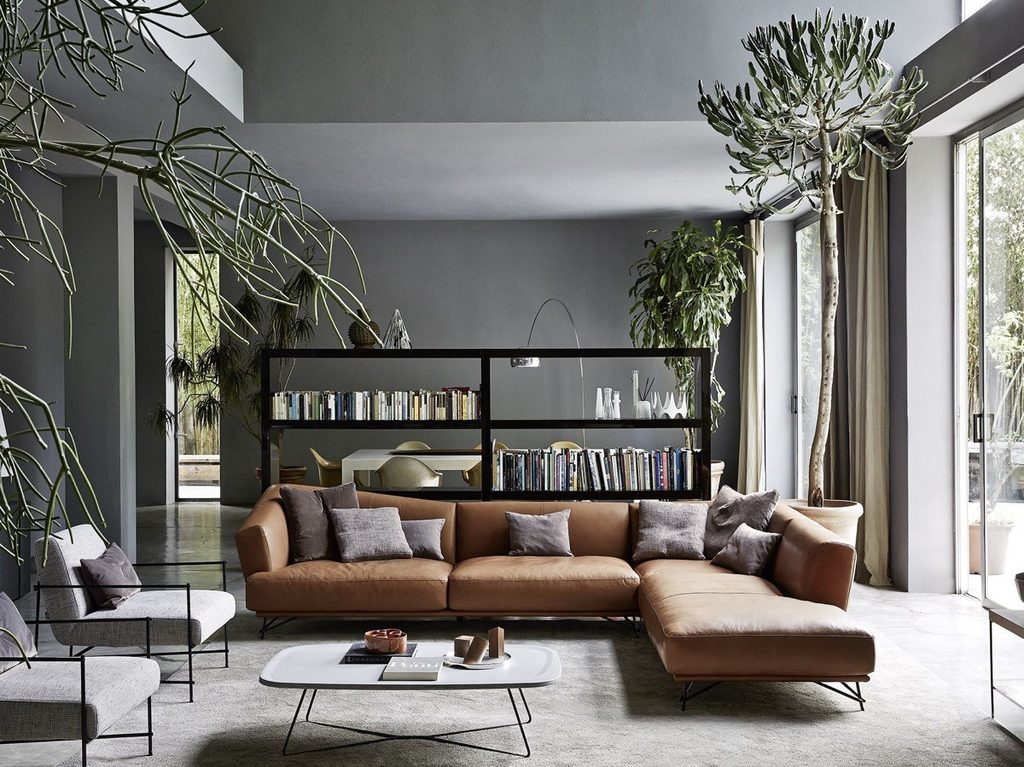
A sofa is usually the foundation of a living room and one of the most important Types of Furniture for Living Room spaces. It provides the main seating area and often becomes the visual anchor around which the rest of the furniture is arranged. Standard sofas are available in different widths, depths, arm styles, back heights, cushion configurations, and upholstery materials. A three-seat sofa can work beautifully in an average living room, while a smaller apartment may benefit from a compact two-seat design.
When choosing a sofa, measure the available wall and floor space instead of judging the size only by photographs. Also measure doorways, hallways, stairways, and elevators if you are ordering a large piece. A sofa should feel comfortable without overwhelming the room. If you already have a large rug or substantial coffee table, a sofa with a simple silhouette can help maintain visual balance.
For a cozy decorating approach, you can also combine a neutral sofa with textured cushions, throws, and natural accents. For more inspiration on creating welcoming interiors, explore the home-decor ideas at Home Styling Guide.
2. Sectional Sofa

A sectional is one of the most versatile types of furniture for living room spaces when you need generous seating.
Sectionals are made from multiple connected sections and can come in L-shaped, U-shaped, curved, modular, or chaise configurations. They are particularly useful for families, people who frequently entertain, or anyone who enjoys stretching out while watching television.
However, a sectional is not automatically the best choice for a large room. The Types of Furniture for Living Room proportions still need to work with the floor plan. A sectional that is too large can block walkways and make the room feel cramped. Before buying one, measure the room carefully and determine where the chaise or return will sit. If the sectional will be delivered in pieces, also check whether each section can pass through your doors and hallways. Sectionals can also be useful in open-concept homes because their shape can visually define a living area without requiring a wall.
3. Loveseat
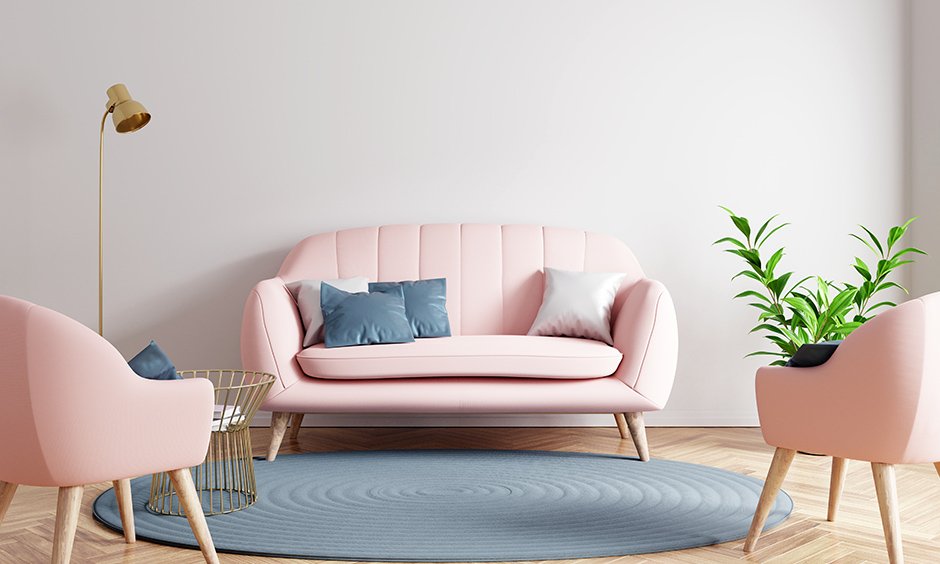
A loveseat is a compact upholstered sofa designed primarily for two people. It is one of the most useful types of furniture for living room spaces when floor area is limited. A loveseat can work in apartments, small living rooms, bedrooms with sitting areas, or as additional seating alongside a larger sofa.
You can use a loveseat by itself or combine it with two accent chairs to create a conversation area. It can also be paired with a small coffee table and narrow side tables. For a small room, look for a loveseat with exposed legs or a relatively slim profile. Visually lighter furniture can make a compact space feel less crowded.
4. Accent Chair
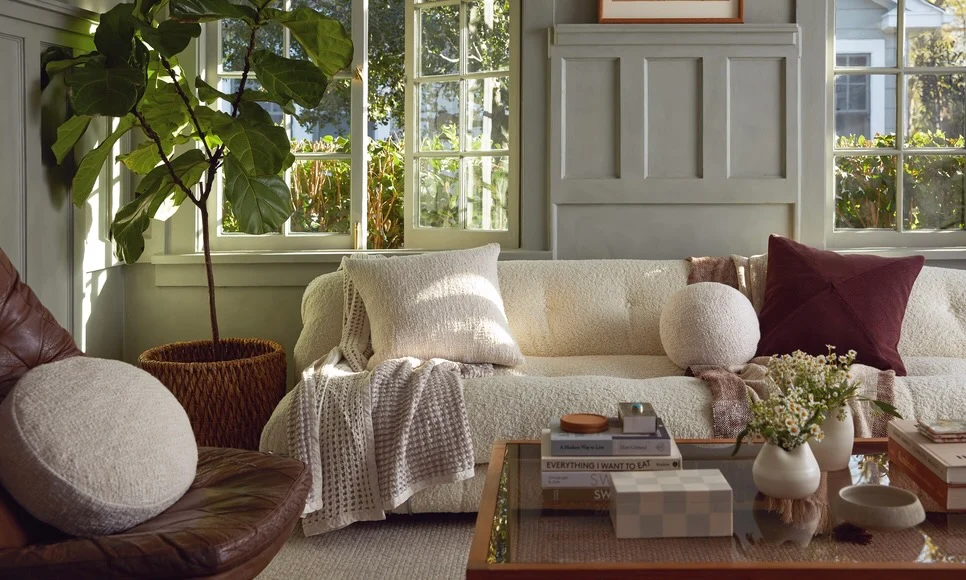
In Types of Furniture for Living Room Accent chairs provide additional seating while giving you an opportunity to introduce a different shape, color, pattern, or texture. Unlike a sofa, an accent chair does not necessarily need to match every other furniture piece. In fact, choosing a chair that complements rather than exactly matches your sofa can create a more layered and interesting room.
Two accent chairs can be placed opposite a sofa to encourage conversation. One chair can also create a reading corner beside a floor lamp and small side table. When selecting an accent chair, pay attention to both comfort and scale. A dramatic oversized chair may look beautiful in a large room but overwhelm a small one.
5. Armchair
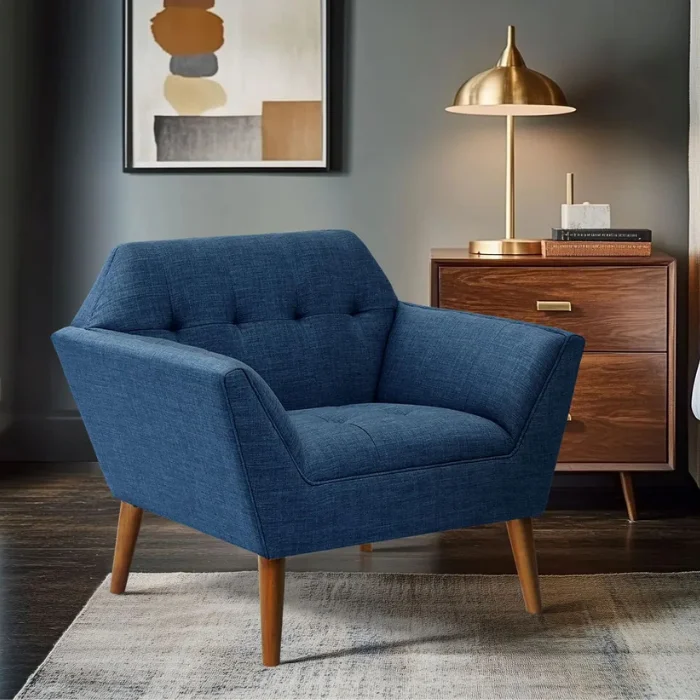
An armchair is a comfortable chair with supported arms and is generally designed for individual seating. Among the different types of furniture for living room spaces, armchairs are especially useful when you want to add comfortable seating without taking up as much space as another sofa. Although armchairs overlap with accent chairs, they are not necessarily decorative statement pieces. Their main purpose is comfortable individual seating.
An armchair works particularly well beside a bookshelf, fireplace, window, or reading lamp, creating a dedicated spot for reading or relaxing. In a family living room, several armchairs can supplement a sofa when you need more flexible seating for guests or everyday activities.
If your living room has a formal layout, matching armchairs can create symmetry and give the space a polished appearance. For a more relaxed interior, choose chairs with related but not identical fabrics, colors, or finishes. This approach adds visual interest while keeping the overall furniture arrangement cohesive.
6. Recliner

A recliner is designed specifically for relaxation. Its back can recline and its footrest can extend, depending on the model. Recliners can be excellent for television rooms, family rooms, reading spaces, and homes where comfort is the highest priority.
The biggest mistake is forgetting that a recliner needs additional operating space. Measure both the upright and extended position before placing it near a wall, coffee table, or walkway. Modern recliners are available in many styles, so you do not necessarily need a bulky traditional looking chair.
7. Sleeper Sofa
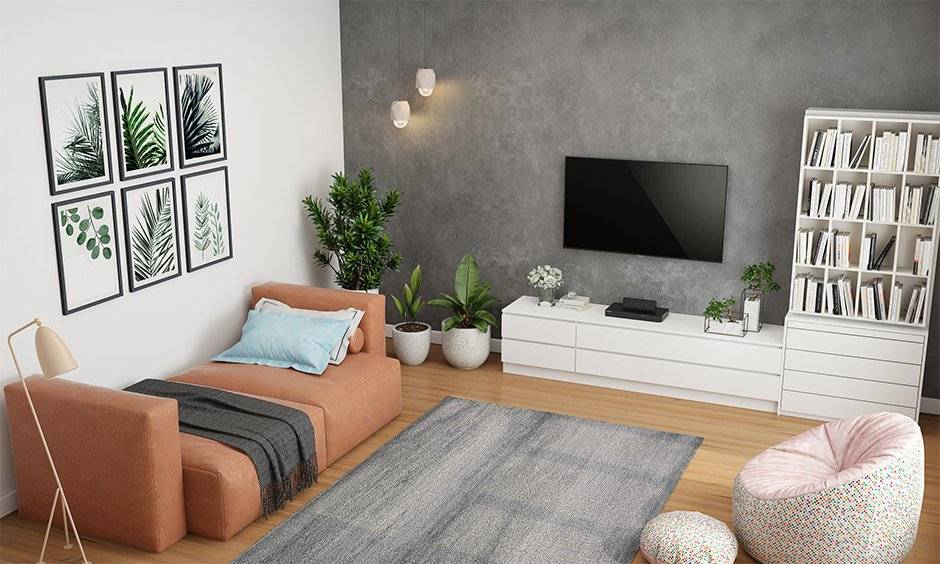
A sleeper sofa combines seating and sleeping functions, making it especially useful in small homes and multipurpose rooms. During the day, it works like a sofa. At night, it can provide an additional sleeping surface for guests.
This is one of the most practical types of furniture for living room spaces when you do not have a dedicated guest room. When selecting a sleeper sofa, measure the room for both the sofa position and the fully opened bed. Make sure there is enough space to walk around it when it is converted.
8. Chaise Lounge

A chaise lounge provides an extended seating surface that allows you to stretch your legs while remaining seated.A chaise can be incorporated into a sectional or purchased as a standalone furniture piece. It works especially well in larger living rooms, reading areas, and relaxed contemporary interiors.
If your room is narrow, make sure the chaise does not interrupt the primary walking path. In larger rooms, it can help create a separate relaxation zone.
9. Ottoman
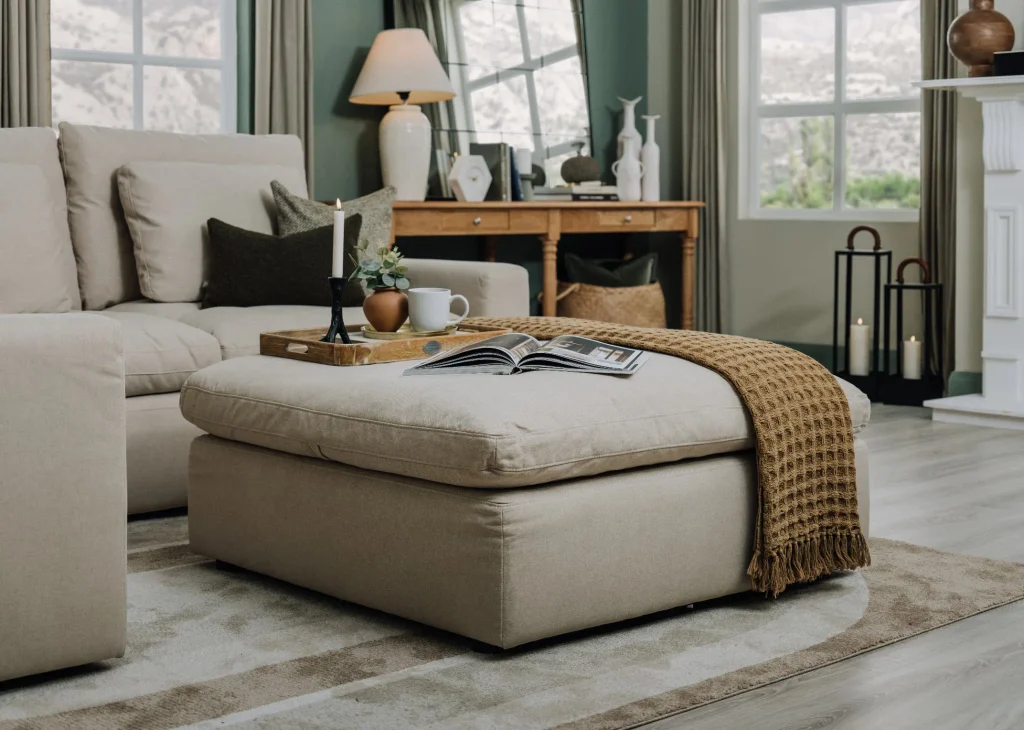
An ottoman is one of the most flexible types of furniture for living room spaces. It can function as a footrest, extra seat, casual table, or decorative accent. Some ottomans also contain hidden storage, allowing you to store blankets, games, pillows, or other items.
A large upholstered ottoman can replace a traditional coffee table when paired with a sturdy tray. This creates a softer and more relaxed look. Ottomans are especially useful in homes where furniture needs to perform multiple functions.
10. Pouf
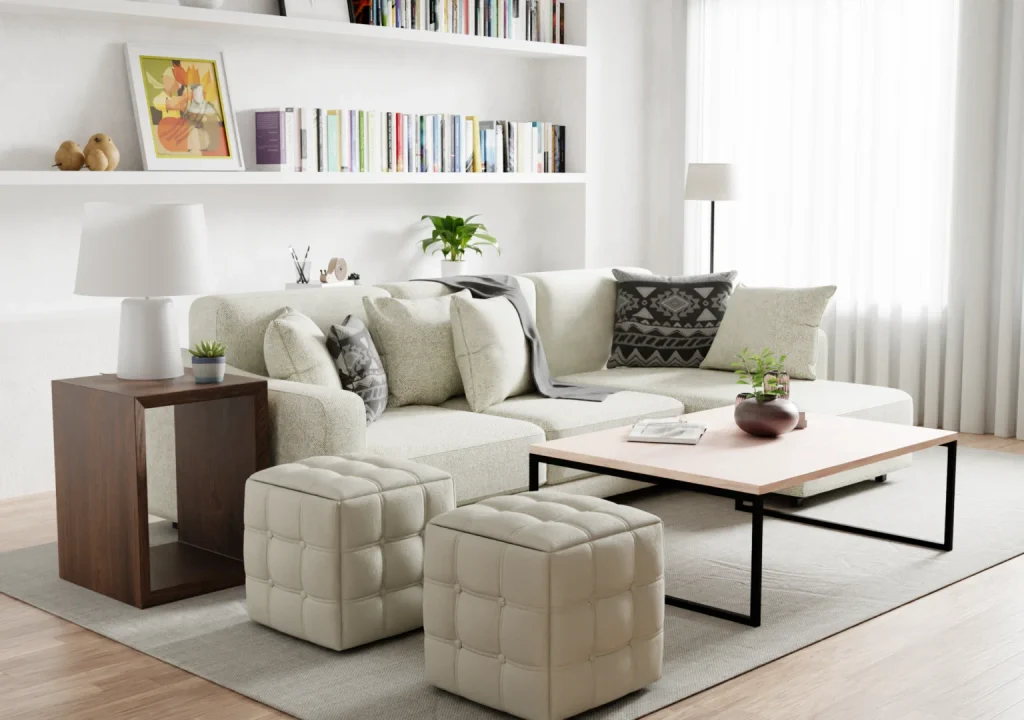
A pouf is a small, lightweight upholstered piece that can be used as a footrest or occasional seat. Because poufs are easy to move, they are useful when you want flexible seating without permanently filling the room with large furniture.
Several small poufs can be tucked beneath a console or placed beside a sofa when needed. They work particularly well with casual, bohemian, eclectic, contemporary, and relaxed decorating styles.
11. Bench

A living room bench can provide additional seating without the visual weight of another large sofa. Benches can be positioned against a wall, beneath a window, near an entry point, or behind a sofa. Some designs also provide hidden storage.
A bench can be particularly useful in a large open room where you want to add seating without creating another bulky visual block.
12. Coffee Table
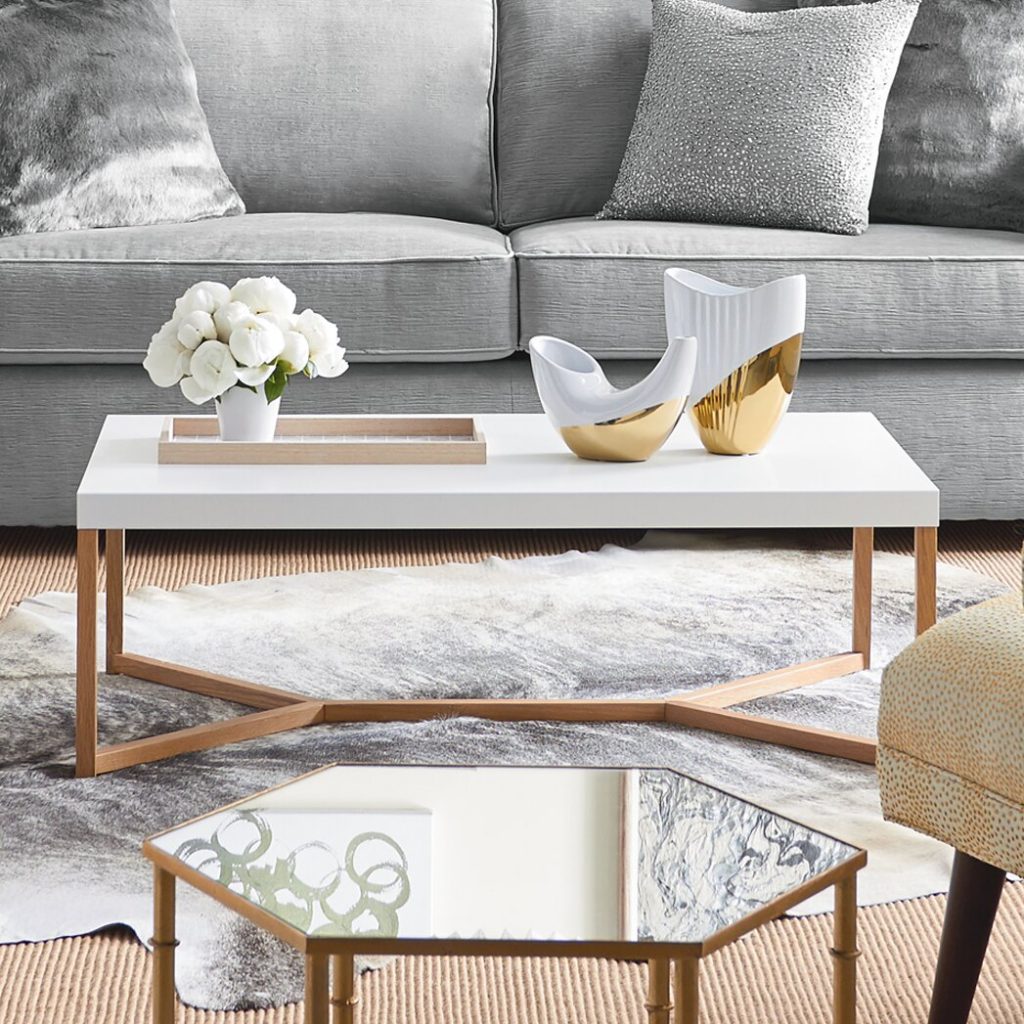
A coffee table is one of the most recognizable types of furniture for living room spaces. Usually placed in front of the main seating, it provides a convenient surface for drinks, books, remotes, decorative objects, and everyday items. It also helps visually connect the sofa, chairs, and rug.
The coffee table should be proportional to the seating around it. A table that is too large can make movement difficult, while one that is too small may look disconnected.
Common shapes include:
- Rectangular
- Square
- Round
- Oval
- Irregular or organic
Round and oval tables can be particularly helpful where you want to soften a room dominated by straight lines. A storage coffee table can provide additional functionality in a smaller living room.
13. End Table
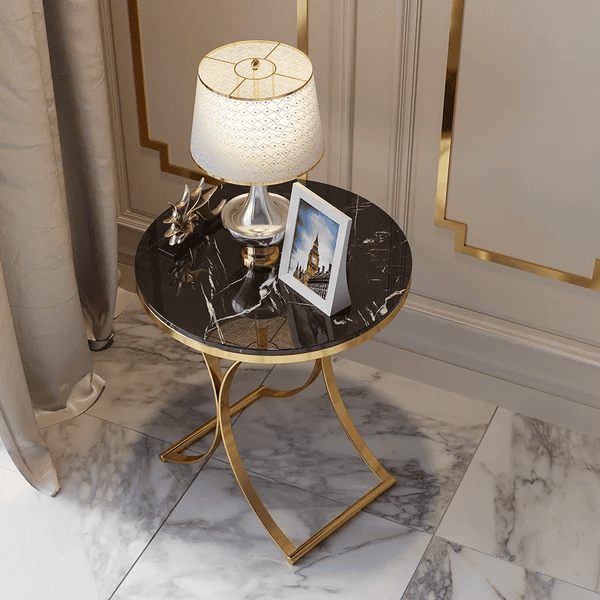
An end table, sometimes called a side table, is usually positioned beside a sofa or chair. It provides a convenient surface for a lamp, drink, phone, remote control, book, or decorative object.
End tables do not have to match perfectly. Two different tables can create a collected look as long as they share something visually, such as color, material, shape, or scale. A practical rule is to choose an end table that is reasonably close to the height of the seating arm so that everyday items are easy to reach.
14. Side Table
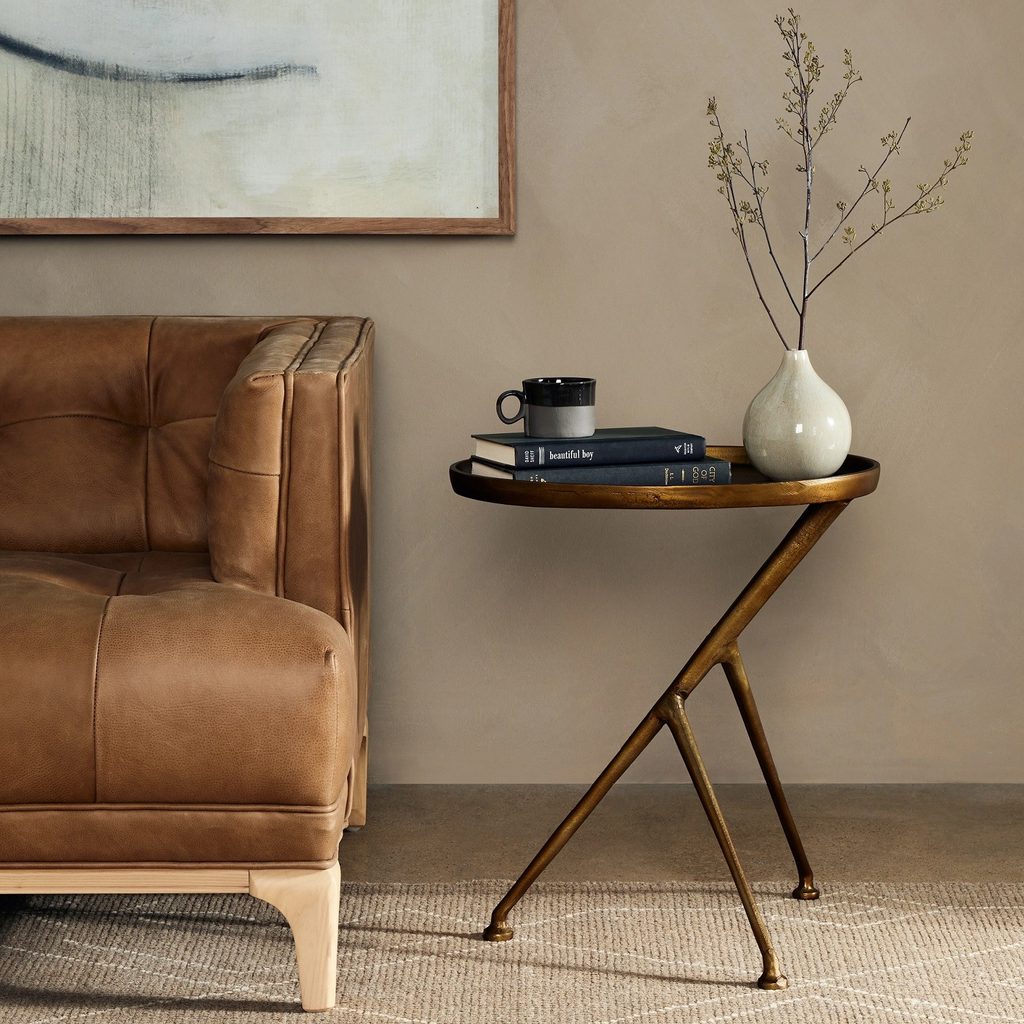
Side tables are smaller tables designed for flexible placement beside seating. Although the terms “end table” and “side table” are often used interchangeably, side tables can include a wider variety of small table designs.
They are excellent for small living rooms because they take up less space than larger tables. Nesting side tables can be particularly useful because multiple surfaces can be separated when guests arrive and stacked together when they are not needed.
15. Console Table
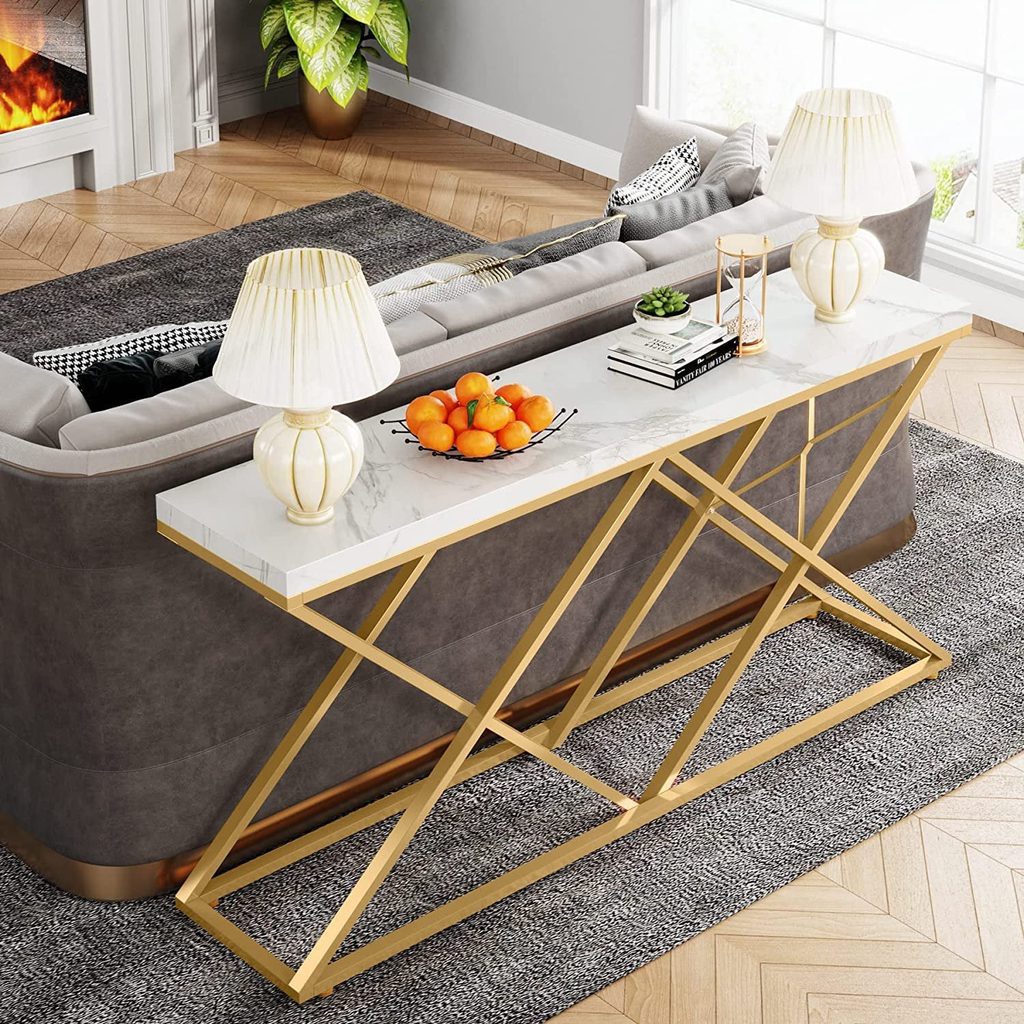
A console table is a long, relatively narrow table that can be placed against a wall, behind a sofa, beneath artwork, or near an entry area. In an open-concept living room, a console can help visually define the back of a sofa and create a transition between the living and dining areas.
A console table can also provide space for lamps, books, decorative objects, baskets, and framed photos. If you have a narrow room, choose a shallow console so that it does not interfere with traffic flow.
16. Sofa Table
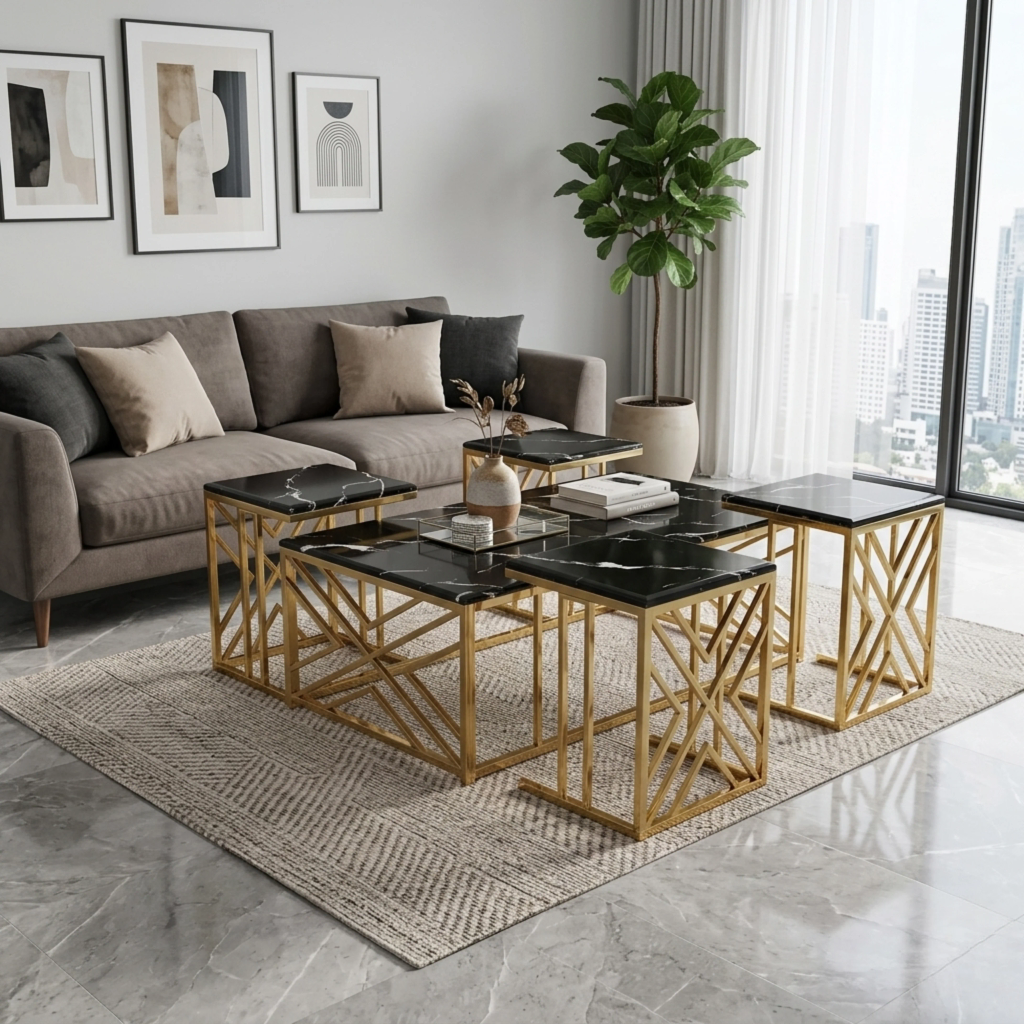
A sofa table is designed to sit behind a sofa, particularly when the sofa is floated away from a wall. It can provide a practical surface for lighting and décor while giving the back of the sofa a more finished appearance.
In an open-plan room, a sofa table can become an important visual divider. You can place lamps, plants, baskets, or decorative accessories on it without making the room feel overly decorated.
17. Nesting Tables
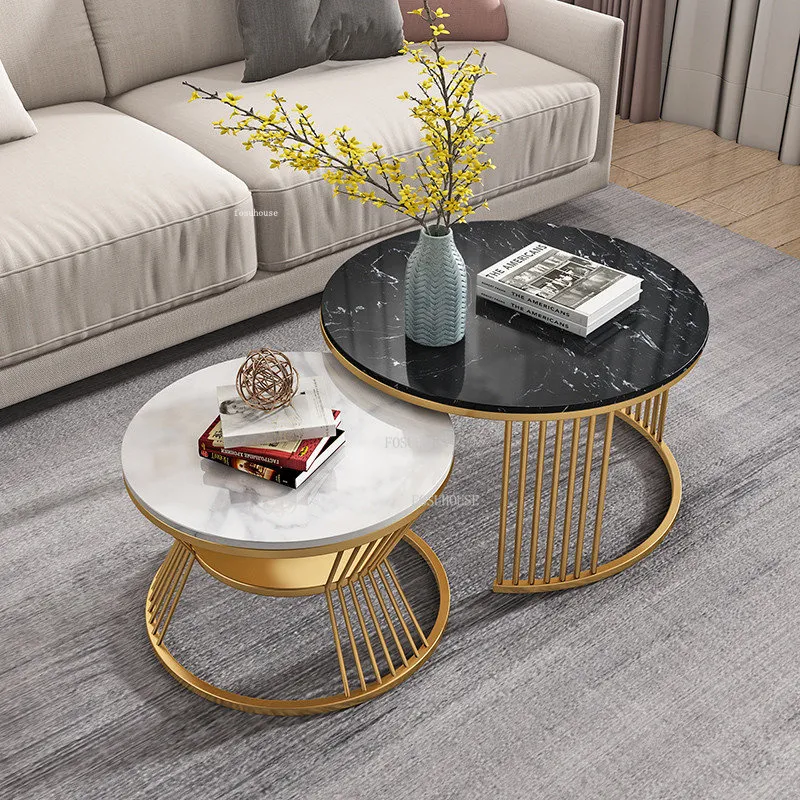
Nesting tables are a smart choice for flexible living rooms. They consist of multiple tables designed to fit underneath one another. When you need additional surfaces, the smaller tables can be pulled apart.
This makes them particularly useful for apartments, small living rooms, and households that frequently entertain guests. Instead of permanently occupying a large footprint, nesting tables give you additional surface area only when you need it.
18. Bookcase
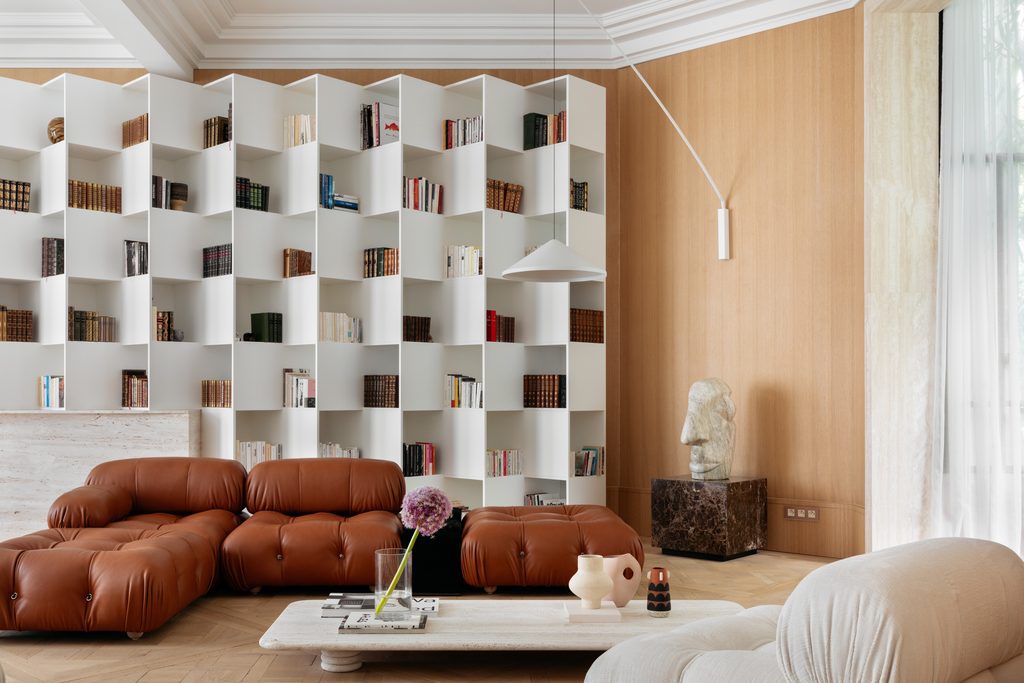
A bookcase provides both storage and display space. It can hold books, framed photographs, plants, artwork, baskets, and decorative objects. Tall bookcases also draw the eye upward and can make a room feel more visually substantial.
When styling a bookcase, avoid filling every shelf. Leave some open space so the display can breathe. A mixture of books, decorative objects, artwork, and greenery usually looks more intentional than a shelf filled with one type of object.
19. Cabinet
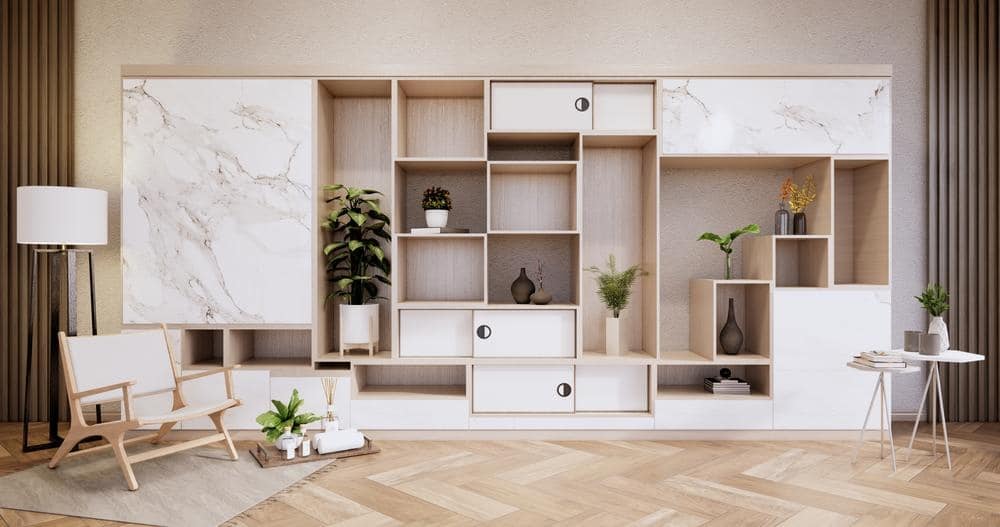
Cabinets are among the most versatile types of furniture for living room spaces because they provide concealed storage. You can use cabinets to hide electronics, board games, toys, extra blankets, books, documents, or household items that you do not want visible.
Tall cabinets are useful when you want vertical storage, while low cabinets can work beneath artwork or beside media furniture. If you have children or pets, consider how securely the cabinet needs to be positioned and whether doors or drawers are practical for everyday use.
20. Sideboard
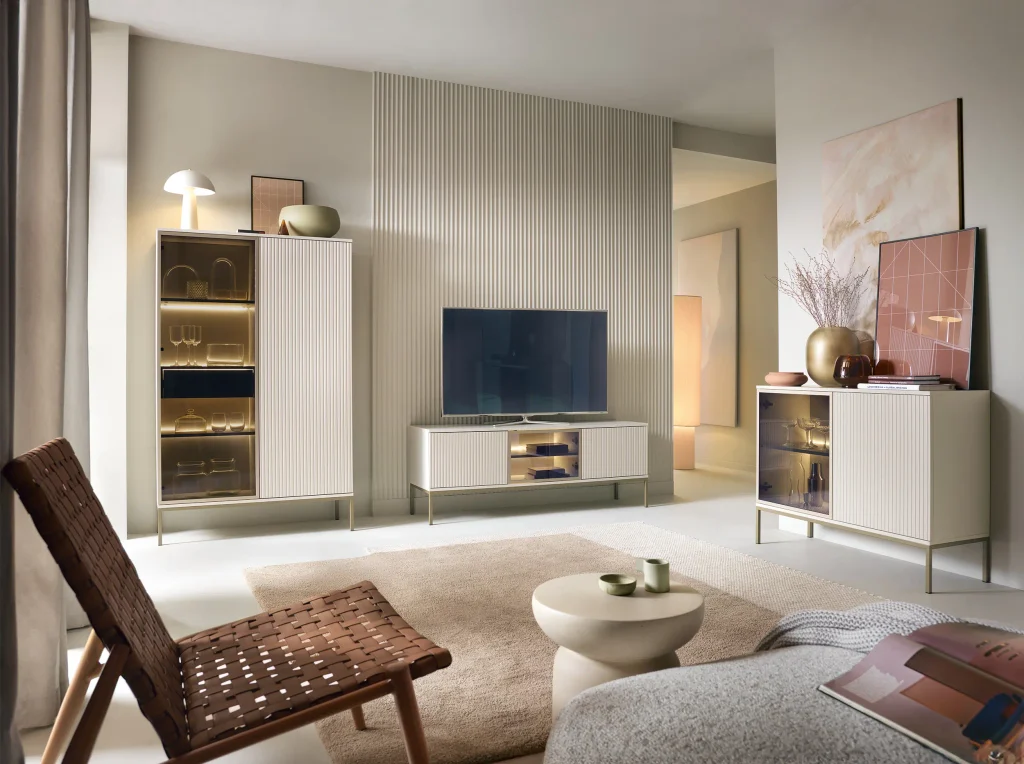
A sideboard is a low storage piece with cabinets or drawers. Although traditionally associated with dining rooms, sideboards can work beautifully in living rooms. They can provide concealed storage while also creating a surface for lamps, artwork, plants, or decorative accessories.
A sideboard can be especially useful on a long empty wall that needs both function and visual balance. If you are interested in creating a warm, organized interior, natural wood storage furniture can pair beautifully with layered textures and neutral colors.
21. Credenza
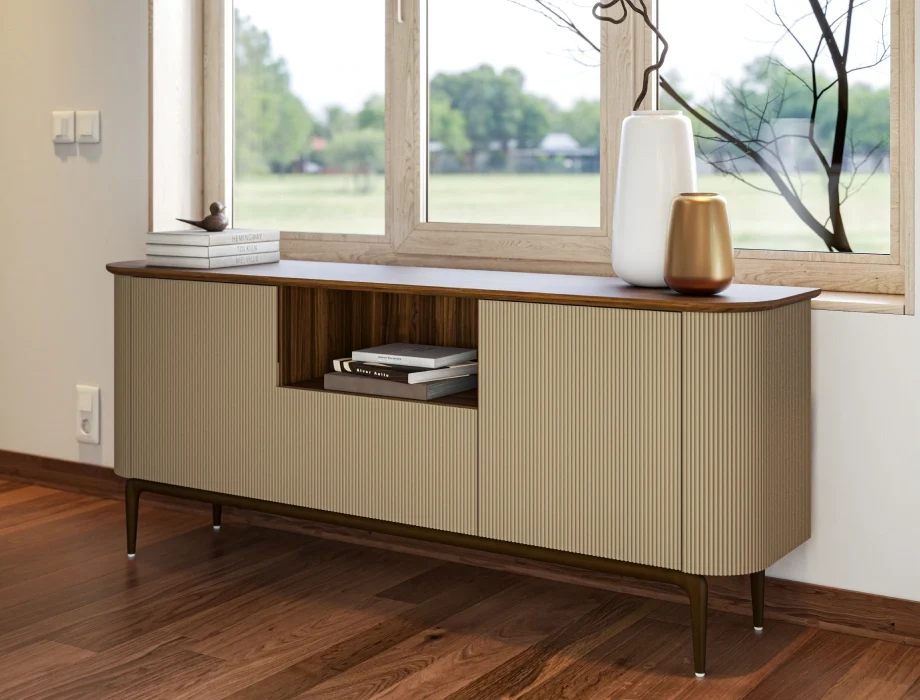
A credenza is another low storage piece that typically has drawers, cabinets, or a combination of both. In a living room, a credenza can be used beneath artwork or a wall-mounted television. It can also provide storage for electronics, books, games, and accessories.
Credenzas are particularly attractive in modern and mid-century-inspired interiors because many designs have clean horizontal lines and relatively low profiles.
22. TV Stand

A TV stand is designed to support a television while often providing additional storage. For a TV-centered living room, it can become one of the most important types of furniture for living room spaces.
When selecting one, consider the television’s width, the stand’s weight capacity, storage requirements, cable management, and ventilation around electronics. The TV stand should also work with the scale of the room. A very small stand beneath a large television can look visually unbalanced.
23. Media Console
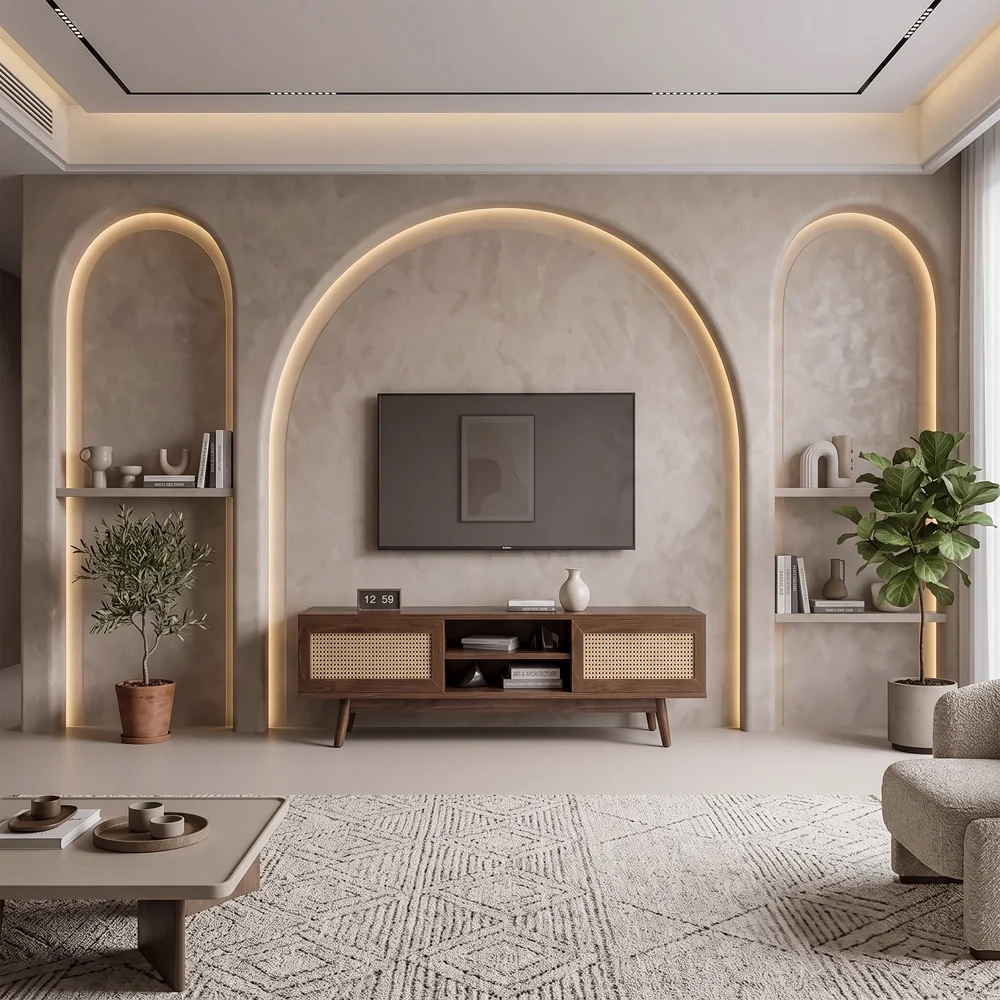
A media console is similar to a TV stand but is generally designed with broader storage and entertainment equipment in mind. It may include cabinets, shelves, drawers, cable-management openings, or dedicated spaces for media devices.
A media console is useful when your living room includes a television, game console, sound system, streaming equipment, or other electronics. For a cleaner modern look, a low-profile console can keep the television area visually streamlined.
24. Entertainment Center

An entertainment center is a larger furniture arrangement that can incorporate a television space with surrounding shelves, cabinets, and storage. This option works best when you want the media wall to be a major feature of the living room.
However, entertainment centers can visually dominate a small room. If your space is limited, a compact media console or wall-mounted solution may provide the same basic function with less visual weight.
25. Display Cabinet

A display cabinet combines storage with presentation. Glass doors allow you to display collectibles, ceramics, books, artwork, or other meaningful objects while protecting them from dust.
A display cabinet can work especially well in traditional, transitional, vintage, or eclectic living rooms. Instead of filling it with numerous small objects, select a few pieces that have personal meaning or complement the room’s overall color palette.
How to Decide Which Types of Furniture for Living Room Spaces You Actually Need
Knowing the different types of furniture for living room spaces is useful, but you do not need every piece.
Start with four questions:
How many people normally use the room?
What activities happen there?
How much floor space is available?
How much storage do you need?
A couple living in a small apartment may need only a compact sofa, coffee table, one or two side tables, and a small media console.
A family might need a sectional, ottoman, side tables, storage cabinet, and media console.
Someone who entertains frequently may benefit from additional accent chairs, poufs, benches, or nesting tables.
The goal is to select furniture based on real use rather than trying to make the room look “complete” by filling every empty area.
Essential vs. Optional Living Room Furniture
One of the easiest ways to avoid overspending is to separate furniture into levels of importance.
| Furniture | Main Function | Usually Needed? | Best For |
|---|---|---|---|
| Sofa | Main seating | Yes | Most living rooms |
| Sectional | Large-capacity seating | Alternative to sofa | Families/open rooms |
| Loveseat | Compact seating | Optional | Small spaces |
| Accent chair | Extra seating | Optional | Flexible layouts |
| Coffee table | Central surface | Usually | Most seating areas |
| End table | Convenient surface | Usually | Sofa/chair setups |
| Ottoman | Footrest/seat/storage | Optional | Flexible rooms |
| Console | Display/storage | Optional | Open layouts |
| Bookcase | Display/storage | Optional | Readers/collectors |
| Cabinet | Concealed storage | Optional | Clutter-prone homes |
| TV stand | Media support | Depends | TV rooms |
| Media console | Media/storage | Depends | Entertainment areas |
This approach is more useful than telling every reader they need the same furniture arrangement.
Best Types of Furniture for Small Living Rooms
Small living rooms require more careful furniture selection because every inch matters. Instead of choosing several large pieces, focus on furniture that provides more than one function.
Choose a Compact Sofa or Loveseat
A compact sofa gives you primary seating without consuming the entire room. A loveseat may be even more appropriate if the room is especially narrow or you live alone or with a partner.
Use an Ottoman Instead of a Large Coffee Table
A storage ottoman can function as seating, a footrest, and a surface when paired with a tray. This is a smart way to reduce the number of separate furniture pieces.
Try Nesting Tables
Nesting tables can be separated when guests need additional surfaces and tucked together when the room needs more open floor space.
Use Vertical Storage
A tall bookcase or cabinet can use vertical space rather than spreading storage across the floor.
Choose a Narrow Media Console
If the television is the focal point, choose a media console with useful storage without excessive depth. The goal is not to make a small living room feel empty. The goal is to make it feel intentional and easy to move through.
Best Types of Furniture for Large Living Rooms
Large rooms have the opposite challenge: they can feel unfinished when furniture is too small or too widely separated. A sectional can anchor a large seating area, while two accent chairs can create additional conversation seating. You can also create multiple zones.
For example:
Zone 1: Sofa + coffee table + chairs for conversation
Zone 2: Accent chair + side table + floor lamp for reading
Zone 3: Media console + comfortable seating for television
A large room can also benefit from a substantial area rug that visually connects the main furniture pieces.
Avoid pushing every piece against the walls simply because there is available wall space. Floating furniture can create a more intimate and purposeful arrangement.
Best Furniture for Open Concept Living Rooms
Open-concept rooms require furniture that helps define spaces without creating physical barriers. A sectional can establish the living zone. A sofa table behind the sofa can provide a visual boundary. A console can also help distinguish the living area from a dining or kitchen zone.
Accent chairs can reinforce the seating area while maintaining an open sightline. When working with an open floor plan, consider the room as a collection of connected zones rather than one giant empty space.
How to Mix Different Types of Furniture for Living Room Spaces
You do not have to buy a complete matching furniture set. In fact, mixing different pieces can make a living room feel more personal and sophisticated. The key is coordination.
Coordinate Color
Your sofa, chairs, tables, and storage pieces do not need identical colors. Instead, use a related palette.
For example, a cream sofa can work with walnut tables, a beige rug, olive accent chairs, and black metal lighting.
Repeat Materials
Repeating one or two materials helps different furniture pieces feel connected.
If you have a wood coffee table, you might repeat wood in a console or bookcase.
Balance Shapes
If your sofa has strong straight lines, a round coffee table can soften the arrangement.
If your room contains many rounded pieces, a rectangular console can introduce structure.
Mix Textures
A fabric sofa, wood table, woven basket, metal lamp, and textured rug can create depth without requiring a large number of decorative accessories.
Furniture Types vs. Furniture Styles: What’s the Difference?
This distinction is important when searching for types of furniture for living room spaces.
A sofa is a furniture type.
A sectional is a furniture configuration.
A recliner is a furniture type with a reclining function.
Modern, traditional, farmhouse, mid-century modern, rustic, and contemporary are furniture or interior design styles.
Leather, linen, velvet, and performance fabric describe materials or upholstery.
This means you can have a modern leather sofa, a traditional fabric sofa, or a mid-century modern sectional.
Understanding these differences makes shopping much easier because you can search for both the function you need and the appearance you want.
How to Choose the Right Living Room Furniture
Choosing among the many types of furniture for living room spaces should begin with measurements.
Measure the Room
Record the room’s length and width. Also measure:
- Doorways
- Windows
- Fireplace locations
- Built-ins
- Radiators or vents
- TV wall
- Existing furniture
- Main walking routes
Do not forget to measure the furniture’s depth, not just its width.
Consider Traffic Flow
A beautiful living room can become frustrating if people constantly have to walk around furniture. Leave comfortable pathways between major furniture pieces and avoid placing large pieces where they interfere with doors or natural movement.
Think About Your Lifestyle
Ask how you actually use the room. If you host guests regularly, prioritize seating.
If you watch television every evening, prioritize comfortable seating and a practical media setup. If you read, create a dedicated chair-and-lamp corner.
If you have children, prioritize durable, easy-to-clean surfaces and fabrics. If you have pets, consider upholstery durability and furniture that is easy to clean.
Consider Furniture Scale
A small coffee table can disappear in front of a huge sectional. Likewise, a giant sectional can overwhelm a compact apartment.
Furniture should relate to the size of the room and to the other pieces around it.
Common Living Room Furniture Mistakes to Avoid
Even attractive types of furniture for living room spaces can create problems if selected or arranged incorrectly.
Buying Before Measuring
Never assume furniture will fit because it looks appropriate online.
Measure both the room and the delivery path.
Choosing Too Much Furniture
An empty corner does not automatically mean you need another chair or table.
Negative space is part of good interior design.
Blocking Walkways
Furniture should support movement rather than interrupt it.
Using Too Many Matching Pieces
A completely matching furniture set can make the room feel predictable. Mixing complementary pieces often creates more personality.
Ignoring Storage
A room can look beautiful on move-in day but quickly become cluttered if there is nowhere to store blankets, books, games, electronics, or everyday items.
Choosing Style Over Comfort
Your living room is a space for real life. A beautiful chair that nobody wants to sit in is not a successful furniture choice.
How to Arrange Different Types of Furniture for Living Room Spaces
Start with the largest piece, usually the sofa or sectional.
Next, establish the primary focal point. This might be a fireplace, television, large window, artwork, or architectural feature.
Then add chairs and tables. The coffee table should relate to the seating arrangement rather than simply sitting in the center of the room.
Side tables should be placed where users can actually reach them.
Storage furniture should be positioned where it provides useful function without obstructing circulation.
Finally, add flexible pieces such as ottomans, poufs, or small stools if there is enough space.
For additional home-styling inspiration, you can explore Balady Home & Decor ideas on Home Styling Guide, which discusses natural materials, warm neutrals, layered textures, plants, and practical styling.
Popular Living Room Furniture Combinations
Classic Combination
A sofa + two accent chairs + coffee table + two end tables creates a traditional conversation arrangement.
Small-Space Combination
A loveseat + nesting tables + storage ottoman + narrow media console can provide seating and functionality without overwhelming a compact room.
Family Combination
A sectional + large ottoman + side tables + media console provides plenty of seating and flexible surfaces.
Formal Combination
A sofa + two matching armchairs + coffee table + console can create a more structured and symmetrical appearance.
Open-Concept Combination
A sectional + coffee table + accent chair + sofa table can define the living area while maintaining an open connection with the rest of the home.
How Current Living Room Furniture Trends Are Changing
Current living-room design is increasingly focused on furniture that combines comfort, flexibility, functionality, and personality rather than simply matching every piece as a complete furniture set. When exploring different types of furniture for living room spaces, homeowners are looking for pieces that look stylish while also adapting to everyday needs.
Multifunctional furniture has become particularly useful for smaller homes and apartments because one piece can serve several purposes. A storage ottoman can work as a footrest, extra seating, and hidden storage, while a sleeper sofa can transform a living room into a guest sleeping area. Nesting tables can provide additional surfaces when needed without permanently taking up valuable floor space, while a modular sectional can be rearranged as the room or family’s needs change.
Natural materials and warm textures are also popular choices for creating inviting living spaces. When selecting types of furniture for living room areas, consider materials such as natural wood, woven fibers, linen-inspired upholstery, textured fabrics, and other finishes that add warmth and visual depth. These materials can be combined with warm neutral colors, layered textiles, indoor plants, and decorative accessories to create a comfortable atmosphere.
However, following every furniture trend is not necessary. The best approach is to choose types of furniture for living room spaces that fit your home’s architecture, lifestyle, available space, and long-term needs. A trendy piece may look attractive today, but furniture that is comfortable, durable, appropriately sized, and functional can remain useful for many years.
How to Make Living Room Furniture Look More Expensive
You do not necessarily need expensive furniture to create an elegant and sophisticated living room. The key is to focus on proportion, coordination, texture, and thoughtful styling when selecting different types of furniture for living room spaces.
Focus on Furniture Proportion
Furniture that is appropriately sized for the room will usually look more intentional than expensive furniture that is too large or too small. Before purchasing a sofa, sectional, coffee table, or accent chair, measure the room and consider how each piece will relate to the surrounding furniture.
Create Visual Consistency
Your types of furniture for living room pieces do not need to match exactly. Instead, create a connection between them by repeating colors, materials, finishes, or shapes.
Layer Different Textures
Texture is another simple way to make living room furniture look more luxurious. Combine upholstered furniture with a textured area rug, decorative pillows, soft throws, natural wood, woven baskets, curtains, and carefully selected accessories.
When different types of furniture for living room spaces are combined with contrasting textures, the room gains depth and visual interest without requiring expensive decorative pieces.
Keep the Room Clutter-Free
Finally, avoid overcrowding the room. Even beautiful furniture can lose its impact when too many pieces compete for attention.
The goal is to create a living room where every furniture piece has a purpose and contributes to comfort, function, flow, storage, or style. When you choose the right types of furniture for living room spaces and combine them thoughtfully, your room can look sophisticated and expensive without requiring an excessive budget.
Frequently Asked Questions About Types of Furniture for Living Room
What are the main types of furniture for living room spaces?
The main categories include seating, tables, storage and display furniture, and entertainment furniture. Common examples include sofas, sectionals, loveseats, accent chairs, coffee tables, end tables, consoles, cabinets, bookcases, TV stands, and media consoles. Current furniture guides use similar broad categories when explaining living-room furniture.
What furniture should every living room have?
Most living rooms need comfortable primary seating and at least one practical surface. Depending on the room, that may mean a sofa, coffee table, side tables, and storage. A television does not automatically mean you need a large entertainment center.
What is the most important piece of living room furniture?
For most homes, the sofa or primary seating is the most important piece because it determines how people use the room. Comfort, size, durability, and placement should therefore be considered before choosing secondary furniture.
What furniture is best for a small living room?
Compact sofas, loveseats, nesting tables, storage ottomans, slim accent chairs, narrow consoles, and vertical storage can work particularly well in small spaces.
What is the difference between a sofa and a sectional?
A sofa is generally one continuous seating piece, while a sectional consists of multiple connected sections that create configurations such as L-shapes, U-shapes, or chaise arrangements.
Is an ottoman a type of living room furniture?
Yes. An ottoman is a versatile living-room furniture piece that can function as a footrest, occasional seat, decorative accent, or storage solution. Some can also serve as a coffee-table alternative when paired with a tray.
Do I need a coffee table?
Not necessarily. A coffee table is useful, but a large ottoman, nesting tables, or several small side tables can provide similar functionality depending on the room.
Should living room furniture match?
It does not have to match exactly. Coordinating colors, materials, proportions, and styles can create a cohesive appearance without purchasing a complete matching set.
What furniture is best for an open-concept living room?
Sectionals, sofas, accent chairs, console tables, and appropriately sized coffee tables can help define an open living area. A sofa table behind a floating sofa can also create a subtle boundary between zones.
How do I choose the right size living room furniture?
Measure your room, doors, pathways, and existing architectural features first. Then consider furniture dimensions, circulation, seating capacity, and the scale of other pieces. Never choose furniture based only on how it looks in a product photograph.
What furniture is best for families?
Families often benefit from durable sofas or sectionals, storage ottomans, easy-to-clean tables, practical storage cabinets, and flexible seating. The best combination depends on how children and adults actually use the room.
Can I mix different furniture styles?
Yes. Mixing styles can make a room feel collected and personal. The key is to establish a visual connection through color, material, proportion, or shape.
Final Thoughts on Types of Furniture for Living Room Spaces
Understanding the different types of furniture for living room spaces is the first step toward creating a room that looks beautiful, comfortable, and functional. From sofas and sectionals to coffee tables, accent chairs, ottomans, cabinets, and media consoles, each furniture piece can serve a specific purpose in your living space.
There is no universal furniture checklist that works for every home. A small apartment needs different types of furniture for living room spaces than a large suburban family room.
Start with the basics when selecting types of furniture for living room spaces: comfortable seating, useful surfaces, appropriate storage, and furniture that supports the room’s main activities. Then consider secondary pieces such as accent chairs, ottomans, benches, console tables, bookcases, cabinets, and media furniture based on the available space and your lifestyle.
Most importantly, the best types of furniture for living room spaces should be selected according to your room’s dimensions, lifestyle, comfort requirements, storage needs, and overall design goals not simply because a particular furniture piece is popular.
The strongest living rooms usually feel balanced rather than crowded. They give people enough room to sit, move, relax, talk, read, watch television, or entertain guests. When every furniture piece has a purpose and the different types of furniture for living room spaces work together visually, even a relatively simple room can feel polished and welcoming.
If you are continuing to build your home-decor knowledge, explore Home Styling Guide for more home-decor ideas, styling inspiration, and practical decorating guides.
Ultimately, the best living room is not the one with the greatest number of furniture pieces. It is the one where every selected piece contributes to comfort, function, flow, storage, or style. Choosing the right types of furniture for living room spaces means creating a room that not only looks attractive but also works naturally for everyday life.