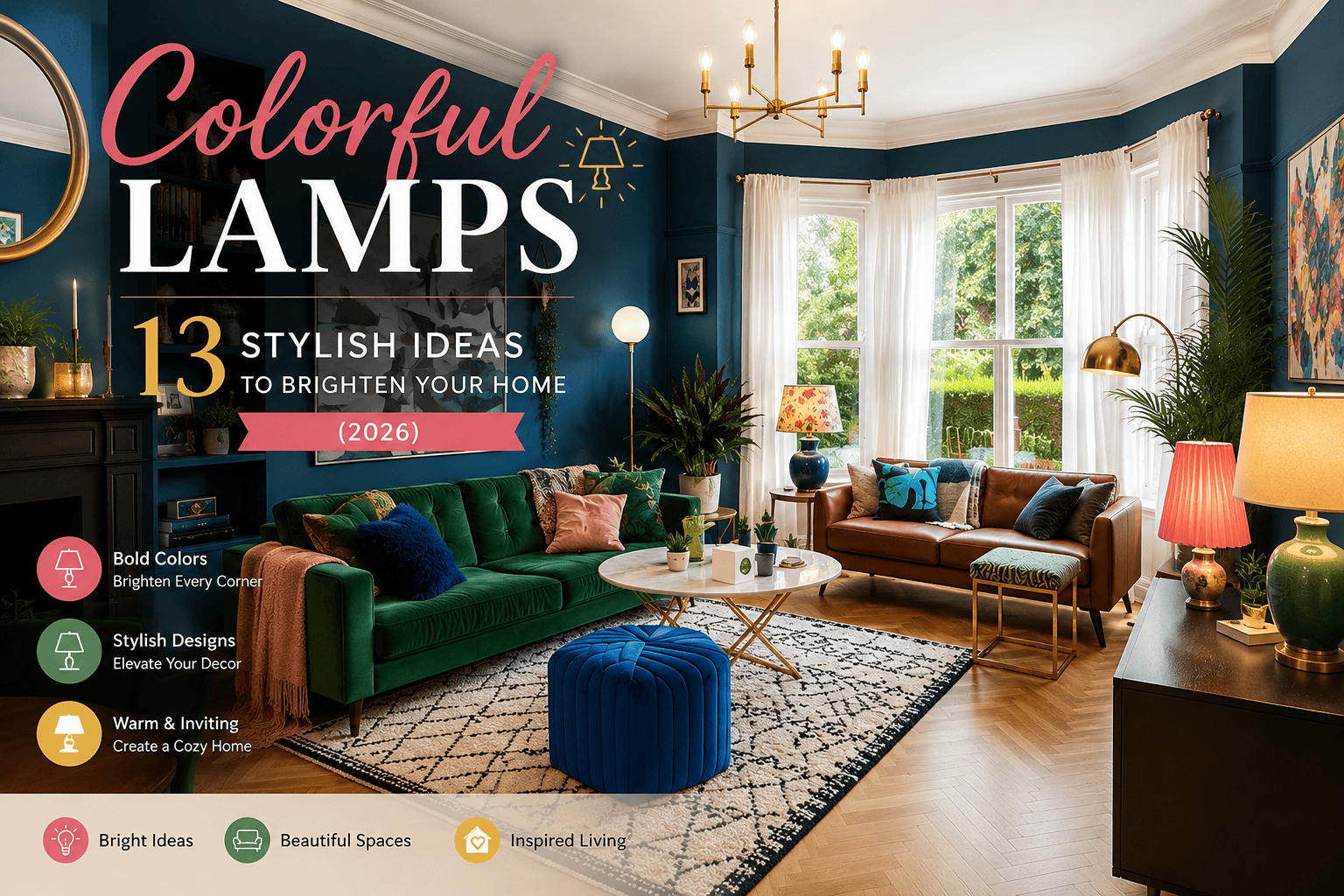
Discover 13 colorful lamps ideas for every room, plus tips for choosing colors, styles, sizes, placement, bulbs, and lighting for a stylish 2026 home.
Color can completely change the personality of a room, but you do not always need to repaint your walls or replace your furniture to create a noticeable difference. Colorful lamps offer an easy way to introduce personality, warmth, contrast, and visual interest while still providing useful lighting.
From a cobalt blue table lamp beside a neutral sofa to an emerald green lamp on a bedroom nightstand, the right fixture can become both a practical light source and a decorative feature. Colorful lamps can also work with modern, minimalist, vintage, boho, eclectic, and maximalist interiors.
The key is choosing a lamp that works with your existing color palette, furniture, room size, and lighting needs. A colorful lamp should feel intentional rather than like an unrelated object added at the last minute.
In this guide, you will discover 13 stylish colorful lamp ideas for 2026, along with practical advice on colors, placement, size, materials, bulbs, decorating styles, and common mistakes to avoid.
What Are Colorful Lamps?

Colorful lamps are decorative lighting fixtures that introduce noticeable color through a lamp base, shade, glass, ceramic finish, metal finish, or another visible part of the fixture. Some designs use one strong color, while others combine several colors or patterns.
A colorful lamp can be subtle or dramatic. A soft sage green fixture may blend quietly into a natural interior, while a bright red or cobalt blue lamp can become the main focal point of a room.
It is also important to distinguish decorative colorful lamps from color-changing lamps. A decorative lamp usually has a fixed physical color, while a color-changing LED lamp changes the color of the light itself.
This difference is useful when shopping because someone searching for colorful lamps may want either a colorful decorative fixture or a lamp capable of producing different colors of light.
Why Are Colorful Lamps Popular in 2026?
Lighting has increasingly become part of home decoration rather than something homeowners choose only for function. A lamp can now contribute to a room’s personality even when it is switched off.
This makes colorful lamps especially useful for homeowners who want to update their interiors without making expensive structural changes. Replacing a small table lamp can create a noticeable change without replacing a sofa, rug, or dining set.
The growing interest in expressive interiors also supports this approach. Current 2026 design coverage has highlighted the renewed appeal of patterned lampshades and more personality-driven lighting details. Country Living recently discussed the return of patterned lampshades as a design trend.
For a broader look at using stronger colors throughout the home, you can also explore our guide to bold color home decor.
13 Colorful Lamp Ideas to Brighten Your Home
1. Add a Cobalt Blue Table Lamp to a Neutral Room
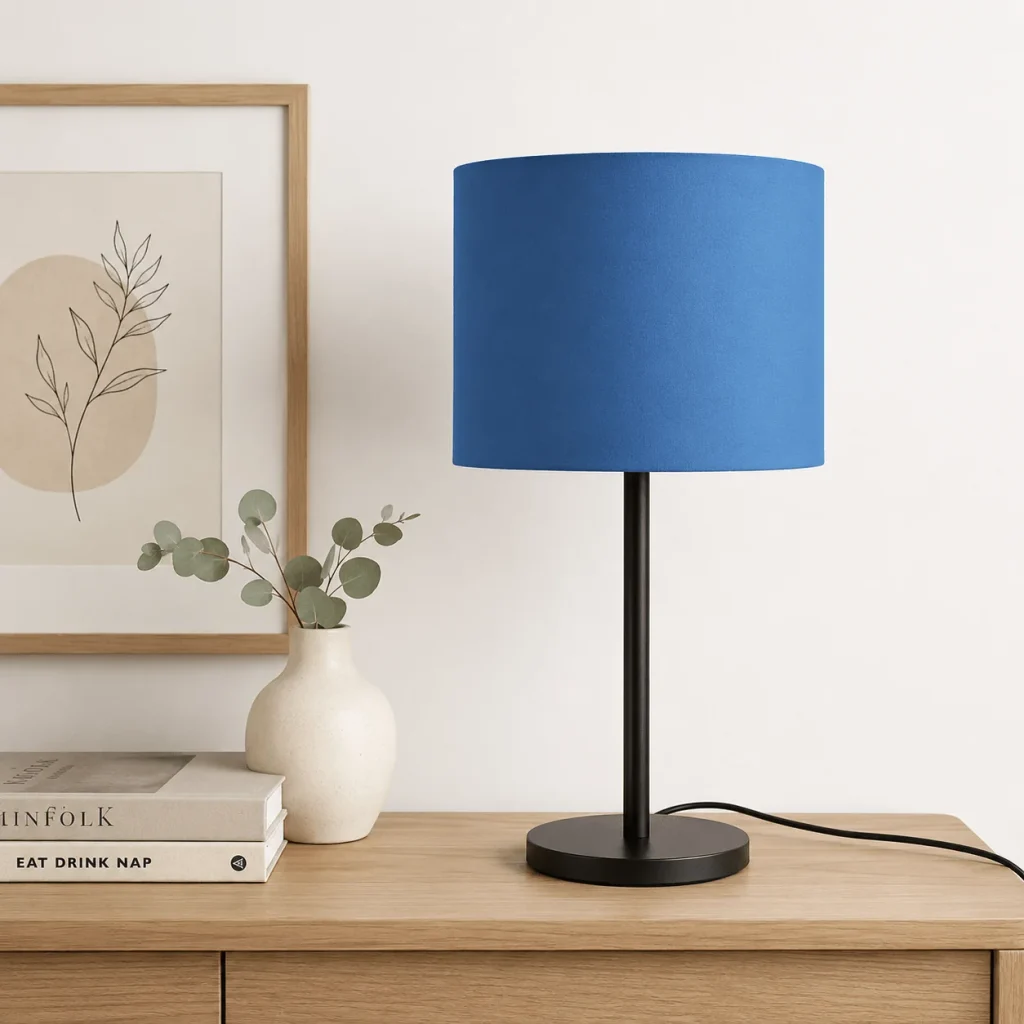
A cobalt blue table lamp can instantly add energy to a room filled with neutral colors. The strong blue creates contrast without requiring you to change the larger pieces of furniture.
Try placing one on a living room side table, console, bedroom nightstand, or home office desk. Cobalt blue works particularly well with cream, white, beige, warm wood, and soft gray.
You can make the lamp feel more connected to the room by repeating a small amount of blue elsewhere. A pillow, artwork, vase, or decorative object can provide enough repetition without making everything look perfectly matched.
If the lamp has a glossy ceramic base, it can create a polished appearance. A matte finish may feel softer and more contemporary.
2. Choose an Emerald Green Lamp With Warm Wood

Emerald green is a sophisticated choice when you want colorful lamps to feel rich rather than overly playful. It works especially well with warm wood furniture such as walnut or oak.
Place an emerald green lamp beside a cream sofa, wooden nightstand, reading chair, or home office desk. Brass details can add another layer of warmth without competing with the green.
Green is also easy to connect with plants and natural materials. If your room already contains greenery, a green lamp can reinforce that color naturally.
For a balanced 2026 look, combine emerald green with warm neutrals instead of surrounding it with several unrelated bright colors.
3. Use a Mustard Yellow Lamp for Warmth

Mustard yellow can bring warmth and personality to rooms that otherwise feel flat. It is especially useful when you want something more noticeable than beige but less intense than a neon shade.
A mustard lamp can work with navy furniture, gray walls, brown wood, cream upholstery, and white decor. It can also bridge warm and cool colors in the same space.
Try a mustard table lamp on a console, side table, dresser, or desk. If the lamp has a patterned shade, keep the surrounding accessories relatively simple so the room does not become visually crowded.
4. Bring in Color With a Glass Lamp

Colored glass can make colorful lamps feel lighter and more elegant. Because the material allows light to interact with the surface, the fixture can look slightly different when illuminated.
Cobalt blue, amber, green, pink, and smoked glass can all create distinctive effects. A glass lamp can work particularly well in contemporary, vintage, eclectic, and transitional interiors.
If your room already contains several bold colors, translucent glass can be a smart choice. It provides color without creating as much visual weight as a large opaque lamp base.
5. Make a Sculptural Orange Lamp the Focal Point
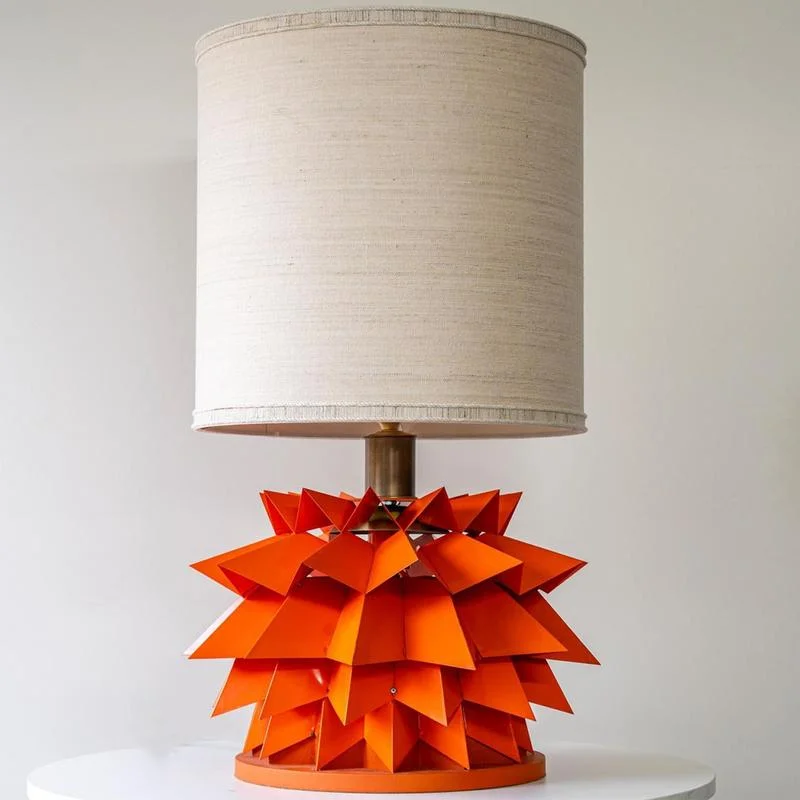
A sculptural orange lamp can become a strong focal point in a room that needs more personality. Burnt orange and terracotta tones are often easier to integrate than extremely bright orange because they work naturally with warm neutrals and wood.
Try combining an orange lamp with cream, beige, navy, olive green, or walnut furniture. A curved base or unusual silhouette can make the lamp feel almost like a piece of artwork.
This is one reason colorful lamps can be so effective. They do not have to look purely functional. A well-designed lamp can contribute to the room even during the daytime when it is not producing light.
6. Add a Soft Pink Lamp to the Bedroom
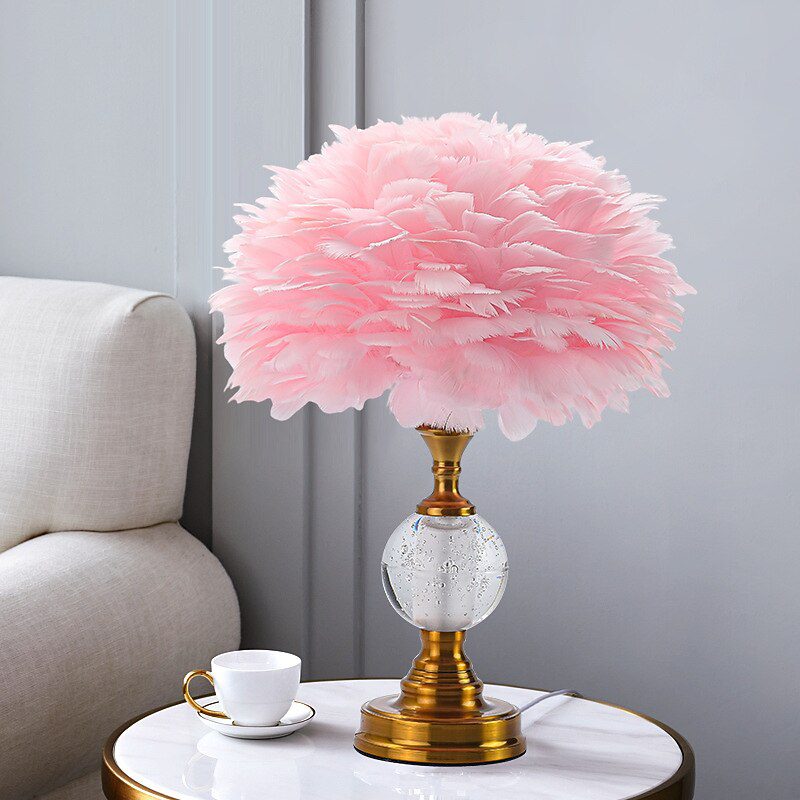
Pink can work beautifully in bedrooms when you choose a sophisticated shade such as dusty rose, blush, muted coral, or berry.
A soft pink lamp can be paired with cream bedding, beige walls, walnut furniture, burgundy accents, or soft gray textiles. The result can feel warm and refined rather than overly themed.
Place matching pink lamps on both nightstands if you want symmetry. Alternatively, use one colorful lamp on a dresser or small accent table if you prefer a more relaxed and eclectic arrangement.
For more bedroom inspiration, explore our bedroom decor ideas and look for ways to repeat the lamp color through bedding, artwork, or accessories.
7. Try a Multicolor Retro Lamp

A multicolor lamp can work particularly well in eclectic, retro, playful, or maximalist interiors. Instead of introducing a completely new color, choose a fixture that combines colors already present in the room.
For example, a lamp containing navy, mustard, cream, and terracotta can connect several existing elements. This makes the fixture feel like part of the room rather than a random colorful object.
The important thing is balance. If your room already contains several strong patterns, a simpler multicolor lamp may work better than another heavily decorated fixture.
8. Use a Colorful Floor Lamp in an Empty Corner

A colorful floor lamp can fill vertical space while also providing useful illumination. It is a practical choice for areas that feel unfinished beside a sofa, accent chair, reading nook, or home office.
A tall lamp naturally attracts attention, so its color can have more impact than a small table lamp. This makes a floor fixture a good option when you want one noticeable accent.
Before buying, measure the available floor area. The lamp should not interfere with walking paths, doors, drawers, or furniture placement.
In a smaller room, a slim colorful floor lamp can provide the same decorative effect without making the space feel crowded.
9. Refresh an Existing Lamp With a Patterned Shade

You do not always need to replace the entire fixture to introduce color. A new lampshade can completely change the appearance of an existing lamp base.
Patterned shades can introduce florals, stripes, geometric designs, botanical motifs, checks, or abstract patterns. Current 2026 design coverage has also highlighted the renewed popularity of patterned lampshades. Country Living recently featured this trend.
When choosing a patterned shade, look for one or two colors that already appear in the room. If the shade includes green, cream, and terracotta, for example, those colors can be repeated subtly through plants, pillows, artwork, or ceramics.
This approach allows you to use colorful lamps without making the entire room colorful.
10. Hang a Colorful Pendant Over the Dining Table

Colorful lighting can also move beyond table and floor lamps. A colorful pendant can become an eye-catching feature above a dining table, kitchen island, or breakfast area.
Because pendant lighting occupies vertical space, it introduces color without using valuable floor or tabletop space.
Cobalt blue, deep green, terracotta, yellow, red, and colored glass can all work well depending on the room’s existing palette.
The most important consideration is scale. A very small pendant may disappear above a large dining table, while an oversized fixture can dominate a compact room.
11. Create a Colorful Bedroom Nightstand Pair

A matching pair of colorful lamps is an easy way to create symmetry in a bedroom. Place one lamp on each side of the bed and connect the color with your bedding, artwork, rug, or curtains.
The lamps do not need to match every other element. Their purpose is to create balance.
If you prefer a less formal look, choose two lamps with similar visual weight but slightly different finishes or shapes. This creates a collected appearance while keeping the room balanced.
Make sure the lamp height works with the mattress and nightstand so that the light is comfortable when you are sitting in bed.
12. Bring Color Into Your Home Office

A colorful desk lamp can make a home office feel more personal without distracting from the main function of the space.
Green, blue, burgundy, mustard, terracotta, and muted pink can all work as office accents. Choose the color according to the existing room rather than selecting a shade simply because it is trendy.
Function is especially important in an office. The lamp should provide adequate illumination without creating uncomfortable glare on your computer screen.
When choosing a bulb, consider lumens and color temperature rather than relying only on wattage. The U.S. Department of Energy explains that lumens measure light output, while correlated color temperature describes the appearance of light in Kelvin. U.S. Department of Energy
13. Place One Bold Lamp in a Calm Neutral Room

One of the easiest ways to experiment with colorful lamps is to place a single bold lamp in an otherwise calm room.
Imagine a living room with cream walls, a beige sofa, natural wood furniture, and a neutral rug. Adding one cobalt blue, emerald green, orange, or yellow lamp can immediately create a focal point.
This strategy works well for people who enjoy colorful interiors but do not want to commit to a fully colorful room.
Once you find a color you like, repeat a small amount of it through artwork, textiles, or accessories. The result will feel intentional without becoming overwhelming.
How to Choose the Right Colorful Lamp
Choosing colorful lamps should involve more than picking your favorite color. The right fixture needs to work with the room’s size, furniture, existing palette, and lighting requirements.
Start With Your Existing Color Palette
Before choosing a lamp, look at the colors already present in the room. Consider the walls, sofa, curtains, rugs, bedding, artwork, wood finishes, and metal accents.
Then decide whether you want the lamp to repeat an existing color, complement it, or create contrast. A neutral room can handle a stronger accent, while a room that already contains several bold colors may benefit from a softer lamp. The goal is not perfect matching. The goal is creating a relationship between the lamp and the rest of the room.
Decide Whether the Lamp Is a Focal Point or Accent
A focal-point lamp should attract attention. You can achieve this through a strong color, unusual shape, larger scale, or distinctive material.
An accent lamp should support the room without dominating it. Softer colors, simpler silhouettes, and smaller sizes are usually easier to use for this purpose. Deciding this before shopping makes it much easier to narrow down your choices.
Consider the Lamp’s Size
Scale is just as important as color. A large colorful lamp can overwhelm a narrow table, while a tiny fixture can disappear beside a large sofa or oversized furniture. Measure the table, available floor area, ceiling height, and surrounding furniture before making a purchase.
The lamp should look proportionate to the furniture it sits beside or on. This is particularly important when using colorful lamps as focal points because their strong color already increases their visual presence.
Choose the Right Shape
The relationship between color and shape matters. If the lamp has a very dramatic silhouette, a simpler color can keep the design balanced. If the shape is simple, you can often use a stronger color or patterned shade.
Think of color and shape as two separate sources of visual interest. When both are extremely bold, the fixture can compete with the rest of the room.
Consider the Material
Material changes how a color looks. Ceramic lamps can feel substantial and decorative, while colored glass often creates a lighter appearance. Metal can make a bold color feel more contemporary, while fabric shades can introduce softer patterns and textures.
Choose the material based on the room’s existing furniture and finishes.
What Colors Work Best With Colorful Lamps?
There is no single best color because the right choice depends on the room’s existing palette.
| Lamp Color | Works Well With | Overall Feel |
|---|---|---|
| Cobalt blue | Cream, white, tan, wood | Fresh and energetic |
| Emerald green | Cream, brass, walnut | Rich and sophisticated |
| Mustard yellow | Navy, gray, brown | Warm and cheerful |
| Terracotta | Cream, olive, navy | Earthy and inviting |
| Dusty pink | Beige, walnut, burgundy | Soft and refined |
| Burnt orange | Navy, cream, charcoal | Warm and dramatic |
| Teal | White, wood, brass | Fresh and balanced |
| Red | Cream, black, walnut | Bold and expressive |
| Purple | Gray, cream, green | Artistic and distinctive |
Use these combinations as starting points rather than strict rules. The amount of color, natural light, furniture finish, and overall room style can change how the combination looks.
Where Should You Place Colorful Lamps?
Placement affects both the appearance and usefulness of colorful lamps.
Living Room
A colorful table lamp can sit on a side table, console, or credenza. A floor lamp can work beside a sofa or reading chair. Use the fixture to create another layer of light rather than depending entirely on a central ceiling fixture.
Bedroom
Bedrooms are ideal for colorful table lamps because nightstands provide an obvious location. You can also use a colorful lamp on a dresser, vanity, or small accent table. Softer colors can create a relaxed appearance.
Home Office
A desk lamp can combine task lighting with personality. Position it so that the light does not create distracting reflections on your screen.
Dining Room
A colorful pendant can become the main visual feature above a dining table. A table or buffet lamp can provide softer secondary lighting elsewhere in the room.
Entryway
An entryway console is an excellent place for a colorful lamp because it is usually a relatively small area where a single accent can make a strong first impression.
Reading Nook
A floor or table lamp can define a reading corner while providing useful illumination. Choose the fixture based on both comfort and appearance.
How to Style Colorful Lamps Without Overdoing It
The goal is not to eliminate color. It is to make the color feel intentional.
Repeat the Lamp Color
If you choose a bright green lamp, you do not need green everywhere. One or two smaller references can be enough. A green vase, pillow, artwork detail, or plant pot can visually connect the lamp to the rest of the room.
Use Neutrals as a Visual Reset
Cream, beige, white, gray, and natural wood can give bold colorful lamps enough space to stand out. This is particularly useful when you want one strong focal point.
Do Not Match Everything Exactly
Exact matching can make a room feel overly coordinated. Instead of finding a lamp that perfectly matches your sofa, look for a color that relates to something else in the room. A terracotta lamp can work with a rust-colored pillow even if the shades are not identical.
Limit Competing Patterns
If the lamp already has a bold patterned shade, simplify nearby accessories. Likewise, if your room already contains patterned curtains and a detailed rug, a solid-color lamp may provide a better visual break.
Consider the Lamp When It Is Off
This is one of the most important considerations when choosing colorful lamps. During the day, the lamp is a decorative object. At night, it becomes a light source. Look at the lamp from different parts of the room before deciding where to place it.
Decorative Colorful Lamps vs. Color-Changing LED Lamps
These two types of lamps can serve different purposes.
| Feature | Decorative Colorful Lamp | Color-Changing LED Lamp |
|---|---|---|
| Main purpose | Decor and lighting | Mood lighting and lighting |
| Physical color | Usually fixed | May be neutral or colorful |
| Light color | Usually fixed | Often adjustable |
| Decorative role | Strong | Depends on design |
| Smart controls | Sometimes | Common on smart models |
| Best use | Everyday interiors | Ambience and entertainment |
A decorative lamp is a better choice when you want the fixture itself to contribute to your room’s design.
A color-changing lamp can be more appropriate when you want to change the atmosphere using different colors of light.
The U.S. Department of Energy also provides guidance on color-tunable LED products and the different technologies used to adjust light appearance. DOE: Understanding LED Color-Tunable Products
How to Choose the Right Bulb for Colorful Lamps
A beautiful fixture still needs the right light source. When choosing a bulb, consider brightness, color temperature, color rendering, compatibility, and dimming requirements.
Check Lumens Instead of Only Watts
Lumens describe the amount of visible light produced, while watts describe electrical power consumption. ENERGY STAR explains that around 800 lumens is approximately equivalent to the brightness traditionally associated with a 60-watt incandescent bulb, although actual performance varies by product. ENERGY STAR This makes lumens a useful starting point when deciding how bright your lamp should be.
Consider Color Temperature
Color temperature is measured in Kelvin. Lower values generally appear warmer, while higher values generally appear cooler. The U.S. Department of Energy explains this relationship in its residential lighting guidance. U.S. Department of Energy
Warm light can work well in relaxed living areas and bedrooms, while a more neutral appearance may be useful for work areas.
Think About Color Rendering
Color rendering affects how naturally colors appear under a light source. This can be important when your room contains colorful artwork, textiles, furniture, or accessories.
A good-quality bulb can help the colors in your interior appear more natural rather than dull or distorted.
Check Dimming Compatibility
If you want to dim the lamp, make sure the bulb and lamp are compatible with the intended dimming system. Always check the manufacturer’s specifications before installing a dimmable bulb or connecting the lamp to a dimmer.
Consider LED Bulbs
LED bulbs are widely used because they can provide efficient lighting in many residential applications. ENERGY STAR notes that LED products use less energy than traditional incandescent lighting while being available in a wide range of applications. ENERGY STAR LED Lighting
Choose the bulb based on the lamp’s socket, recommended wattage or equivalent, brightness, color temperature, and intended use.
Colorful Lamps for Different Interior Styles
Modern Interiors
Modern rooms usually work well with clean silhouettes, smooth ceramic, colored glass, or simple metal designs. A strong blue, green, orange, or red lamp can become the main accent without requiring additional decoration.
Mid-Century Modern Interiors
Mustard, orange, olive, teal, and warm red work naturally with walnut furniture and simple geometric shapes. Choose a lamp with a recognizable mid-century silhouette for a cohesive look.
Boho Interiors
Boho spaces can handle textured shades, warm colors, natural materials, and handmade-looking finishes. Terracotta, mustard, rust, green, and muted pink can work especially well.
Eclectic Interiors
Eclectic rooms offer more freedom to combine colors, patterns, materials, and periods. A multicolor lamp can work as a connecting element when it includes colors already present elsewhere in the room.
Vintage Interiors
Colored glass, ceramic bases, patterned shades, and retro silhouettes can all contribute to a vintage atmosphere. Look for a design that feels consistent with the period or aesthetic you are trying to create.
Maximalist Interiors
Maximalist rooms can handle stronger colors and patterns, so a colorful lamp can become part of a larger composition. However, even maximalist rooms benefit from some repetition and balance.
Minimalist Interiors
A single colorful lamp can be especially effective in a minimalist room.
Because the surrounding environment is simple, the lamp can provide personality without making the space feel cluttered.
Common Colorful Lamp Mistakes to Avoid
Choosing the Wrong Size
A lamp that is too small may disappear beside your furniture. One that is too large may overwhelm the table or room. Always consider the proportions of the surrounding furniture.
Adding Too Many Bold Colors
You do not need several unrelated colors to create a colorful room.Choose a dominant palette and allow the lamp to support it.
Matching Everything Too Literally
Exact color matching can make the room feel artificial. Use related colors instead and allow subtle variations.
Ignoring Function
A lamp should still provide appropriate illumination. Do not choose a fixture entirely because it looks attractive if it cannot perform the lighting task you need.
Ignoring Glare
A beautiful bulb can still be uncomfortable if it is directly visible from your normal seating position. Consider the shade, bulb brightness, lamp height, and viewing angle.
Forgetting Daylight Appearance
A lamp can look completely different when it is switched off. Check its physical color, shape, and material in daylight before making your final decision.
Blocking Walking Areas
Floor lamps should never create unnecessary obstacles. Check the walking path around the fixture, particularly in small rooms and busy living areas.
A Simple Formula for Decorating With Colorful Lamps
If you are unsure where to begin, start with the room rather than the lamp. First, decide where you need additional lighting. Then look at the existing colors in that space. Choose whether you want the lamp to be a focal point or a supporting accent. After that, check the fixture’s size, shape, material, and brightness.
Finally, repeat a small amount of the lamp’s color somewhere else in the room. This could be through artwork, a pillow, vase, throw, or decorative accessory. This simple process makes colorful lamps much easier to integrate into an existing interior.
Are Colorful Lamps Still Stylish in 2026?
Yes. Colorful lamps fit naturally into the current preference for more expressive and personalized interiors.
The modern approach is not necessarily about filling an entire room with bright colors. Instead, homeowners can use one or two carefully chosen accents to give a neutral room more personality.
A deep green lamp against cream walls can create a sophisticated focal point. A mustard lamp can add warmth to a navy-and-gray room. A patterned shade can introduce personality without changing the furniture.
The most stylish choice is therefore not always the brightest lamp. It is the fixture that makes sense with the room around it.
Frequently Asked Questions About Colorful Lamps
What are colorful lamps?
Colorful lamps are decorative lighting fixtures that use noticeable color in their base, shade, glass, ceramic, metal finish, or another visible component. They can be used as accent pieces or focal points throughout the home.
What color lamp works best in a neutral room?
Strong colors such as cobalt blue, emerald green, mustard yellow, terracotta, orange, and deep pink can create attractive contrast against neutral colors such as cream, beige, white, and gray.
Should a colorful lamp match my furniture?
A colorful lamp does not need to match your furniture exactly. It is usually better to connect the lamp to an existing color, material, or finish in the room.
Can colorful lamps work in minimalist homes?
Yes. A single colorful lamp can work especially well in a minimalist room because the simple surroundings give the fixture more visual importance.
Are colorful lamps suitable for bedrooms?
Yes. Soft green, muted blue, dusty pink, terracotta, and other comfortable colors can work well in bedrooms. Choose an appropriate bulb and make sure the fixture provides the amount of light you need.
Are colorful lamps the same as RGB lamps?
No. A decorative colorful lamp generally has a fixed physical color, while an RGB or color-changing lamp can change the color of the light it produces.
How many colorful lamps should a room have?
There is no fixed number. One colorful lamp can create a focal point, while two matching lamps can provide symmetry on bedroom nightstands or living room side tables.
What bulb color is best for a colorful lamp?
The best bulb depends on the room and purpose. Warmer light is commonly comfortable in bedrooms and relaxed living spaces, while a more neutral light may be useful for work areas.
How do I keep a colorful lamp from looking out of place?
Connect the lamp to at least one existing feature in the room. You can repeat its color through artwork, textiles, plants, or small accessories without matching everything exactly.
Final Thoughts
Colorful lamps are a simple way to introduce personality, warmth, and visual interest without redesigning an entire room. A cobalt blue table lamp can energize a neutral living room, an emerald green lamp can add sophistication to a bedroom, and a patterned lampshade can transform an existing fixture.
The most successful approach is to think beyond color alone. Consider the lamp’s size, shape, material, brightness, placement, and relationship to the surrounding furniture.
Whether you prefer modern, vintage, boho, eclectic, minimalist, or maximalist interiors, there is a way to make colorful lamps work with your decorating style.
For more inspiration, explore our bold color home decor ideas and discover additional ways to introduce expressive color into your home.
Last Updated: August 2026
About the Author
Sadia Waheed
Sadia Waheed is a home decor content creator and blogger behind Home Styling Guide, where she shares practical decorating ideas, styling inspiration, and approachable ways to create beautiful and functional living spaces.



Amazing ideas