
Learn how to design a luxury living room with expert tips for furniture, layout, colors, lighting, materials, rugs, decor, and a polished high end look.
A luxury living room is not simply a room filled with expensive furniture, marble surfaces, or shiny metallic accents. The most beautiful spaces feel luxurious because every element has been chosen with purpose. Furniture is correctly scaled, lighting is layered, colors work together, textures create depth, and the room feels comfortable rather than staged.
If you are wondering how to design a luxury living room, the best place to start is not with accessories or expensive purchases. Start with the room itself. Look at its size, architecture, natural light, traffic flow, focal points, and the way your household actually uses the space. Once those foundations are right, decorative details become much easier to select.
In 2026, luxury living room design is also becoming warmer and more personal. Current design coverage is moving away from overly coordinated rooms and toward spaces with richer colors, expressive artwork, sculptural furniture, natural materials, and a comfortable lived-in quality.
This guide explains how to design a luxury living room from the ground up, whether you are decorating a spacious American great room, a suburban family room, an apartment, or a smaller living area.
What Makes a Living Room Look Luxurious?
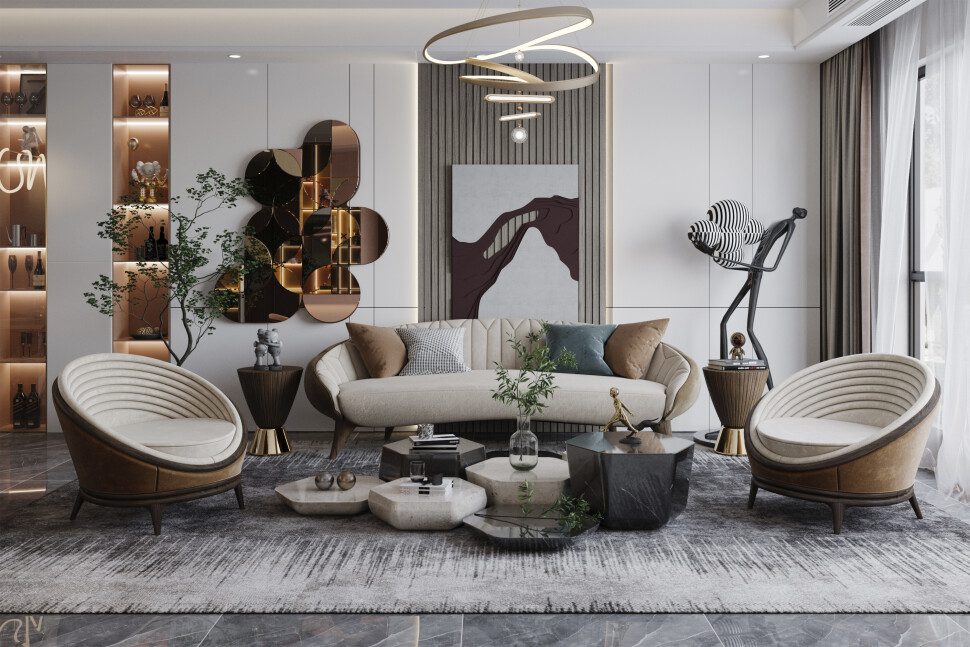
Before learning how to design a luxury living room, it helps to understand what actually creates the impression of luxury.
Luxury is largely about visual quality and proportion. A modestly sized room can look more sophisticated than a huge room when its furniture fits properly, its lighting is thoughtfully layered, and its decorative elements have enough breathing room.
A luxury room usually has a clear visual hierarchy. Your eye should know where to look first, while secondary elements support the main focal point instead of competing with it.
Materials also matter. Natural wood, stone, linen, leather, velvet, glass, brass, and bronze can introduce richness when they are combined thoughtfully. The goal is not to use every premium material at once. Too many competing finishes can make a room feel busy instead of elegant.
The same principle applies to accessories. A few carefully selected objects can have more impact than a crowded collection of decorative pieces.
Current 2026 living-room coverage also points toward rooms that feel more expressive, comfortable, and personal instead of completely neutral or overly minimal.
How to Design a Luxury Living Room Step by Step
The easiest way to understand how to design a luxury living room is to treat the project as a sequence rather than trying to choose everything at once.
1. Measure the Room Before Buying Anything

The first step in how to design a luxury living room is surprisingly simple: measure.
Record the room’s length and width, ceiling height, door openings, windows, fireplace dimensions, built-ins, vents, outlets, and other permanent features. Also pay attention to the direction doors open and the natural walking paths through the room.
This prevents one of the most common decorating mistakes: buying beautiful furniture that is simply too large or too small for the space.
A large sectional may look impressive in a showroom but overwhelm a compact living room. At the same time, placing a tiny sofa in a large great room can make the entire space feel unfinished.
Create a basic floor plan before shopping. You can use graph paper or a digital room-planning tool, but even a simple scaled sketch can reveal whether your preferred furniture arrangement will actually work.
Planning the layout before ordering furniture is also emphasized by established interior-design publications such as Homes & Gardens.
2. Decide How the Room Will Be Used
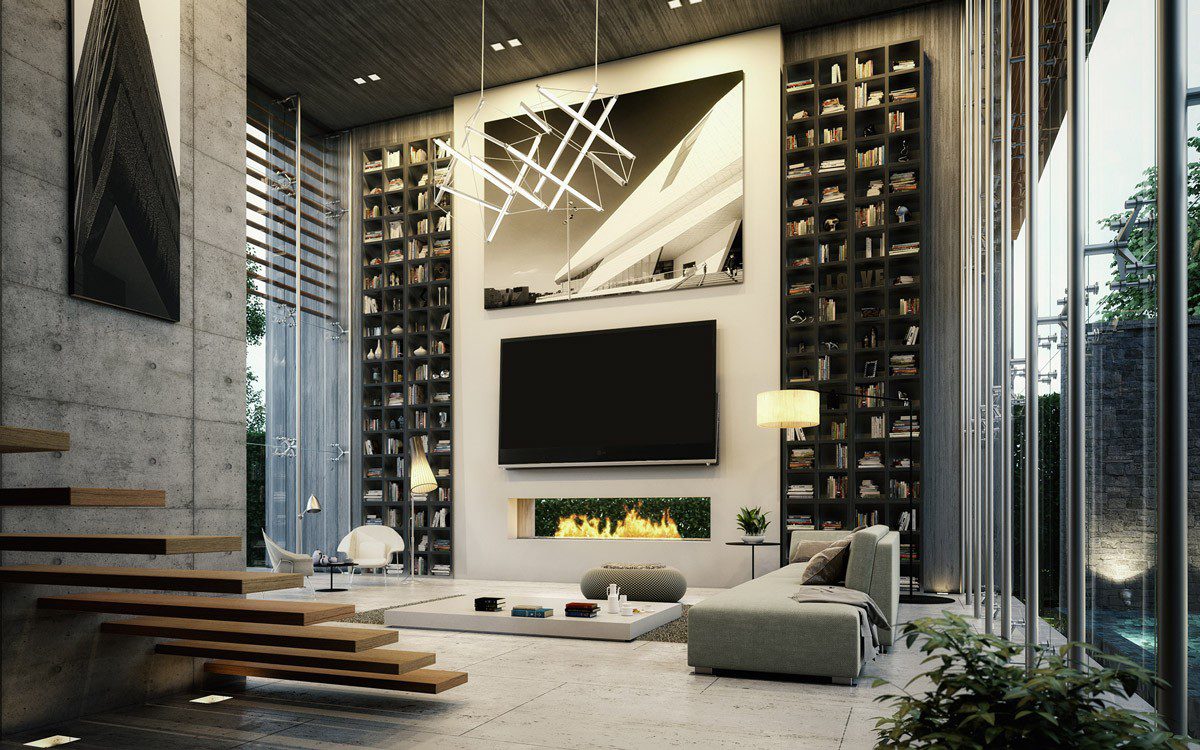
A luxury living room should look beautiful, but it also needs to work for everyday life.
Ask yourself what happens in the room. Is it mainly for entertaining guests? Is it a family room where people watch television? Do you read there? Do children use the space? Do you regularly host large gatherings?
These answers affect everything from sofa selection to coffee-table size.
If the room is primarily for conversation, arrange seating so people can comfortably face one another. If television is important, make sure the viewing angle works before creating an elaborate furniture arrangement.
If you frequently entertain, consider multiple seating options rather than relying on one oversized sofa.
This functional approach is one of the easiest ways to make luxury feel authentic. A room that looks beautiful but is uncomfortable will never feel truly high-end.
3. Establish a Strong Focal Point

Every sophisticated living room benefits from a focal point.
The focal point might be a fireplace, a large window with a view, a dramatic piece of artwork, an architectural wall, a sculptural light fixture, or an especially beautiful piece of furniture.
When learning how to design a luxury living room, identify this feature before deciding where smaller decorative elements will go.
For example, if your home has an attractive fireplace, arrange the furniture so that it becomes part of the room’s visual story. If there is no obvious architectural feature, you can create one with oversized artwork, a statement chandelier, a textured wall treatment, or a distinctive console.
The mistake to avoid is creating several competing focal points. A huge television, oversized artwork, dramatic chandelier, statement wall, and large sculpture can all fight for attention. Luxury usually comes from controlled visual hierarchy.
4. Choose Furniture With the Right Scale
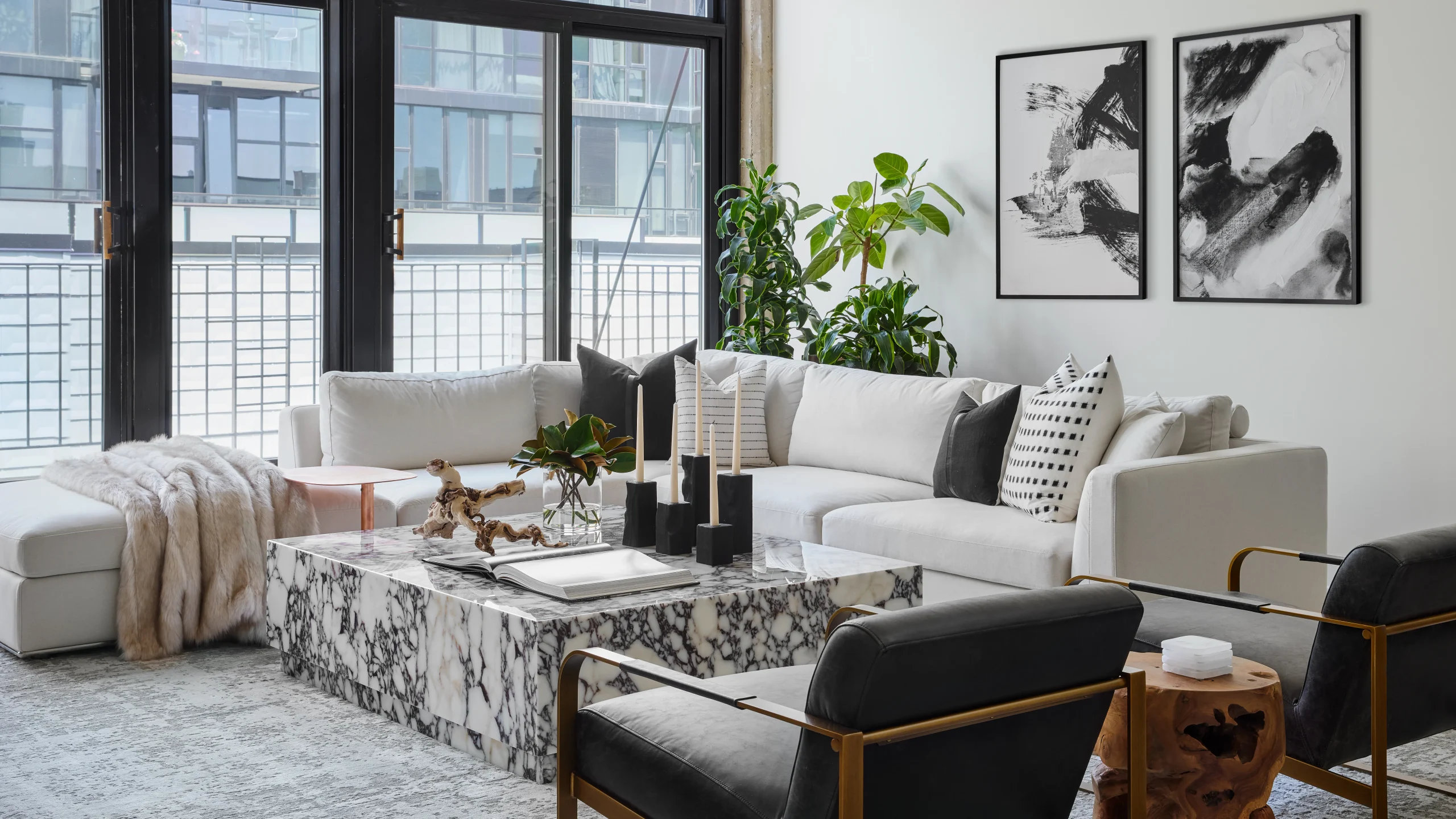
Furniture scale can make or break a luxury living room. A high end sofa does not automatically look luxurious if it is the wrong size for the room. The relationship between the sofa, chairs, tables, rug, walls, and ceiling should feel balanced.
Large rooms can accommodate deeper sofas, substantial coffee tables, larger artwork, and multiple seating zones. Smaller rooms generally benefit from streamlined silhouettes and fewer major pieces.
Do not automatically push every piece against the wall. In many rooms, floating a sofa away from the wall can create a stronger seating zone and improve circulation.
The furniture arrangement should encourage conversation while leaving clear pathways around the room.
If you are researching living-room furniture options, HomeStylingGuide’s living room furniture guide can be used as a related resource when expanding your furniture planning.
5. Invest in the Right Sofa

The sofa is usually one of the largest visual elements in the living room, so it deserves careful attention.
When deciding how to design a luxury living room, look beyond color. Consider the frame, upholstery, seat depth, cushion construction, silhouette, leg design, and overall proportions. A simple sofa in a beautiful fabric can look more sophisticated than an overly ornate sofa covered in several competing details.
For a contemporary luxury room, you might choose a clean-lined sofa with soft upholstery. For a traditional or transitional room, a tailored sofa with classic detailing can work beautifully.
Comfort should be part of the decision. A luxury living room should invite people to sit down. In 2026, rounded forms, plush seating, organic shapes, and comfort-focused silhouettes are receiving considerable design attention.
6. Anchor the Space With a Properly Sized Rug
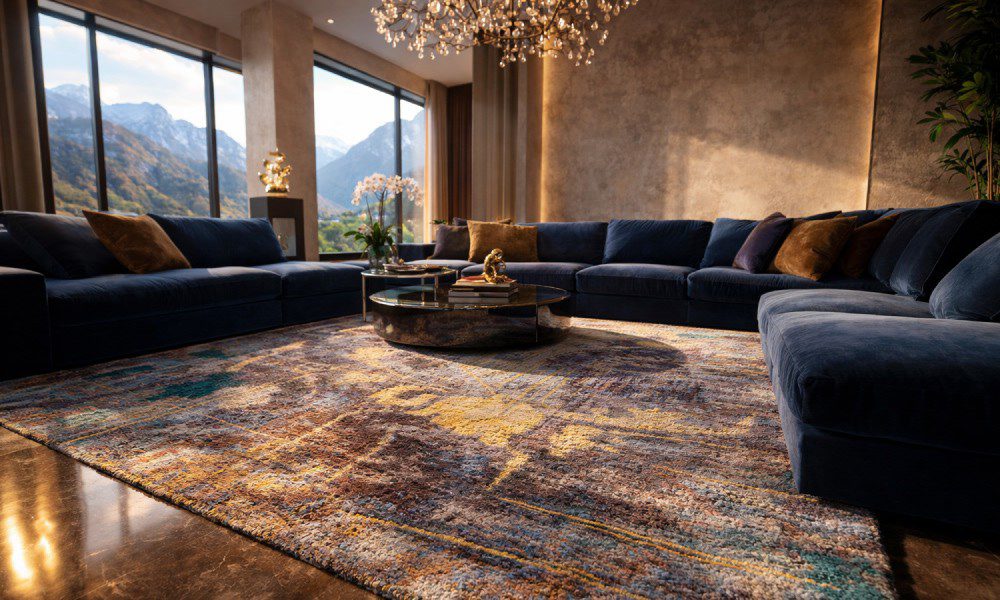
A beautiful rug can visually connect the entire room. One of the most common mistakes in living-room design is using a rug that is too small. A tiny rug floating underneath the coffee table can make an otherwise expensive room feel disconnected.
Whenever possible, choose a rug large enough to visually unite the major seating pieces. In a larger room, all or most of the furniture can sit on the rug. In a smaller space, at least the front legs of the main seating pieces can rest on it.
The rug should complement the overall color palette rather than introducing an unrelated pattern.
For a quiet luxury look, consider wool, wool-blend, subtle patterned, or textured rugs. If the room already contains dramatic artwork or patterned upholstery, a calmer rug may provide the necessary balance.
7. Build a Sophisticated Color Palette
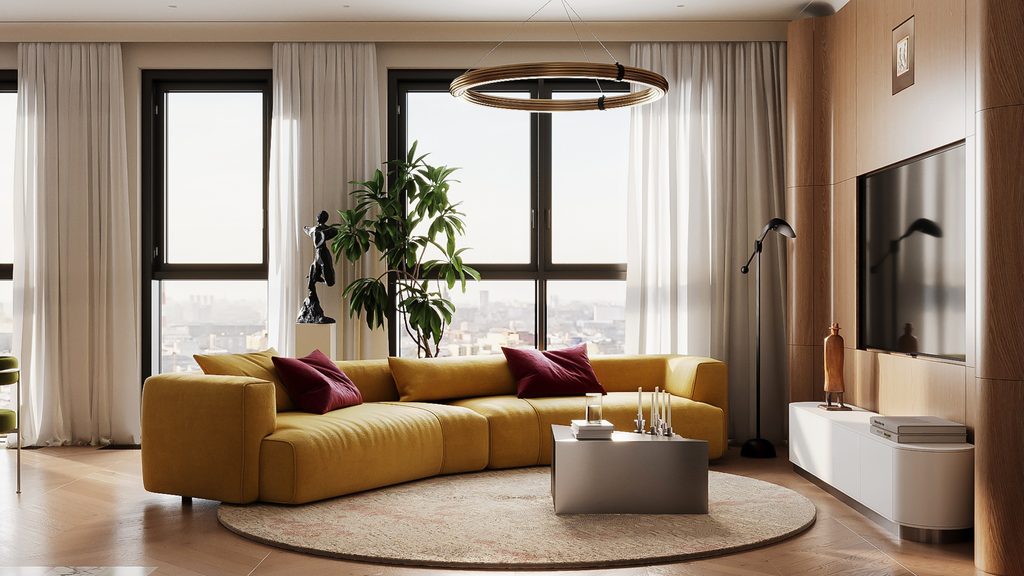
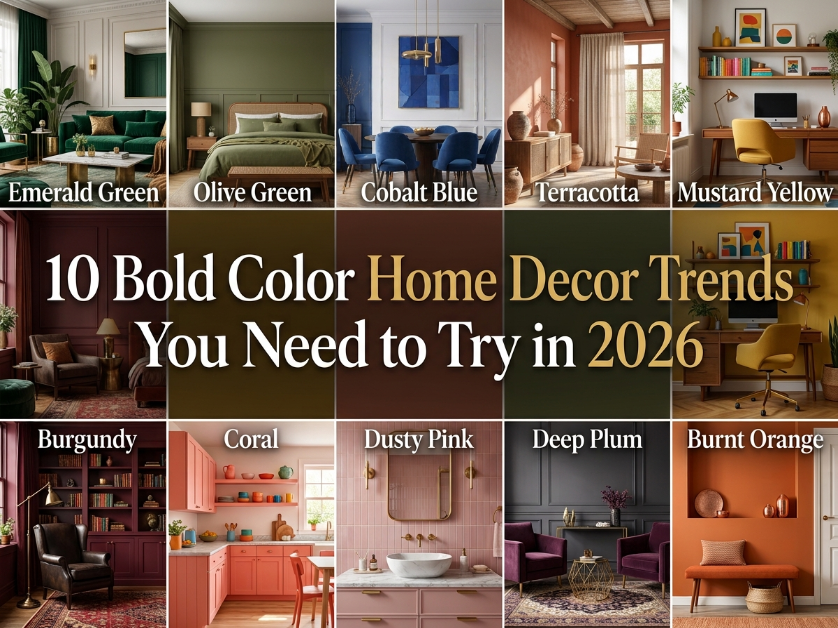
Color is one of the strongest tools for creating atmosphere. A luxury palette does not have to be beige, white, gray, or cream. Those shades can certainly create an elegant foundation, but sophisticated rooms can also incorporate olive, navy, chocolate brown, burgundy, charcoal, muted blue, terracotta, or other rich tones. The key is creating relationships between colors.
A warm cream wall might work beautifully with walnut furniture, camel leather, brass details, and muted green textiles. A charcoal wall could be balanced with ivory upholstery, warm wood, and soft metallic accents.
Current 2026 living-room trends show greater interest in expressive color and personality rather than completely safe neutral schemes.
For inspiration on incorporating stronger colors throughout the home, HomeStylingGuide’s bold color home decor ideas can provide another useful direction.
8. Layer Natural and Luxurious Materials

Material contrast is one of the secrets behind a sophisticated interior. Imagine a room with a soft linen sofa, a walnut console, a stone coffee table, a wool rug, brushed brass lighting, and a few glass accessories. None of those elements needs to scream luxury. Together, however, they create depth. Try combining hard and soft surfaces.
Stone can be balanced with fabric. Metal can be softened with wood. Smooth surfaces can be paired with woven materials. Leather can work with linen or wool.
Avoid using one finish everywhere. If every surface is glossy, the room can feel cold. If everything is soft and matte, the design may lack contrast. The best luxury rooms often use several materials while maintaining a controlled color palette.
9. Create Layers of Lighting
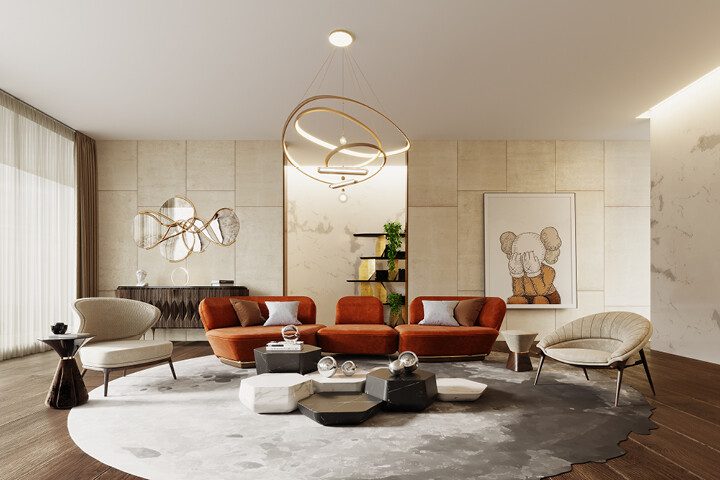
Lighting is essential when learning how to design a luxury living room because even the most beautiful furniture can look ordinary under harsh, single-source lighting.
Instead of relying entirely on one ceiling fixture, combine several types of light.
Ambient lighting provides general illumination. Floor and table lamps add practical and decorative light. Wall sconces can emphasize architectural features or artwork. Accent lighting can highlight shelves, artwork, plants, or textured surfaces.
A statement chandelier or pendant can become a focal point, particularly in a room with a high ceiling. Warm, adjustable lighting is particularly useful because it allows the atmosphere to change throughout the day.
HomeStylingGuide also covers lighted home decor ideas that can complement a broader lighting strategy. The goal is not simply to make the room bright. Luxury lighting creates layers, shadows, warmth, and visual depth.
10. Use Window Treatments to Add Height

Window treatments can have a surprisingly strong effect on the perceived quality of a room.Instead of installing curtains that stop immediately above the window frame, consider how the treatment can emphasize the full height of the wall.
Floor-length curtains often create a more finished appearance. Hanging the rod higher and extending it wider than the window can also make the window appear larger, provided the arrangement works with the architecture.
Choose fabrics that complement the room. Linen and linen-look materials can create relaxed sophistication, while heavier fabrics can feel more traditional and dramatic.
Avoid extremely short curtains that end awkwardly above the floor unless the room’s architecture specifically requires that treatment.
11. Add Art Instead of Filling Walls With Small Decor

Artwork can instantly personalize a luxury living room.One large piece can sometimes create more impact than an entire collection of small frames.
When deciding how to design a luxury living room, think about artwork as part of the room’s overall composition rather than something added at the very end.
A large abstract painting can work beautifully above a sofa. A photographic print can add sophistication to a contemporary space. A traditional painting can introduce character to a classic or transitional interior.
The artwork does not need to match the sofa exactly. Instead, look for connections through color, texture, subject matter, or visual weight.Give important artwork enough surrounding space to breathe.
12. Layer Texture for a Richer Interior

Texture prevents neutral rooms from feeling flat.
If your living room uses a restrained color palette, introduce interest through upholstery, rugs, curtains, pillows, throws, wood grain, stone, woven baskets, ceramics, and other tactile surfaces.
For example, a cream sofa can become much more interesting when paired with a textured wool rug, linen curtains, a chunky throw, smooth stone, and warm wood.
This is especially useful if you prefer quiet luxury.Instead of relying on strong patterns or excessive decoration, allow materials to create visual interest.Texture also helps a large room feel warmer and more inviting.
13. Style the coffee table

Luxury styling is often about knowing when to stop.
A coffee table might include a stack of beautiful books, a ceramic object, a low vase, or a small sculptural element. A console might feature artwork, a lamp, a bowl, and one or two carefully chosen accessories.
The exact objects matter less than their arrangement.
Use differences in height, shape, and texture to create interest. Leave some empty space so that the arrangement feels intentional rather than crowded.
This concept of looking collected rather than cluttered is also increasingly emphasized by contemporary design coverage. Livingetc recently highlighted the importance of making belongings appear curated instead of chaotic.
14. Bring in Natural Elements

Natural elements can make a luxury room feel warmer and more personal.
Wood is particularly effective because it introduces warmth and visible grain. Plants can bring softness and life. Stone, ceramics, woven materials, and natural fibers can reinforce an organic feeling.
You do not need a large number of plants. One substantial plant in an attractive planter may be more effective than many small plants scattered throughout the room.
For a modern luxury room, consider combining warm wood with stone and soft textiles.For a traditional space, darker wood and classic upholstery can create a richer atmosphere.For an organic luxury interior, lighter woods, natural stone, linen, woven textures, and greenery can work together beautifully.
15. Edit the Room Until It Feels Effortless
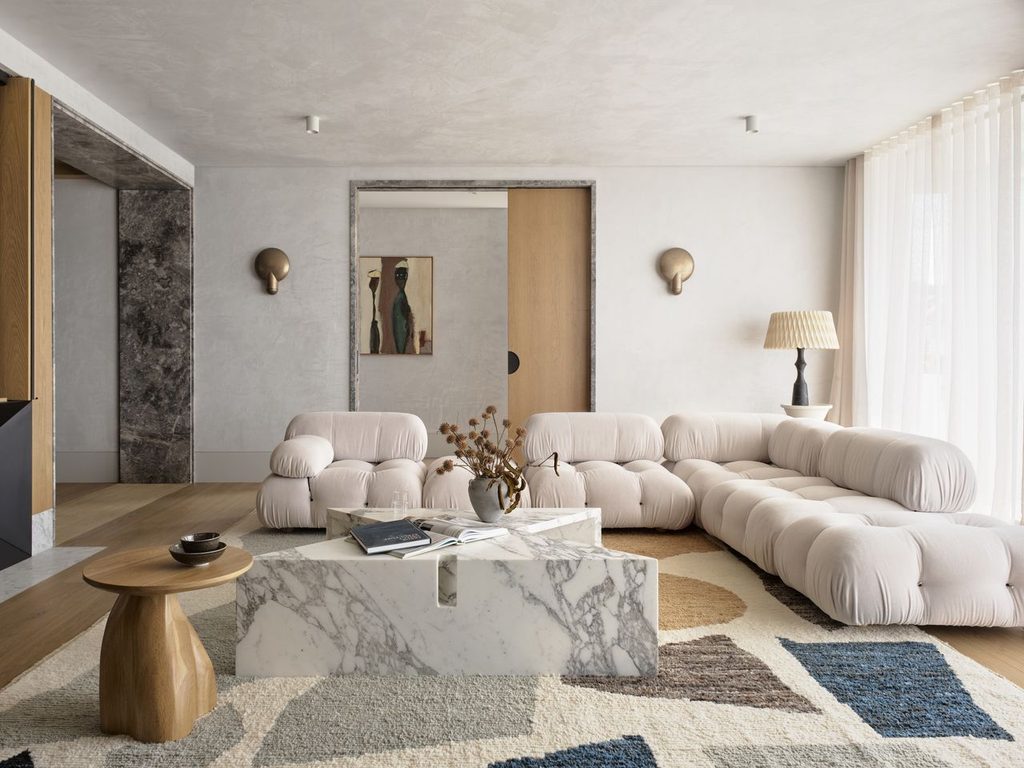
The final stage of how to design a luxury living room is editing. Once everything is in place, step back and examine the room as a whole.
Is there too much furniture? Are several objects competing for attention? Does one side of the room feel heavier than the other? Are there enough empty surfaces? Is the color palette coherent?
Remove anything that does not contribute to the design. This final editing stage is one reason luxury interiors often look effortless. The room is not necessarily empty; it simply contains fewer distracting elements.
A sophisticated space should feel intentional without looking like every object was placed according to a rigid formula.
How to Choose a Luxury Living Room Style
Once you understand how to design a luxury living room, you can adapt the basic principles to different styles.
Modern Luxury
Modern luxury focuses on clean architecture, sophisticated materials, restrained decoration, and carefully selected statement pieces.
Think streamlined sofas, sculptural tables, large-scale artwork, warm wood, stone surfaces, and layered lighting.The palette can remain neutral, but adding one or two richer colors can keep the room from feeling generic.
Quiet Luxury
Quiet luxury relies on quality, subtlety, and restraint.
Instead of obvious decorative extravagance, use beautiful fabrics, natural materials, timeless furniture, soft lighting, and carefully selected accessories.
Cream, taupe, warm beige, brown, muted green, and soft gray can all work well. The room should look expensive because of its quality and composition rather than because it contains obvious luxury symbols.
Organic Luxury
Organic luxury combines sophisticated design with natural materials and relaxed textures. Think oak or walnut, stone, linen, wool, natural fibers, soft curves, greenery, and warm neutral colors. This style is particularly effective for homeowners who want their living room to feel elegant without becoming formal.
Transitional Luxury
Transitional design combines traditional and contemporary elements.
A classic sofa might be paired with a modern coffee table. Traditional molding can work alongside contemporary artwork. Antique-inspired accessories can coexist with clean-lined furniture. This approach is useful for many American homes because it can bridge existing architectural details with newer furniture.
Traditional Luxury
Traditional luxury often uses symmetry, classic furniture forms, rich woods, detailed textiles, artwork, decorative molding, and elegant lighting. The key is avoiding excessive ornamentation. A traditional room can feel current when the palette and styling remain controlled.
How to Design a Luxury Living Room for a Small Space
A small living room can absolutely feel luxurious when every element is chosen with intention. When learning how to design a luxury living room in a compact space, the first priority should be proportion rather than quantity. Avoid filling every available inch with furniture or accessories. Choose a sofa that provides enough seating without dominating the room, pair it with appropriately sized chairs or tables, and use a properly proportioned area rug to visually anchor the seating arrangement.
Furniture with lighter visual profiles can help maintain an open feeling. Glass or slim-profile coffee tables, furniture with raised legs, and streamlined shelving can make the floor area feel less crowded. Instead of using several small decorative pieces, select a few well-chosen accents that contribute to the room’s overall style. In a small space, restraint often creates a more expensive-looking result than excessive decoration.
Vertical design elements can also make a compact room feel taller and more elegant. Hang curtains closer to the ceiling when appropriate, use vertically oriented artwork, or introduce slim shelving that draws attention upward. A tall floor lamp can provide both useful illumination and visual height without requiring much floor space.
Color continuity is another important part of how to design a luxury living room when space is limited. Rather than introducing numerous unrelated shades, create a controlled palette and repeat those colors through upholstery, artwork, rugs, curtains, and accessories. Layered lighting becomes especially valuable because a combination of natural daylight, ambient lighting, floor lamps, and table lamps can make the room feel brighter, deeper, and more inviting.
The biggest mistake is trying to make a small room look luxurious by filling it with miniature furniture. Too many undersized pieces can actually make the room feel busy and disconnected. Sometimes, fewer pieces with better proportions, richer textures, and stronger silhouettes create a far more sophisticated atmosphere.
How to Design a Luxury Living Room in an Open-Plan Home
Open-plan American homes require a slightly different approach because the living room often shares space with the kitchen, dining area, or entryway. When considering how to design a luxury living room in an open floor plan, avoid treating the entire space as one enormous room. Instead, create clearly recognizable zones while maintaining a visual relationship between them.
The living area can have its own seating arrangement, area rug, lighting, and focal point while still coordinating with the surrounding spaces. A generously sized rug can define the living zone without blocking sightlines. A sofa can also help establish a subtle boundary between the living room and another area without physically closing off the space.
Furniture placement is particularly important in an open-plan room. Arrange seating so that it encourages conversation while still allowing comfortable movement between zones. Avoid pushing every piece against the walls simply because the room is large. A thoughtfully positioned sofa or pair of chairs can make the living area feel intentional and architectural rather than like furniture randomly placed in a large open space.
Material and color repetition can help connect the different areas. For example, if the living room features walnut furniture, repeat a similar warm wood tone in the dining area or kitchen. If brass appears in the living-room lighting, introduce small touches of the same finish elsewhere. The goal is coordination rather than identical matching.
This approach is an important part of how to design a luxury living room in an open-plan home because luxury depends on visual harmony as much as individual furniture pieces. The finished space should feel unified from one end to the other while still allowing each zone to have its own purpose and personality.
How to Design a Luxury Living Room on a Budget
You do not need a huge budget to create a sophisticated living room. When learning how to design a luxury living room on a budget, focus on changes that create a significant visual impact rather than trying to replace everything at once. Good proportion, thoughtful arrangement, coordinated colors, and layered lighting can often make a room feel more polished without requiring expensive renovations.
Start with the layout because rearranging furniture costs nothing. Create a comfortable conversation area, improve the walking paths, and make sure the main seating pieces relate properly to one another. Sometimes moving a sofa, chair, or coffee table can make a room feel more spacious and intentional immediately.
Lighting should be another priority. A combination of a floor lamp, table lamp, wall lighting, or an attractive ceiling fixture can dramatically change the atmosphere. Warm, layered illumination generally feels more inviting than relying on a single bright overhead light. If replacing a major fixture is outside the budget, even a well-positioned lamp can add depth and create a more sophisticated evening atmosphere.
Next, focus on textiles because they can introduce texture and visual richness without requiring a complete furniture makeover. A well-chosen area rug, fuller curtains, decorative pillows, or a textured throw can make basic furniture feel more refined. Choose colors and materials that work together instead of buying several unrelated accessories.
Artwork can provide another major visual upgrade. Rather than covering every wall with inexpensive decorations, consider choosing one larger piece that gives the room a strong focal point. You can also create a more curated appearance by displaying a smaller number of meaningful objects instead of filling shelves and tables with miscellaneous decor.
If your budget allows only one major investment, put that money toward an item that has both functional and visual importance, such as a quality sofa, properly sized area rug, statement light fixture, or substantial piece of artwork. Understanding how to design a luxury living room means knowing where investment will have the greatest effect rather than assuming that a luxurious room requires expensive products everywhere.
The goal is to spend strategically rather than simply spend more. A cohesive color palette, improved lighting, better proportions, thoughtful styling, and carefully selected focal pieces can create a high-end atmosphere while keeping the overall project realistic and budget-conscious.
Where to Spend More in a Luxury Living Room
If you have a larger decorating budget, prioritize pieces that affect comfort, durability, and the visual foundation of the room.
A well-made sofa can become the anchor of the space. A high-quality rug can define the seating arrangement and introduce texture. Good lighting can transform the entire atmosphere. Custom window treatments may also be worthwhile when the architecture calls for them.
Quality materials can be especially valuable when they will receive heavy daily use. The idea is not that every item needs to be expensive. Instead, allow a few important elements to carry the design.
Luxury Living Room Color Combinations for 2026
Color choices should reflect the home’s architecture and your personal style, but several combinations work particularly well for sophisticated living spaces.
Warm Cream and Walnut
This combination creates a welcoming and timeless foundation. Cream upholstery and walls can be balanced with rich walnut furniture and darker accents.
Taupe and Chocolate Brown
For a warmer and moodier room, taupe can be combined with chocolate brown, camel, bronze, or warm brass.
Olive and Warm White
Olive introduces personality while remaining relatively sophisticated. Pair it with warm white, natural wood, and linen.
Navy and Cream
Navy works particularly well in traditional, transitional, and coastal-inspired luxury rooms. Cream and warm wood can soften the contrast.
Charcoal and Camel
Charcoal creates drama, while camel leather or upholstery adds warmth. Brass or bronze can provide a subtle finishing touch.
The most important principle is consistency. Do not choose a color simply because it is trending. Make sure it works with your flooring, natural light, architectural features, and existing furniture.
Luxury Living Room Materials That Elevate the Design
Materials are central to how to design a luxury living room because they communicate quality through texture and visual depth.
Natural wood provides warmth and can prevent stone-heavy interiors from feeling cold. Stone creates a substantial, architectural quality. Marble, travertine, limestone, and other stone finishes can be used for coffee tables, fireplaces, side tables, or accent surfaces. Linen provides relaxed texture and works especially well in warm, natural interiors.
Velvet can introduce depth and a more formal feeling, particularly when used on accent chairs or pillows. Leather adds durability and richness, especially in camel, cognac, brown, or deep neutral tones.
Brass and bronze can provide warmth without the overly shiny appearance sometimes associated with traditional “glam” decor.Glass can visually lighten a room and create contrast against heavier materials. The most sophisticated combination is usually a mixture rather than one dominant finish.
How Lighting Changes the Luxury Effect
When learning how to design a luxury living room, lighting deserves special attention because it can completely change how furniture, colors, textures, and architectural details appear. Natural daylight should always be considered first. Observe which areas receive direct sunlight, which corners remain darker, and how the room changes from morning to evening. This will help you determine where additional lighting is needed and prevent the space from feeling either too dark or unnecessarily bright.
The next step in how to design a luxury living room is to create layers of artificial lighting instead of depending on a single ceiling fixture. A central chandelier or pendant can provide general illumination, while floor lamps can add height and table lamps can create intimate pools of light around seating areas. Wall sconces and picture lights can highlight artwork, architectural features, or textured walls, while accent lighting can add depth during the evening.
If possible, install dimmers so you can adjust the atmosphere throughout the day. Bright lighting may be useful when entertaining or cleaning, while softer illumination can make the room feel warmer and more sophisticated at night. The goal is not simply to make the living room brighter; it is to use light strategically so that the entire design feels layered, comfortable, and polished.
Common Luxury Living Room Mistakes to Avoid
Understanding how to design a luxury living room also means knowing which mistakes can make an expensive-looking space feel poorly planned. One of the most common problems is choosing furniture that is too small or too large for the room. Luxury depends heavily on proportion, so an oversized sofa can overwhelm a compact space, while tiny furniture can make a large living room feel empty and unfinished. Always consider the relationship between the furniture, walls, rug, coffee table, and available walking space.
Another frequent mistake is using a rug that is too small. A tiny rug positioned only underneath the coffee table can visually disconnect the seating arrangement. Overdecorating can cause a similar problem. Filling every surface with accessories, artwork, plants, and decorative objects does not automatically create luxury. Instead, choose fewer pieces and give important objects enough space to stand out.
Poor lighting, excessive matching, and too many metallic finishes can also weaken the design. One ceiling fixture may leave corners looking flat, while matching every furniture piece can make the room resemble a showroom. When considering how to design a luxury living room, aim for coordination rather than perfect matching. Finally, never sacrifice comfort simply to create an impressive appearance. A luxury living room should be beautiful enough to impress guests but comfortable enough for everyday life.
How to Make a Luxury Living Room Feel Comfortable
When learning how to design a luxury living room, remember that sophistication should never make the space feel untouchable. Comfortable seating, soft upholstery, textured rugs, cushions, throws, and warm lighting can make an elegant room feel inviting. Choose furniture that supports the way you actually live rather than selecting pieces only because they look impressive in photographs or showrooms.
The arrangement is equally important. Leave enough space around sofas, chairs, and tables so people can move naturally through the room. Create seating areas that encourage conversation instead of positioning every piece simply around the walls. If your living room is used by children or pets, choose durable fabrics and finishes that can handle everyday use while still maintaining a refined appearance.
Personal details are another important part of how to design a luxury living room that feels authentic. Display meaningful artwork, books, travel finds, family pieces, or objects that reflect your interests when they complement the overall design. Modern luxury is not about creating a museum-like space; it is about combining quality, comfort, personality, and thoughtful styling in a way that feels genuinely lived in.
How to Make a Living Room Look Expensive Without Making It Look Overdone
If you want to understand how to design a luxury living room that looks expensive without appearing excessive, start with restraint. Keep the main color palette cohesive and select furniture with strong, timeless silhouettes. Instead of filling the room with numerous statement pieces, choose one or two elements that immediately attract attention, such as an oversized artwork, sculptural coffee table, elegant chandelier, or distinctive accent chair.
Small details can also have a surprisingly large impact. Pay attention to curtain length, rug size, lighting temperature, artwork placement, furniture spacing, and the way accessories are grouped. These elements can make an ordinary room appear significantly more polished without requiring a complete furniture replacement.
The biggest secret is to avoid confusing luxury with excess. A room with expensive furniture can still look poorly designed if it has awkward proportions, harsh lighting, or too much decoration. When deciding how to design a luxury living room, prioritize visual balance, quality-looking materials, comfortable furniture, and breathing room. A simple but carefully edited space often looks more sophisticated than a room filled with costly objects.
2026 Luxury Living Room Trends Worth Considering
Luxury interiors in 2026 are becoming more expressive, comfortable, and personal. Current design conversations are moving beyond the idea that luxury must mean perfectly neutral rooms filled with obvious expensive finishes. Richer colors, organic shapes, sculptural furniture, tactile materials, natural wood, statement lighting, and personalized artwork are becoming important elements of contemporary luxury interiors.
When considering how to design a luxury living room in 2026, curved furniture can soften rooms dominated by straight architectural lines, while natural materials can make modern spaces feel warmer. Stone, wood, linen, wool, leather, and textured fabrics can add depth without requiring excessive decoration. Statement lighting can also serve two purposes by providing illumination while functioning as an architectural or sculptural feature.
However, you do not need to incorporate every trend into your room. The strongest approach is to use current ideas as accents while maintaining timeless foundations such as good proportions, comfortable furniture, cohesive colors, and quality materials. This allows your living room to feel current in 2026 without becoming dated when trends change.
How to Design a Luxury Living Room Without Following Every Trend
Trends can provide inspiration, but they should never replace fundamental design principles. The most important part of how to design a luxury living room is understanding what works for your particular space. If a curved sofa improves the flow and complements the architecture, it can be an excellent choice. If it makes circulation difficult or takes up too much space, choose a different silhouette regardless of how popular the trend is.
The same principle applies to color. If saturated colors suit your personality and work with the room’s natural light, introduce them through walls, upholstery, artwork, or accessories. If you prefer warm neutrals, there is no reason to abandon them simply because richer colors are trending. Luxury should reflect the homeowner rather than simply reproduce whatever appears popular on social media.
Ultimately, the most timeless approach to how to design a luxury living room is to combine proportion, quality, comfort, texture, lighting, and personal style. Use trends selectively rather than allowing them to control the entire design. When the foundation is strong, you can easily update smaller elements over time without redesigning the entire room.
Frequently Asked Questions(How to Design a Luxury Living Room)
How do you design a luxury living room?
To understand how to design a luxury living room, begin with the room’s dimensions and function. Establish a focal point, plan the furniture layout, choose appropriately scaled seating and a large enough rug, create a cohesive color palette, layer materials and lighting, then finish with artwork and carefully edited accessories.
What makes a living room look luxurious?
Good proportions, quality-looking materials, layered lighting, sophisticated colors, comfortable furniture, large-scale artwork, appropriate rug sizing, natural textures, and visual restraint can all make a living room feel luxurious.
How can I make my living room look expensive?
Improve the layout first, then focus on lighting, rug size, curtains, artwork, texture, and clutter control. You do not need every item to be expensive. A cohesive room with carefully selected focal pieces often looks more sophisticated than a room filled with costly accessories.
What colors make a living room look luxurious?
Warm cream, taupe, beige, chocolate brown, olive, navy, charcoal, camel, and muted earthy colors can all create sophisticated interiors. The best choice depends on the room’s natural light, architecture, furniture, and personal style.
How do I make a small living room look luxurious?
Use furniture that fits the room, avoid overcrowding, choose a properly proportioned rug, create layered lighting, maintain a cohesive palette, and use artwork or vertical elements to create visual focus.
What furniture should be in a luxury living room?
A typical luxury living room may include a well-proportioned sofa or sectional, one or more accent chairs, a suitable coffee table, side tables, and a console or storage piece where needed. The exact number depends on the room’s size and purpose.
What type of rug is best for a luxury living room?
A high-quality wool, wool-blend, textured, or carefully patterned rug can work beautifully. More important than the material alone is choosing a rug that is appropriately sized for the furniture arrangement.
Does a luxury living room have to be neutral?
No. Neutral colors can create an elegant foundation, but luxury can also include deep blue, olive, burgundy, brown, charcoal, or other sophisticated colors. Current 2026 design trends are increasingly embracing personality and richer color.
How important is lighting in a luxury living room?
Lighting is extremely important because it affects the appearance of colors, textures, artwork, and furniture. A combination of ambient, task, accent, and decorative lighting generally creates more depth than relying on one overhead fixture.
Can I create a luxury living room on a budget?
Yes. Focus on layout, proportion, lighting, textiles, artwork, and clutter control. Spend more strategically on major pieces when possible rather than trying to make every decorative item expensive.
What is quiet luxury in interior design?
Quiet luxury is an approach that emphasizes quality, restraint, natural materials, timeless design, subtle colors, comfort, and craftsmanship rather than obvious displays of wealth or excessive decoration.
Should all furniture match in a luxury living room?
No. Coordinated does not mean identical. Combining complementary silhouettes, materials, colors, and finishes usually creates a more layered and collected interior.
A Simple Luxury Living Room Design Checklist
When reviewing how to design a luxury living room, remember the order of decisions.
Start with the architecture and measurements. Then determine how the room will function and identify the focal point.Next, plan the furniture arrangement and choose pieces according to the room’s scale.
After that, select the rug, color palette, materials, window treatments, and lighting.Finally, introduce artwork, textiles, greenery, books, and decorative objects.
Then edit. If the room feels crowded, remove something. If it feels flat, add texture or lighting. If it feels disconnected, repeat a color or material This process is more reliable than buying individual pieces simply because they look luxurious in a showroom.
Final Thoughts
Learning how to design a luxury living room is ultimately about creating relationships between the elements in the room. A beautiful sofa needs the right rug. The rug needs an appropriate coffee table. The furniture arrangement needs enough space around it. The colors need to work with the architecture and natural light. Materials need contrast. Lighting needs layers. Accessories need breathing room.
Most importantly, the room needs to work for the people who live there. The most successful luxury living rooms in 2026 are not necessarily the ones with the most expensive objects. They are the spaces that combine proportion, comfort, craftsmanship, personality, natural materials, sophisticated lighting, and thoughtful restraint.
Whether your goal is a quiet luxury retreat, a modern entertaining space, a warm transitional living room, or an elegant family room, start with the same principle: design the room intentionally before decorating it.
For more inspiration, explore Home Styling Guide and its growing collection of home-decor resources, including colorful lamp ideas, lighted home decor ideas, and other practical styling guides.
When you design around proportion, comfort, texture, lighting, and personal style, luxury becomes much more attainable—and much more timeless.

One thought on “How to Design a Luxury Living Room: 15 Expert Tips for 2026”