
Discover 11 kitchen decor ideas to make your space stylish and cozy, from countertop styling and artwork to lighting, greenery, shelves, and color.
Your kitchen is more than a place to prepare meals. It is often where morning coffee happens, family members gather after a long day, friends sit and talk, and everyday routines take place. Because the kitchen is used so frequently, thoughtful decorating can make the entire home feel more welcoming.
The best kitchen decor ideas do not require you to completely remodel the room. Sometimes a carefully styled countertop, a beautiful piece of artwork, warm lighting, natural wood, or a few meaningful accessories can make a kitchen feel completely different.
The key is to decorate with intention. A kitchen needs to remain practical, so every decorative choice should work with the way you actually use the space. Too many accessories can reduce valuable preparation space, while too little decoration can make a kitchen feel cold or unfinished.
In this guide, you will discover 11 kitchen decor ideas that combine style, comfort, and functionality. These ideas work for modern, traditional, farmhouse, contemporary, minimalist, and cozy kitchens, and many can be adapted to small kitchens or budget-friendly makeovers.
How to Choose the Right Kitchen Decor

Before trying different kitchen decor ideas, think about the feeling you want your kitchen to have. A bright white kitchen can feel clean and airy, while warm wood, woven textures, soft lighting, and earthy colors can create a more comfortable atmosphere.
Your existing cabinets, countertops, flooring, backsplash, appliances, and hardware should also influence your decorating decisions. You do not need every element in the room to match perfectly. Instead, choose a small number of colors and materials that repeat throughout the space.
For example, if your kitchen already has warm wood cabinets, you can repeat that warmth with wooden cutting boards, woven baskets, a natural-fiber runner, or wooden stools. If your kitchen is mostly white, artwork, colorful ceramics, greenery, or a contrasting island can introduce personality.
This approach is also useful if you are updating a kitchen without a full renovation. Rather than changing expensive permanent features, concentrate on movable and decorative elements first.
If you enjoy experimenting with color throughout your home, you can also explore our guide to bold color home decor for inspiration on using stronger shades without making a room feel visually chaotic.
11 Kitchen Decor Ideas to Make Your Space Feel Stylish & Cozy
1. Style Your Kitchen Countertops With a Decorative Tray
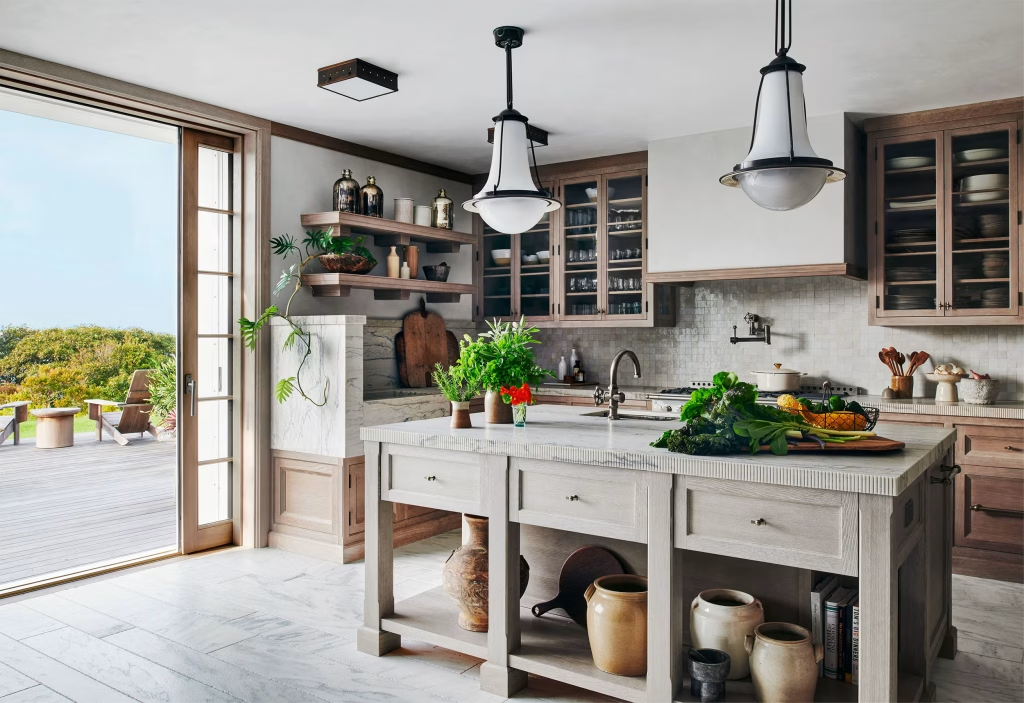
One of the easiest kitchen decor ideas is to organize frequently used countertop items on a decorative tray. A tray creates a visual boundary, making several individual objects look like one intentional arrangement instead of random items scattered around the counter.
Choose a tray made from wood, stone, metal, ceramic, or another material that complements your kitchen. Place practical items such as olive oil, salt, pepper, a utensil holder, or hand soap inside it, then add one decorative element such as a small vase, plant, bowl, or candle where appropriate.
The goal is not to cover the countertop. Leaving some open workspace is important, especially around your main preparation areas. A smaller tray can work particularly well in a compact kitchen because it adds structure without taking over the counter.
For a cozy kitchen, natural wood trays work beautifully with neutral cabinets and warm finishes. In a modern kitchen, a simple stone or metal tray can create a cleaner appearance. If your kitchen already contains several strong finishes, choose a tray with a quiet texture rather than adding another competing pattern.
A well-styled tray can also make cleaning easier because you can move a group of accessories at once when you need to clear the surface. This is one reason functional decoration is often more useful than purely decorative objects.
2. Display Cutting Boards as Warm Kitchen Decor
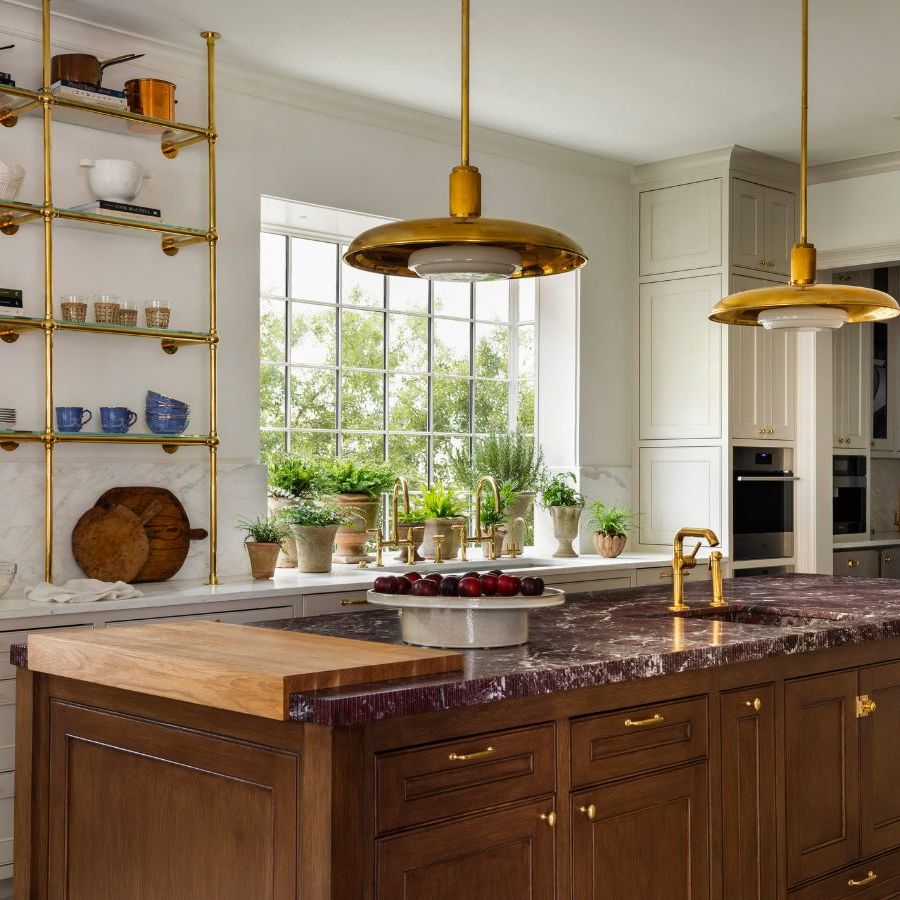
Cutting boards are another excellent example of kitchen items that can function as both practical tools and decoration. Instead of hiding attractive wooden boards inside a cabinet, lean a few against the backsplash or arrange them vertically near an area where they can be safely accessed.
This is one of the most versatile kitchen decor ideas because cutting boards naturally introduce warmth and texture. Wood can soften kitchens dominated by white cabinetry, stone countertops, stainless steel appliances, or other hard surfaces.
Try combining boards with slightly different shapes and sizes rather than displaying a large collection. A large rectangular board can be placed behind a smaller rounded board, creating layers without making the arrangement complicated.
For a more collected appearance, add one small ceramic vessel or a neutral-toned bowl nearby. The combination of wood and ceramic can create a relaxed, lived-in look without requiring expensive accessories.
Just make sure decorative boards are kept clean and stored appropriately if you use them for food preparation. Decorative presentation should never interfere with kitchen hygiene or safe food handling.
3. Add Artwork to an Empty Kitchen Wall

Artwork is frequently associated with living rooms and bedrooms, but it can be equally effective in kitchens. A blank kitchen wall can make the room feel unfinished, while the right artwork can introduce color, personality, and visual interest.
Choose artwork that complements the existing palette instead of selecting a piece solely because it looks attractive by itself. For example, a kitchen with cream cabinets and natural wood might work beautifully with botanical artwork, vintage-inspired food illustrations, abstract art, or muted landscape prints.
Scale is important. A tiny frame on a large empty wall can look disconnected, while an oversized piece may overwhelm a narrow area. Consider the available wall width, nearby cabinets, furniture, and visual weight before deciding on the size.
One of the most useful kitchen decor ideas is to treat the kitchen like any other living space. You do not have to fill every wall with kitchen-themed signs or food-related artwork. A sophisticated painting, abstract print, photograph, or vintage piece can make the kitchen feel more connected to the rest of your home.
If you already use artwork in your bedroom or living room, repeat one color from those spaces in the kitchen. This can create a subtle visual connection throughout an open-concept home.
For more inspiration about creating decorative focal points, you can also explore our article on luxurious focal point bedroom wall ideas. Although it focuses on bedrooms, the same principles of scale, balance, texture, and visual anchoring can be adapted to kitchen walls.
4. Bring Greenery and Natural Elements Into the Kitchen

Plants can instantly make a kitchen feel more welcoming. Even a small amount of greenery can soften the hard surfaces that are common in kitchens, including cabinetry, tile, stone, metal, and glass.
Consider placing a small herb planter near a suitable window, adding a potted plant to an open shelf, or displaying a simple vase of fresh or dried branches. If your kitchen receives limited natural light, choose greenery that is genuinely suitable for those conditions rather than selecting a plant only for its appearance.
Natural materials can extend beyond plants. Wooden bowls, woven baskets, stone accessories, rattan details, ceramic vessels, and linen textiles can all introduce organic texture.
This is particularly useful for kitchens that feel overly sleek. A completely smooth kitchen can sometimes feel visually cold, while introducing a few contrasting textures gives the room more depth.
Among the many kitchen decor ideas available, natural elements are especially adaptable because they work with numerous design styles. They can complement modern kitchens, farmhouse interiors, cottage-inspired spaces, transitional homes, and organic contemporary designs.
The important thing is moderation. A few thoughtfully positioned natural elements usually look more sophisticated than filling every available surface with plants and accessories.
5. Create a Cozy Coffee or Beverage Station

If you regularly make coffee or tea at home, turn that daily routine into part of your kitchen design. A small coffee station can become both a functional zone and an attractive decorative feature.
Start with the items you already use. A coffee maker, mugs, coffee canister, tray, spoon holder, or small shelf may be enough to establish the area. Add one or two decorative elements such as a framed print, small plant, wooden board, or ceramic container.
The most successful kitchen decor ideas often combine function and personality, and a beverage station does exactly that. Instead of placing appliances and supplies randomly around the kitchen, grouping them into one defined area makes the space feel more intentional.
A coffee station can also work in a small kitchen. You do not necessarily need a dedicated cabinet or built-in bar. A section of countertop or a narrow shelf can create the same effect.
For an open-concept kitchen, coordinate the colors of your mugs, containers, and accessories with the rest of the room. A consistent palette prevents the station from appearing visually disconnected.
If you have open shelving, you can display a few attractive mugs above the coffee area. Just avoid overcrowding the shelf because negative space helps the display feel organized.
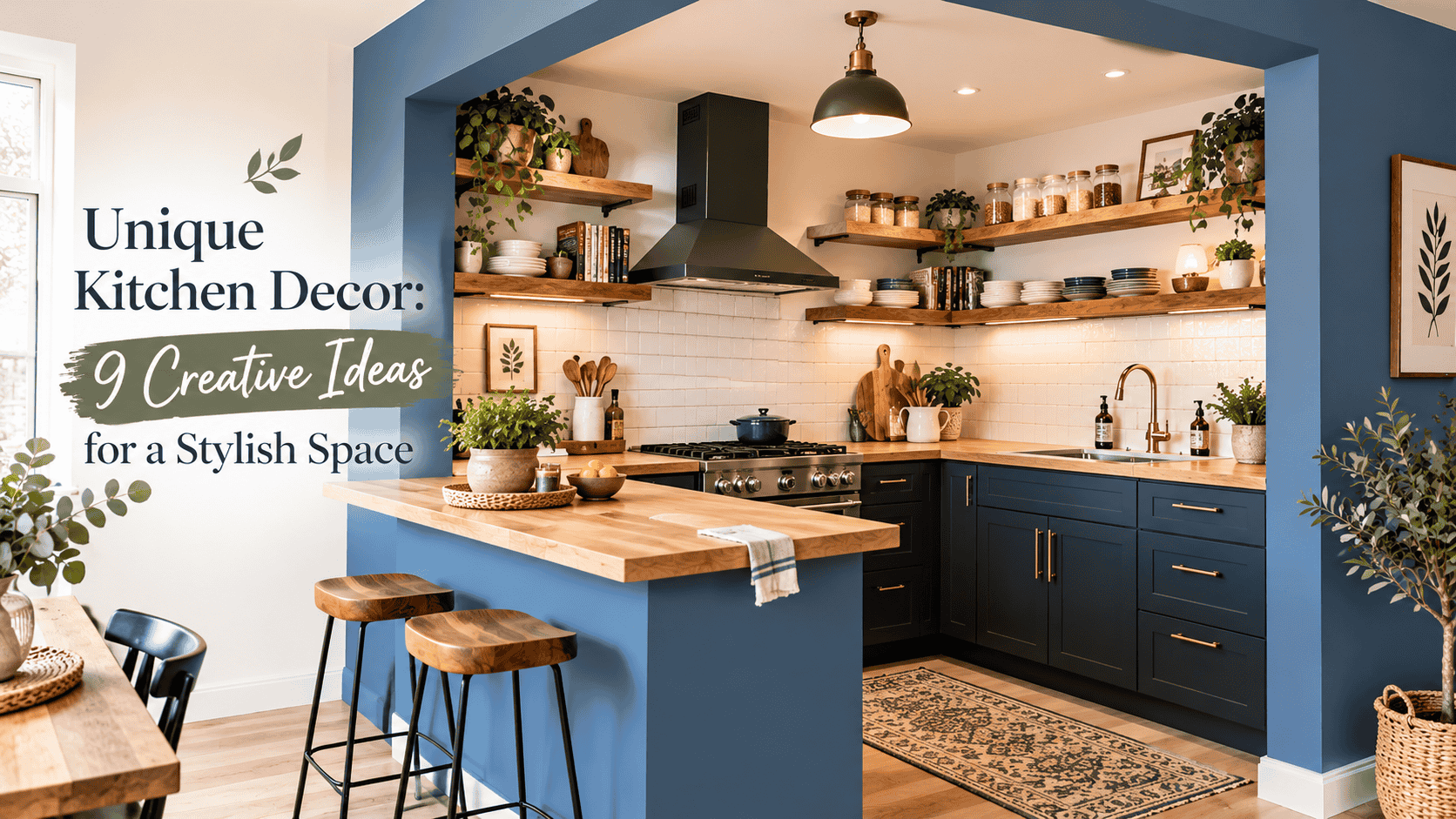
6. Use Open Shelves to Display Beautiful Everyday Items

Open shelving can serve as both storage and decoration. Instead of treating shelves as a place to put as many objects as possible, use them to create a carefully edited display.
Start with larger items such as plates, bowls, serving pieces, cutting boards, or cookbooks. Then introduce smaller decorative elements such as a ceramic vase, framed print, or small plant.
One of the most effective kitchen decor ideas for open shelving is to repeat colors. You do not need every item to match, but choosing two or three dominant tones can create visual cohesion.
For example, a shelf might combine cream-colored ceramics, natural wood, and muted blue accents. Another kitchen might use white dishes, clear glassware, and warm brass details.
Leave empty areas between groups. Negative space gives individual objects room to breathe and prevents the shelf from looking like a crowded storage cabinet.
Open shelving also works particularly well when you want your kitchen to feel personal. Display a few meaningful pieces rather than buying an entire collection of matching decorative objects.
However, practicality matters. Items placed near cooking areas can collect grease and dust more quickly, so choose objects that are easy to clean and avoid displaying anything delicate in a location where it may be exposed to heat or splashing.
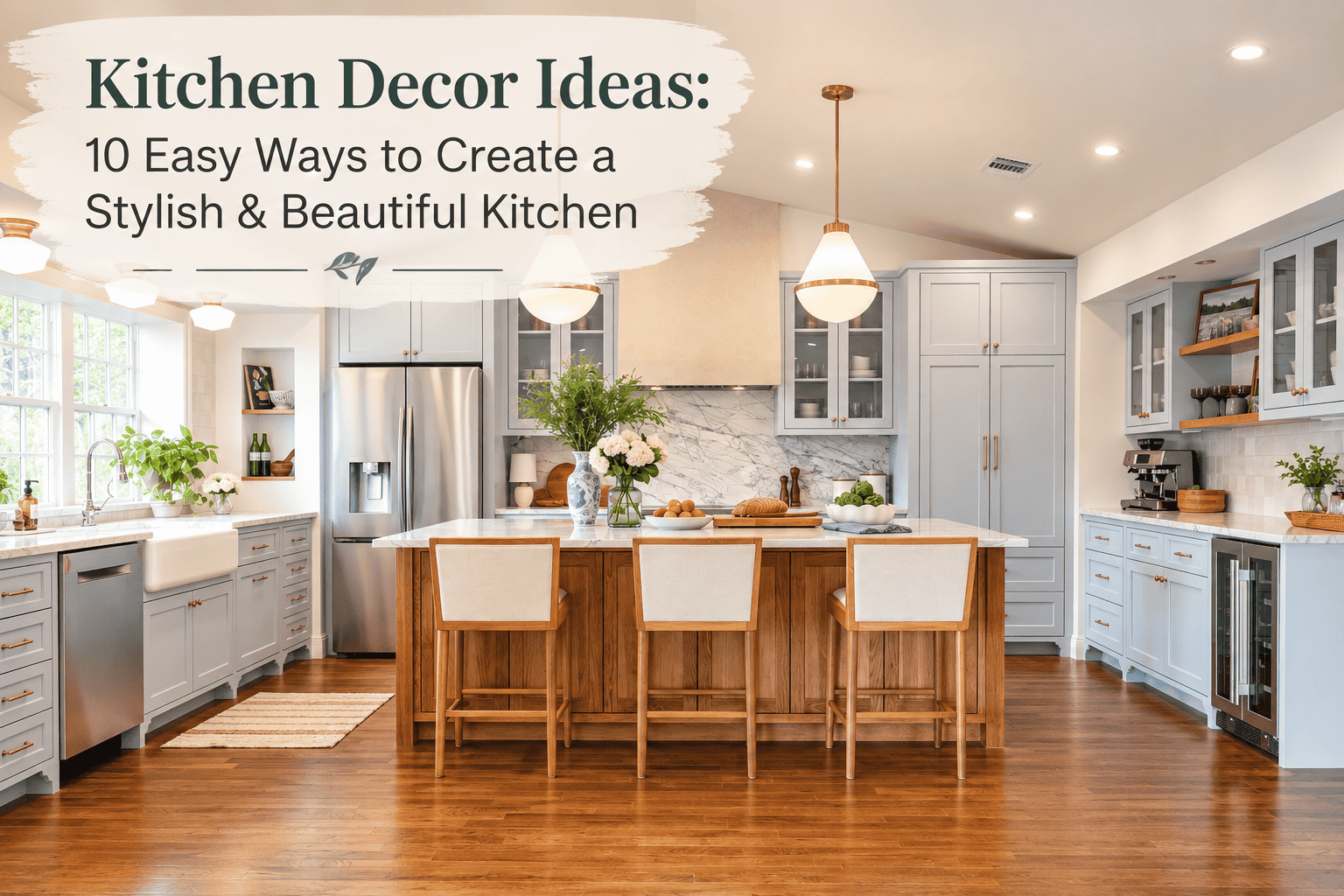
7. Make the Kitchen Island a Decorative Focal Point

The kitchen island naturally attracts attention, making it one of the most important areas to consider when exploring kitchen decor ideas.
A simple centerpiece can make an island feel finished without taking away its functionality. Try a wooden or stone tray containing a bowl of fruit, a vase, or a small collection of practical objects.
The size of the island should determine the scale of the decoration. A large island can handle a substantial centerpiece, while a narrow island may look better with one simple vase or bowl.
You can also use the island’s seating to introduce color and texture. Upholstered stools, woven seats, or simple wooden counter stools can become part of the overall design.
If your kitchen has a large island, avoid placing decorative objects directly in the areas where food preparation commonly happens. The most attractive arrangement is not useful if it constantly has to be moved.
For a more sophisticated look, repeat one island color elsewhere in the room. For example, if the island has a blue accent, you might echo a similar tone in artwork, textiles, ceramics, or small accessories.
A colorful island can also become a statement feature without requiring the entire kitchen to be bold. This allows you to introduce personality while maintaining a balanced overall palette.
8. Add Warm Lighting for a More Inviting Kitchen

Lighting is one of the most powerful kitchen decor ideas because it influences both appearance and atmosphere. A beautifully decorated kitchen can still feel cold if the lighting is harsh or poorly positioned.
Think about lighting in layers rather than relying on one central ceiling fixture. Pendant lighting can define a kitchen island, under-cabinet lighting can illuminate work surfaces, and decorative fixtures can add personality.
If your kitchen includes a dining or breakfast area, a statement pendant or chandelier can help visually define that zone. In a kitchen with limited natural light, carefully placed lighting can make the space feel more welcoming.
Decorative lighting should also fit the scale of the kitchen. A very large fixture may overwhelm a small room, while a tiny pendant can disappear above a large island.
Architectural Digest’s current kitchen coverage similarly emphasizes personalized styling, lighting, artwork, texture, and decorative details as ways to make kitchens feel more distinctive rather than purely utilitarian. Architectural Digest kitchen decor ideas
Think about the color temperature as well. Warm lighting can make wood, cream, beige, brass, and earthy colors feel especially inviting, while cooler lighting can emphasize a crisp modern palette.
If you are making electrical changes, use an appropriately qualified professional and follow local electrical requirements. Decorative decisions should never compromise safety.
9. Introduce a Kitchen Runner for Color and Texture
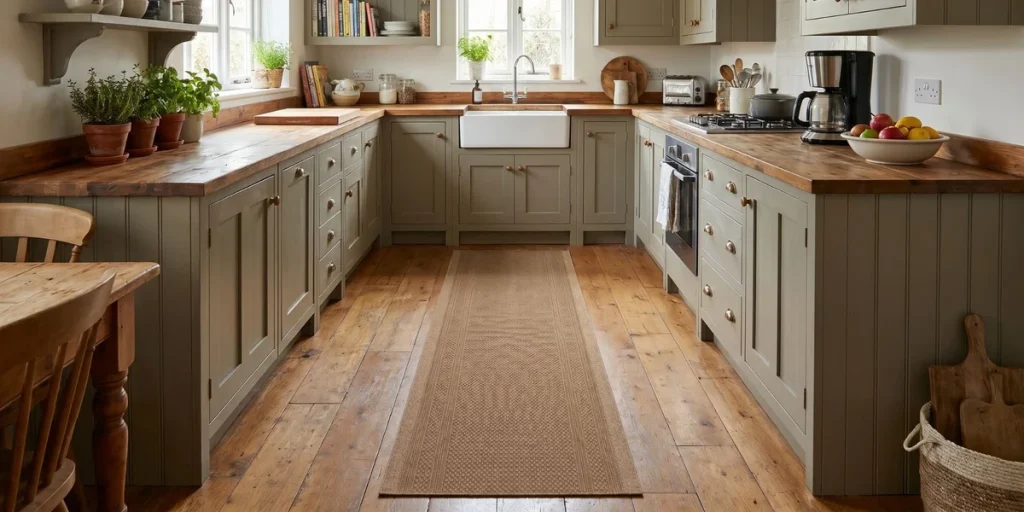
A kitchen runner is an easy way to add softness, pattern, and color without changing permanent finishes. It can also visually connect separate areas of a long kitchen.
A runner works particularly well in galley kitchens or kitchens with a long passage between cabinets. Choose a width that leaves comfortable clearance around the edges rather than covering the entire floor.
When selecting a pattern, consider the rest of the room. If your backsplash and cabinets already contain strong visual details, a subtle runner may create better balance. If your kitchen is mostly neutral, a patterned runner can become a small focal point.
Durability is especially important because kitchen floors experience spills, crumbs, moisture, and frequent foot traffic. Look for a rug or runner that is appropriate for the location and practical to clean.
This is one of the kitchen decor ideas that can change the mood of a room without requiring paint, new cabinets, or construction.
A runner can also help connect the kitchen with nearby rooms. Repeat a color from the runner in a piece of artwork, a bowl, bar stools, or textiles to create a cohesive appearance.
10. Upgrade Small Details Such as Hardware and Towels

Not every kitchen makeover needs a dramatic change. Sometimes the smallest details have the biggest effect because they are repeated throughout the room.
Cabinet pulls, drawer handles, faucets, knobs, and even kitchen towels can influence the overall style. If your existing hardware feels dated, replacing it with a design that better matches your kitchen can create a noticeable visual update.
For example, streamlined hardware can reinforce a modern aesthetic, while traditional pulls may complement a classic or farmhouse-inspired kitchen. Brass, black, nickel, and other finishes can each create a different visual effect, so consider the finishes already present in your kitchen before making changes.
Textiles are another simple option. Coordinated kitchen towels, a runner, seat cushions, or curtains can introduce softness and color without taking up countertop space.
Among these kitchen decor ideas, hardware is particularly useful because it can update the appearance of cabinets without replacing the cabinetry itself. Before purchasing new pieces, measure the existing hardware and check the mounting-hole spacing so replacements are compatible.
For more ideas about using color thoughtfully in home interiors, see our guide to two color combinations for bedroom walls. The same principle of repeating and balancing colors can help you create a cohesive kitchen palette.
11. Mix Modern Pieces With Warm, Personal Accessories
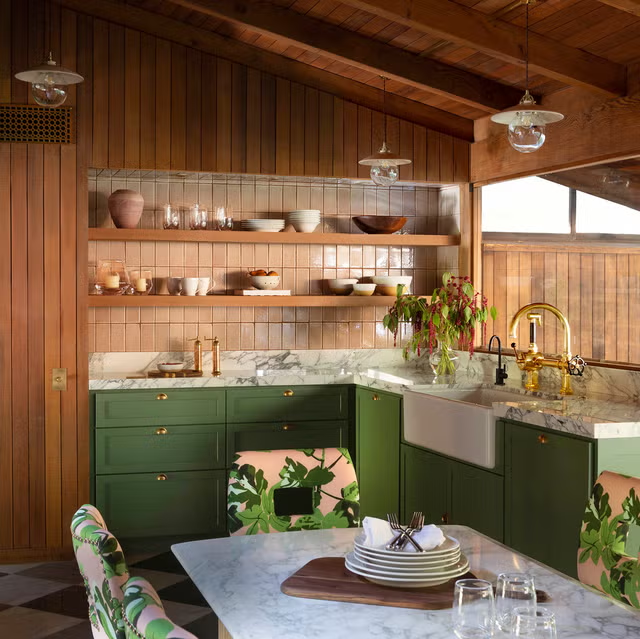
A kitchen can look beautiful and still feel impersonal if every element appears brand new and perfectly coordinated. Mixing modern pieces with vintage, handmade, inherited, or personally meaningful objects can give the space more character.
Try combining sleek cabinets with an old wooden cutting board, contemporary lighting with vintage artwork, modern stools with woven accessories, or streamlined countertops with handmade ceramics.
The goal is not to create a collection of unrelated objects. Choose pieces that share at least one visual connection, such as color, material, shape, or texture.
This is one of the most personal kitchen decor ideas because there is no single correct formula. Your kitchen should reflect how you live and what you enjoy.
A few meaningful objects can make the space feel more authentic than a room filled with generic decorations. A ceramic bowl from a local artist, a framed family recipe, a vintage serving piece, or a favorite cookbook can all become part of the kitchen’s story.
Architectural Digest also emphasizes personalization and using objects that reflect the homeowner’s style and lifestyle rather than following a rigid decorating theme. Architectural Digest kitchen decor article
This approach is particularly useful if your kitchen already has a strong architectural foundation. Instead of trying to change everything, allow your accessories to add personality around the existing features.
How to Make a Small Kitchen Feel Stylish

Small kitchens require more editing because every decorative object competes with limited workspace. The best kitchen decor ideas for small rooms therefore focus on visual impact without adding unnecessary clutter.
Start by choosing one or two focal areas. An attractive wall, open shelf, pendant light, or small island centerpiece can provide enough personality without decorating every surface.
Vertical space is another opportunity. Wall-mounted shelves, artwork, rails, and carefully selected storage can draw the eye upward and make use of areas that would otherwise remain empty.
Light colors can also help a small kitchen feel open, although you do not have to use an all-white palette. Soft beige, warm white, light gray, muted blue, pale wood, and other restrained tones can maintain an airy feeling while still providing warmth.
Mirrors or reflective surfaces can also contribute to a brighter appearance, particularly when positioned where they can reflect available light.
The most important rule is to preserve functional workspace. A small kitchen can quickly feel even smaller when every counter is covered with decorative objects.
Kitchen Decor Ideas for a Budget Friendly Refresh

You do not need to replace your cabinets or countertops to make a kitchen feel more attractive. Some of the most effective kitchen decor ideas involve editing what you already own and adding a few carefully chosen elements.
Start by removing objects that you no longer use. Decluttering can make the kitchen feel larger before you spend anything.
Next, rearrange existing artwork, cookbooks, ceramics, cutting boards, plants, or serving pieces. Moving objects between rooms can sometimes create a completely different look without purchasing new decor.
If you have a little more budget available, prioritize high-visibility details such as cabinet hardware, lighting, textiles, artwork, or a runner. These elements can change the atmosphere without requiring structural work.
Paint can also make a significant visual difference, but test samples before committing. Lighting conditions, surrounding finishes, and the time of day can change how a color appears.
Good Housekeeping’s current kitchen decorating guide similarly emphasizes that kitchen updates can range from simple changes to larger projects and specifically covers ideas across different budgets. Good Housekeeping kitchen decorating ideas
Kitchen Decor Ideas for Different Decorating Styles
Your decorating style should influence which accessories, colors, materials, and patterns you choose. The same kitchen can feel completely different depending on how those elements are combined.
Modern Kitchen Decor
Modern kitchen decor ideas usually work best when accessories are edited and intentional. Choose clean-lined objects, simple artwork, streamlined lighting, and a limited color palette.
Instead of filling shelves with many small items, display a few larger pieces with enough empty space around them. Wood, metal, glass, stone, and ceramic can provide contrast without making the room feel busy.
Farmhouse Kitchen Decor
Farmhouse kitchens benefit from warmth and character. Natural wood, woven baskets, vintage-inspired artwork, ceramic pieces, simple textiles, and practical kitchen accessories can create a relaxed atmosphere.
Avoid turning every surface into a farmhouse display. A restrained mix of old and new usually looks more natural than a room filled with matching themed signs.
Cozy Kitchen Decor
For a cozy kitchen, focus on texture and warmth. Wooden accessories, soft textiles, warm lighting, greenery, rugs, ceramics, and comfortable seating can all contribute to the atmosphere.
Color also matters. Warm neutrals, earthy shades, muted blues, soft greens, and natural wood can make the room feel comfortable without requiring dramatic changes.
Minimalist Kitchen Decor
Minimalist kitchen decor ideas focus on quality, proportion, and negative space rather than quantity.
Choose a few accessories that have a clear purpose or strong visual presence. A single vase, large artwork, carefully arranged cutting boards, or one beautiful pendant can have more impact than many small decorative objects.
If you enjoy decorating other areas of your home, you can find additional inspiration in our formal living room ideas and bedroom decor ideas guides. These spaces use many of the same principles of balance, focal points, texture, and intentional styling.
Common Kitchen Decorating Mistakes to Avoid
One common mistake is decorating every available surface. A kitchen needs working space, and excessive accessories can make even a large room feel crowded.
Another mistake is ignoring scale. Small accessories can disappear on a large island, while oversized objects can overwhelm a narrow counter or shelf. Always consider the size of the surrounding furniture and architecture.
Using too many unrelated colors can also make the room feel chaotic. You do not have to use only one color, but repeating a few tones throughout the kitchen creates stronger visual cohesion.
It is also important to think about maintenance. Decorative objects placed close to cooking surfaces can collect grease and dust. Choose materials and locations that you can realistically keep clean.
Finally, avoid decorating solely according to trends. Current inspiration can be useful, but your kitchen should still suit your lifestyle and the architecture of your home. Martha Stewart’s recent kitchen coverage similarly emphasizes personal style, useful objects, lighting, natural elements, artwork, and carefully selected accessories rather than decoration for its own sake. Martha Stewart kitchen decor ideas
How to Keep Kitchen Decor Functional
The most successful kitchen decor ideas are usually the ones that work with everyday life. A beautiful kitchen should still allow you to prepare food, clean surfaces, store equipment, and move comfortably through the room.
Whenever possible, let practical objects become part of the decoration. Cutting boards, cookbooks, attractive ceramics, wooden utensils, baskets, fruit bowls, mugs, and serving pieces can all contribute to the visual design while remaining useful.
Keep decorative objects away from areas where they could interfere with cooking, heat, ventilation, or food preparation. The exact placement will depend on your kitchen layout and appliances.
Think of decoration as a layer rather than a replacement for function. Start with the kitchen’s practical needs, then add visual interest around them.
This mindset makes it much easier to create a room that feels polished without becoming difficult to use.
How to Create a Stylish and Cozy Kitchen Without Remodeling
A full renovation is not the only way to improve the appearance of your kitchen. In many cases, the most noticeable changes come from adjusting color, lighting, accessories, textiles, and organization.
Start by identifying what feels wrong about the current room. Does it feel too cold? Add warmer materials and lighting. Does it feel cluttered? Edit the countertops and open shelving. Does it feel empty? Introduce artwork or a carefully chosen focal point.
If the room feels outdated, consider smaller visual updates before replacing major components. Hardware, lighting, paint, rugs, artwork, and decorative accessories can all change the character of a kitchen.
For renters, prioritize removable and portable options. Artwork, textiles, freestanding storage, countertop accessories, and other non-permanent changes can add personality without making structural alterations.
The best kitchen decor ideas are ultimately those that solve a real problem while making the space more attractive.
Frequently Asked Questions About Kitchen Decor Ideas
What should I put on my kitchen counters for decoration?
Choose a small number of useful and attractive objects, such as a wooden cutting board, fruit bowl, decorative tray, ceramic utensil holder, cookbook, small plant, or vase. Keep enough open space for food preparation and daily activities.
How can I decorate my kitchen without remodeling?
Start with affordable visual changes such as artwork, lighting, cabinet hardware, textiles, rugs, plants, countertop accessories, and open-shelf styling. Rearranging existing items and decluttering can also create a noticeable improvement without construction.
How do I make a small kitchen look stylish?
Use vertical space, keep countertops visually clear, introduce a few well-scaled decorative pieces, and choose colors that work with the available light. Avoid overcrowding shelves and counters because excessive decoration can make a small kitchen feel even smaller.
What should I put on a kitchen island?
A tray with a bowl, vase, fruit, cutting board, or small decorative arrangement can work well. The size of the centerpiece should match the island while leaving enough open space for practical use.
How can I make my kitchen feel cozy?
Use warm lighting, natural wood, greenery, textiles, artwork, rugs, ceramics, and personal accessories. A combination of different textures can make a kitchen feel more inviting without requiring major renovations.
How can I decorate a kitchen on a budget?
Start by decluttering and rearranging items you already own. Then prioritize inexpensive, high-visibility changes such as artwork, towels, rugs, plants, cabinet hardware, or decorative storage. Focus spending on the areas that have the greatest visual impact.
What are the best kitchen decor ideas for a modern kitchen?
Modern kitchens generally benefit from simple artwork, streamlined accessories, carefully edited open shelving, statement lighting, natural textures, and a restrained color palette. The goal is to create visual interest without excessive decoration.
Should kitchen decor match the rest of the house?
It does not need to match exactly, but repeating colors, materials, or design details can help an open-concept home feel cohesive. The kitchen can have its own personality while still connecting visually with nearby rooms.
Final Thoughts on Kitchen Decor Ideas
The best kitchen decor ideas do not require a perfect kitchen, an unlimited budget, or a complete renovation. A thoughtful combination of functional objects, artwork, natural materials, lighting, textiles, greenery, and personal accessories can make a noticeable difference.
Start with the areas that matter most. If your counters feel cluttered, organize them with a simple tray and remove unnecessary objects. If your walls feel empty, add artwork. If the room feels cold, introduce wood, textiles, plants, and warmer lighting.
For a small kitchen, focus on scale and negative space. For a large kitchen, create clear focal points instead of decorating every corner. If you are renting, concentrate on removable and portable changes.
Most importantly, let your kitchen reflect the way you actually live. A beautiful space should still be comfortable, practical, and easy to maintain.
With the right approach, these 11 kitchen decor ideas can help you create a kitchen that feels stylish, personal, functional, and cozy without losing the everyday practicality that makes the kitchen such an important part of the home.


2 thoughts on “11 Kitchen Decor Ideas to Make Your Space Feel Stylish & Cozy 2026”