Discover 11 stylish living room table decor ideas for 2026, with practical tips for coffee tables, side tables, centerpieces, color, texture, and clutter free styling.
Decorating a living room table may seem like a small detail, but the right arrangement can completely change how the entire room feels. A thoughtfully styled table can connect your sofa, rug, lighting, artwork, and accessories while giving the living room a finished and welcoming appearance. The challenge is knowing what to put on the table, how much to use, and where each piece should go.
The best living room table decor is not simply a collection of beautiful objects. It should balance style with everyday function. Your table may need to hold drinks, books, remotes, snacks, candles, or decorative accessories, so the arrangement needs to look attractive without making the surface difficult to use.
In this guide, you will discover 11 practical decor living room table ideas for 2026, including coffee table styling, trays, books, greenery, vases, candles, sculptural accessories, small space solutions, and elegant arrangements. You will also learn how to choose the right pieces for your table’s size and shape and how to avoid the cluttered look that can make otherwise beautiful living room table decor feel unfinished.
What Makes Good Living Room Table Decor?
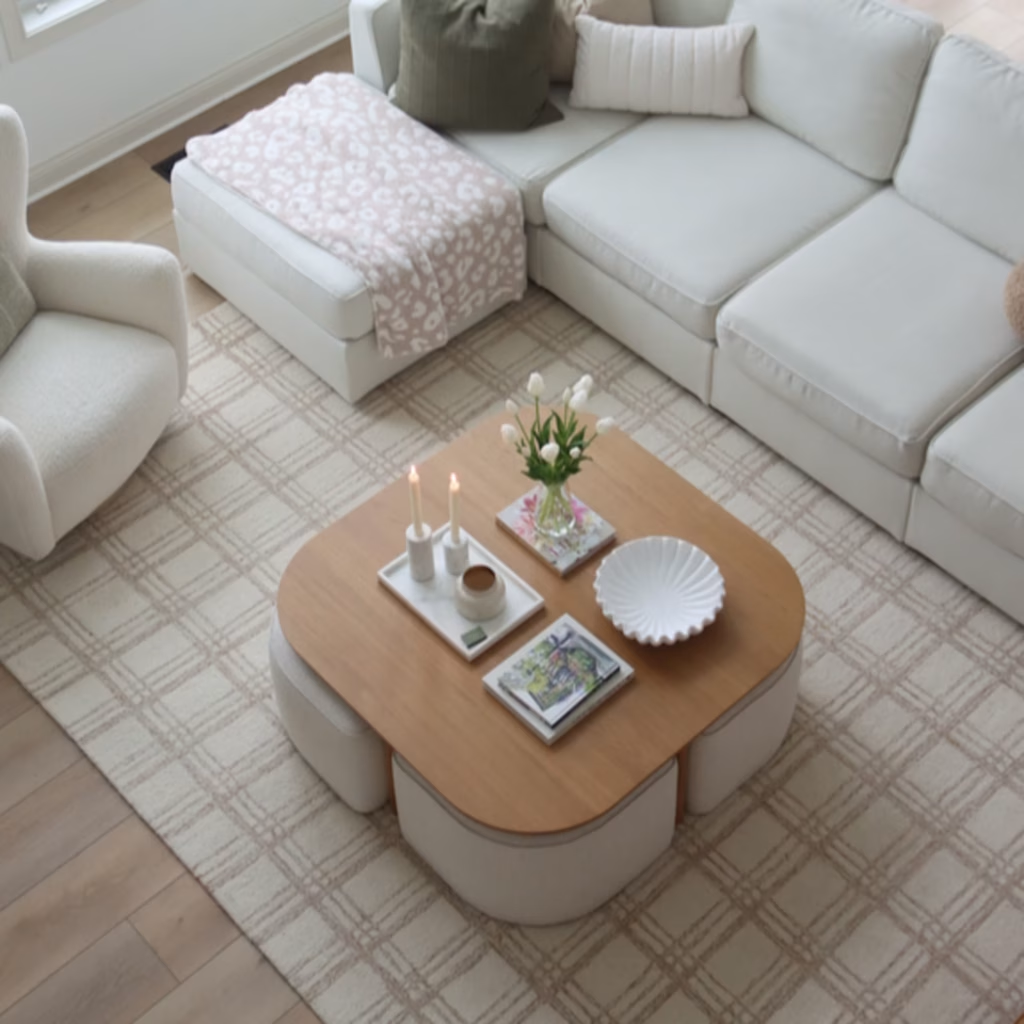
Good living room table decor begins with balance. The goal is not to cover every inch of the tabletop. Instead, the arrangement should create a visual focal point while leaving enough open space for everyday activities. A beautifully decorated table still needs to function as part of the living room.
Before choosing decorative objects, consider the table itself. Its shape, material, height, and size should influence the arrangement. A large rectangular coffee table can handle several smaller groupings, while a small round table may look better with one central arrangement. A narrow console table needs a different approach from a substantial coffee table positioned in front of a sectional.
The surrounding room matters just as much. Your decor living room table arrangement should relate to the colors, textures, and materials already present. If your living room has warm wood furniture, a ceramic vase, woven tray, or natural stone accessory can reinforce that warmth. If the room is contemporary and minimalist, fewer objects with stronger shapes may create a better result.
How to Decorate a Living Room Table Without Clutter
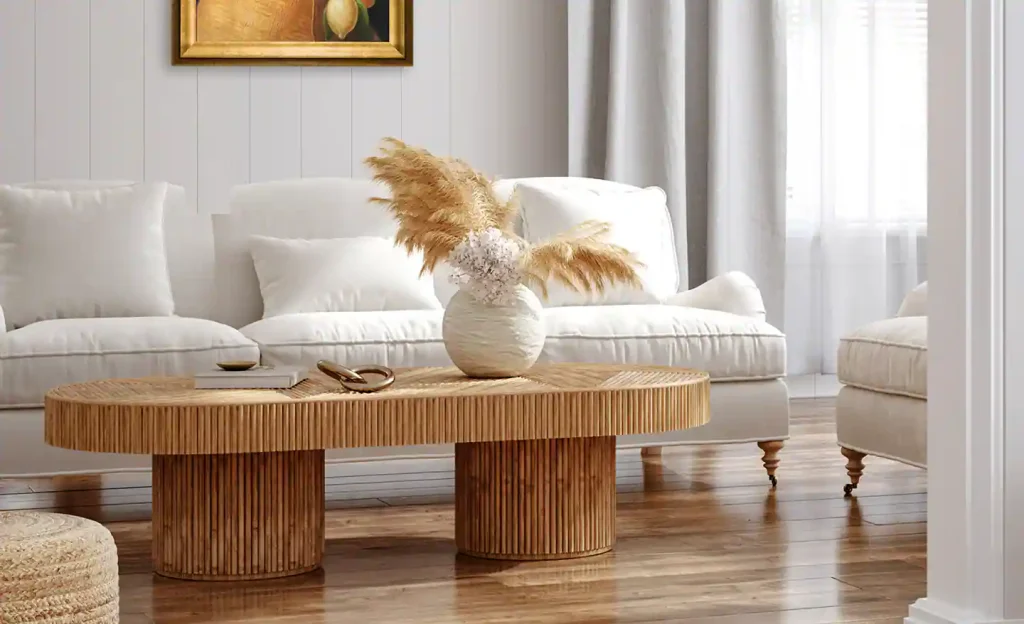
The most important rule for living room table decor is to leave breathing room. A table that is completely covered with books, candles, bowls, plants, and accessories can quickly become difficult to use and visually overwhelming. Negative space is not wasted space; it gives the decorative pieces around it more impact.
Start by choosing one anchor object. This could be a decorative tray, a substantial vase, a stack of coffee-table books, or a sculptural bowl. Once the anchor is established, add one or two supporting elements with different heights or shapes. This creates visual hierarchy instead of making every object compete for attention.
A recent 2026 House Beautiful guide on coffee-table styling similarly emphasizes keeping arrangements practical for everyday life and using a mixture of trays, books, organic elements, decorative objects, and open space. House Beautiful: Coffee Table Styling Advice
The same principle works across different types of decor living room table arrangements. You do not need a complicated formula. Think about the visual weight of each object, vary the heights, connect the colors to the rest of the room, and then remove anything that feels unnecessary.
11 Living Room Table Decor Ideas for 2026
The following living room table decor ideas are designed to work across modern American homes, apartments, family rooms, and more formal living spaces. You can copy an arrangement closely or use each concept as a starting point for your own decorating style.
1. Create a Layered Tray Arrangement
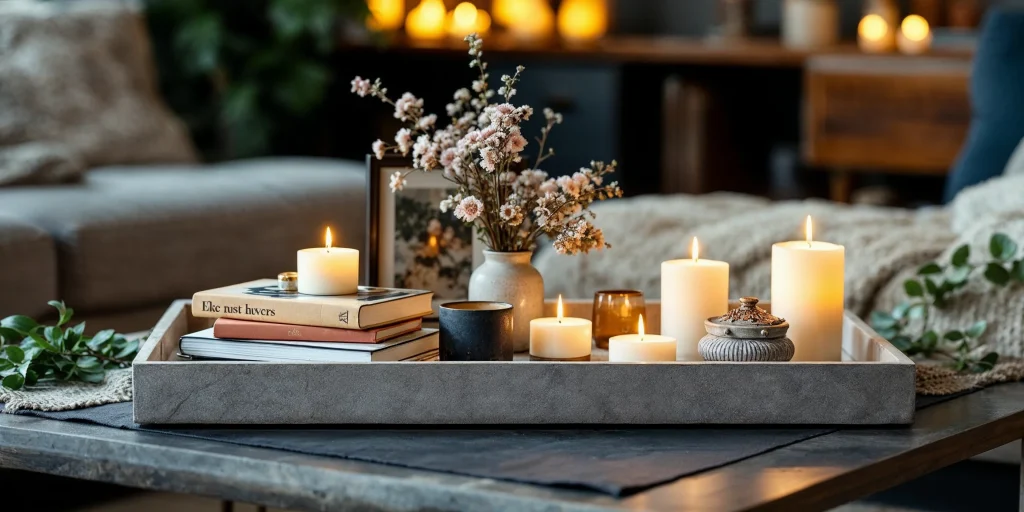
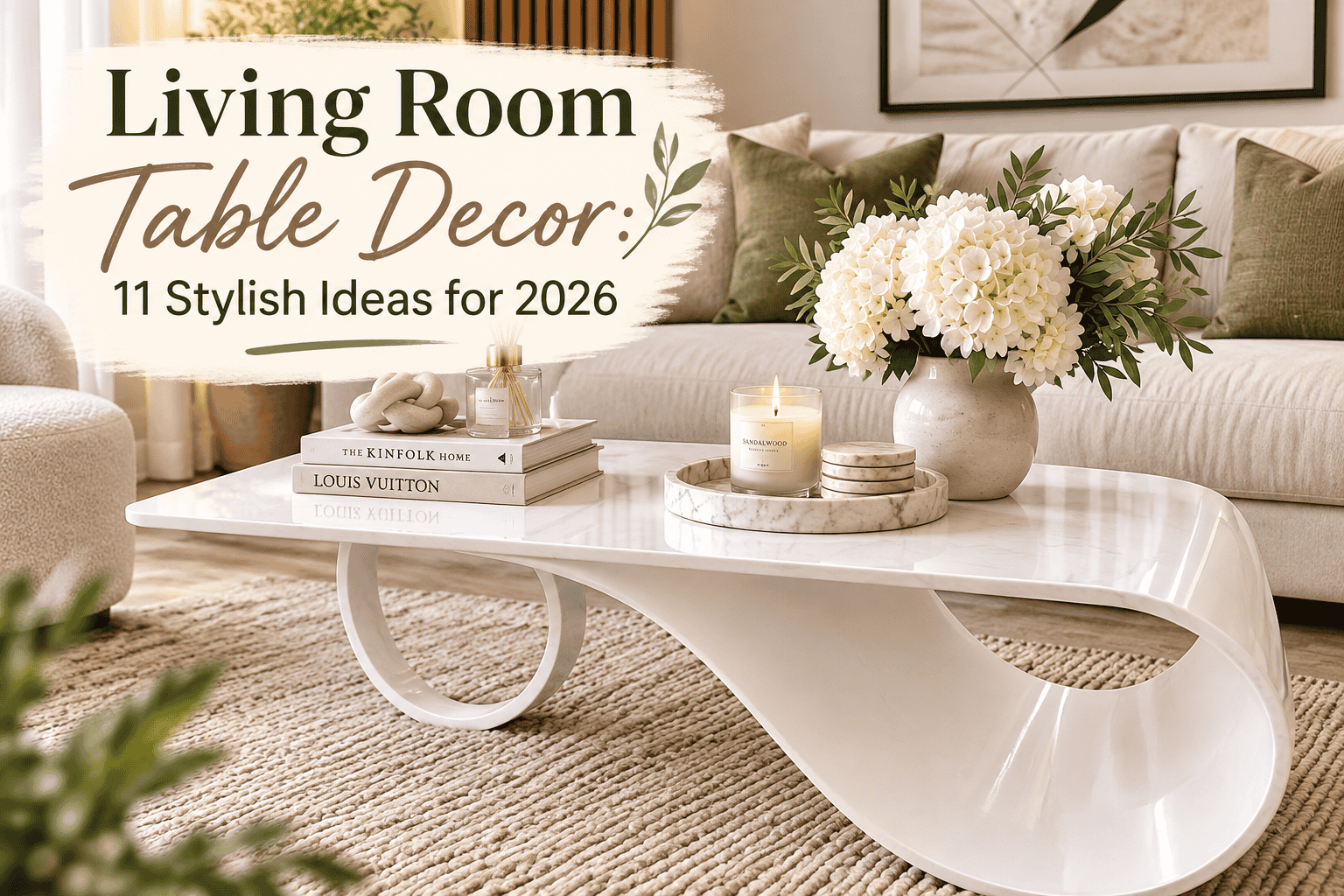
A decorative tray is one of the easiest ways to organize decor living room table pieces while creating a polished focal point. A tray visually groups smaller objects together, making the arrangement feel intentional instead of scattered across the tabletop.
For a rectangular or square coffee table, position the tray slightly off-center rather than automatically placing it directly in the middle. Add a small stack of coffee-table books, a vase, a candle, or a decorative bowl. The different shapes create visual interest while the tray provides a clear boundary for the arrangement.
A tray is especially useful when the living room table is used every day. If you need additional space for drinks, snacks, or a laptop, the entire arrangement can often be moved or lifted together. This makes tray-based living room table decor both decorative and practical.
Choose the tray according to your room’s style. Natural wood works beautifully with farmhouse, rustic, and organic interiors. Marble can create a more luxurious appearance, while metal or lacquered trays can complement modern spaces. Woven trays introduce texture and are particularly useful in relaxed or coastal-inspired rooms.
2. Stack Coffee Table Books for Height and Personality
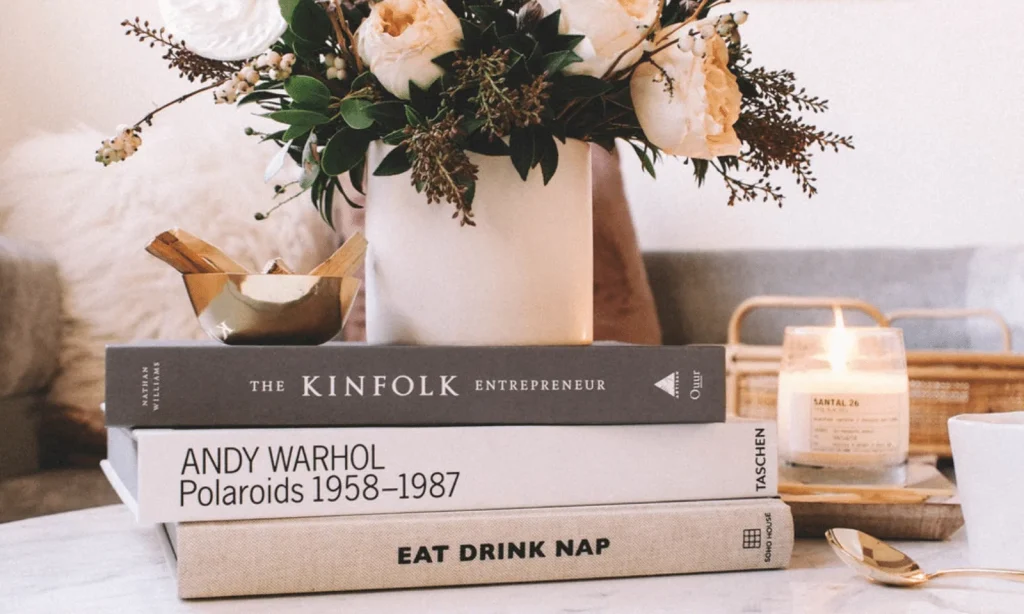
Coffee-table books are a classic choice for living room table decor because they combine decoration with personality. Books can introduce color, texture, height, and visual interest without making the table look overly accessorized.
Rather than creating one extremely tall stack, consider two smaller stacks on a larger table. Place a decorative object on one stack and leave another stack open. The variation creates an asymmetrical arrangement that feels relaxed and collected.
Choose books that genuinely interest you or that connect with the room. Books about architecture, travel, photography, art, fashion, gardens, or design can become conversation pieces. Neutral covers work well in restrained interiors, while colorful covers can introduce controlled accents into a neutral living room.
For a more casual look, leave one favorite book open to an attractive photograph or page. House Beautiful’s current coffee-table inspiration also demonstrates how open books can create a lived-in appearance rather than making the room feel like a staged showroom. House Beautiful: Coffee Table Decor Ideas
The key is not to use books simply because every table seems to have them. They work best when their colors, sizes, and subjects contribute to the overall room. Thoughtful book styling can make decor living room table arrangements feel personal rather than generic.
3. Add a Vase With Greenery or Flowers
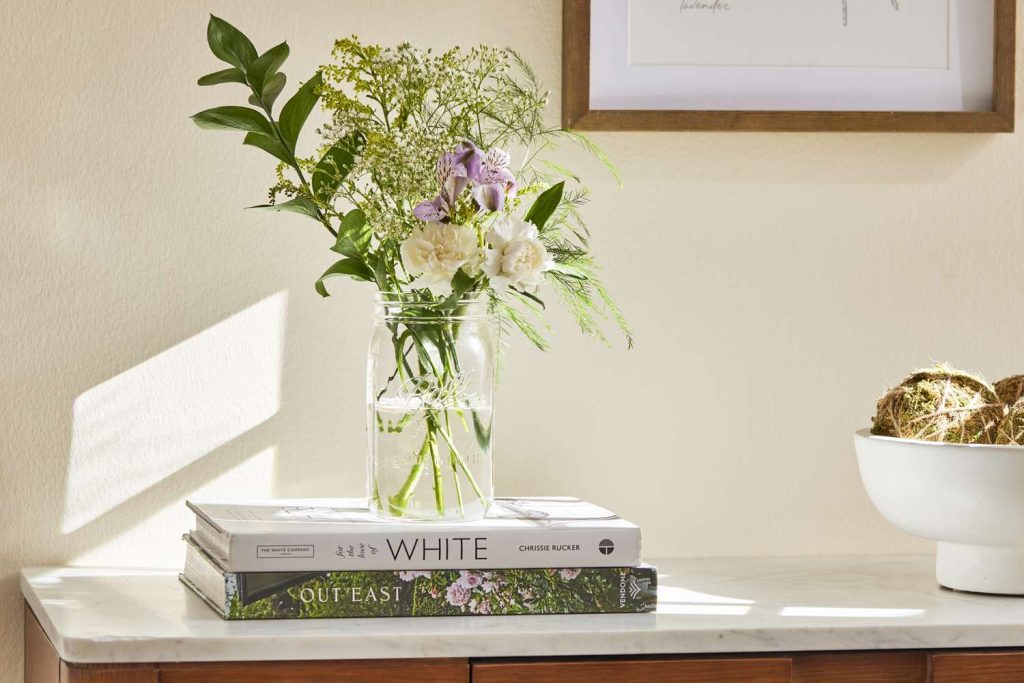
A vase is one of the most versatile elements you can use for living room table decor. It introduces vertical height and provides an opportunity to bring natural color and organic shapes into a room dominated by furniture and hard surfaces.
For a contemporary living room, try a simple ceramic or glass vase with a small arrangement of branches. For a traditional room, a more decorative vessel with flowers can create an elegant centerpiece. In a relaxed interior, a handmade ceramic or textured vase can add character.
The height of the arrangement should relate to the table and surrounding furniture. A very tall arrangement may interfere with conversation across a coffee table, while a very short object may disappear visually. For a frequently used coffee table, low or medium-height greenery is often easier to live with.
You can also use faux greenery when maintaining fresh flowers is inconvenient. The goal is to introduce an organic element that softens the harder materials around the table.
Greenery works especially well when it repeats a natural element already present in the room. A plant near the window, wooden furniture, woven basket, or natural-fiber rug can all provide visual connections to the greenery on the table.
4. Style a Decorative Bowl as a Functional Centerpiece
A decorative bowl can make an excellent centerpiece for living room table decor, particularly when you want something attractive but practical. It can hold small objects such as remote controls, coasters, or other everyday items while still functioning as part of the room’s design.
Choose a bowl that provides contrast against the table. A light ceramic bowl can stand out beautifully on dark wood, while a darker stone or metal bowl can create definition against a light tabletop.
Shape matters as well. A rounded bowl can soften a room dominated by rectangular furniture. If your living room already contains many curved forms, a structured geometric bowl may introduce useful contrast.
For a large coffee table, place the bowl inside a tray or combine it with a small book stack. For a smaller table, allow the bowl to stand alone. This is a good example of why decor living room table should be adapted to the available surface rather than copied from a photograph.
5. Use Candles to Add Warmth and Height
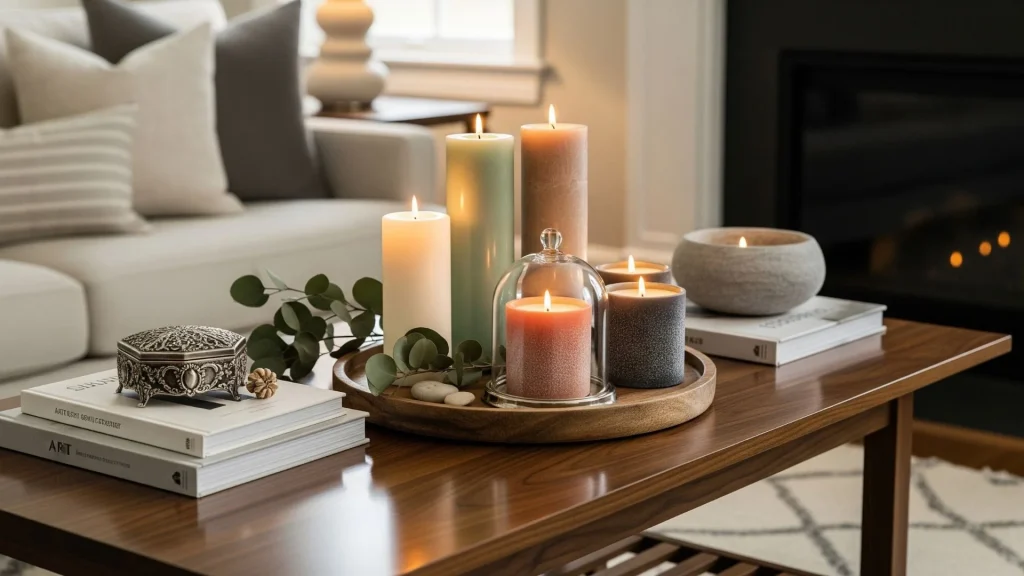
Candles can make living room table decor feel warmer, especially during evenings when the overhead lights are turned down. They also introduce vertical height and can create a softer atmosphere.
Instead of placing one candle randomly on the table, consider grouping two or three candles with different heights. You can use candleholders, glass vessels, or sculptural containers depending on the room’s style.
For a sophisticated appearance, repeat a finish already present in the room. Brass candleholders can connect with brass lighting or hardware. Black candleholders can echo black picture frames or furniture legs. Ceramic candles can complement pottery and other handcrafted accessories.
Safety should always come first. Keep burning candles away from curtains, books, greenery, and other flammable materials, and never leave an open flame unattended. If your household includes young children or pets, flameless candles can provide a similar visual effect with fewer concerns.
Candles also work particularly well in seasonal living room table decor because they can be refreshed without replacing the entire arrangement. Change the vessel, scent, or surrounding accent pieces while keeping the basic styling structure.
6. Mix Different Heights and Shapes
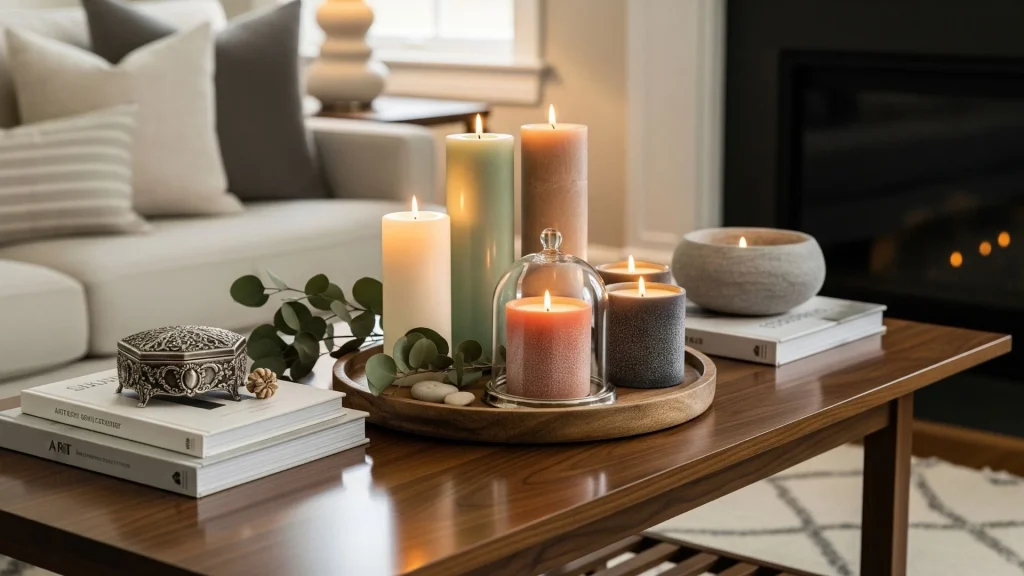
One of the easiest ways to make decor living room table arrangements look more professionally styled is to vary the height and shape of the objects.
Imagine placing three objects of exactly the same height next to one another. The result can look flat and repetitive. Instead, combine a low bowl, medium-height vase, and taller candleholder or sculpture.
The objects should not necessarily match. In fact, too much matching can make the arrangement feel like a purchased set rather than a collected composition. What matters is that the pieces share some relationship through color, material, shape, or style.
A useful way to create balance is to imagine a triangle across the arrangement. One object can provide the tallest point, another can sit at medium height, and a third can remain low. This creates movement for the eye.
Different shapes are equally important. If your coffee table is rectangular and your sofa has straight lines, rounded accessories can soften the composition. If the room contains many curved pieces, geometric accessories can introduce contrast.
7. Create a Minimalist Living Room Table Arrangement
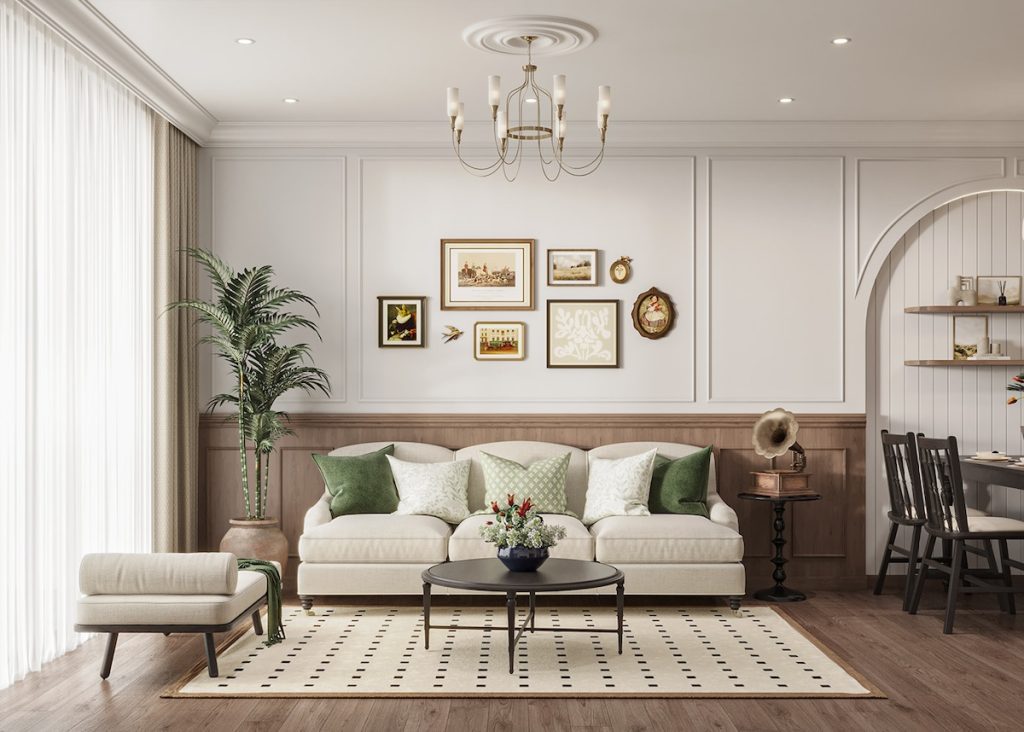
Minimalist living room table decor does not mean leaving the table completely empty. It means being selective about what deserves to remain visible.
Start with one strong object, such as a sculptural vase, large bowl, ceramic object, or carefully selected book stack. Then ask whether another item genuinely improves the arrangement. If it does, add it. If it simply fills empty space, leave it out.
This approach works especially well in modern apartments and smaller living rooms because visual clutter can make limited space feel even smaller.
A minimalist table can also highlight the table itself. A beautiful marble, walnut, glass, or stone tabletop may deserve to remain partially visible rather than being hidden beneath accessories.
The result should feel calm and intentional rather than unfinished. The difference comes from the quality, scale, and placement of the few objects you choose.
8. Style a Small Living Room Table for Maximum Function
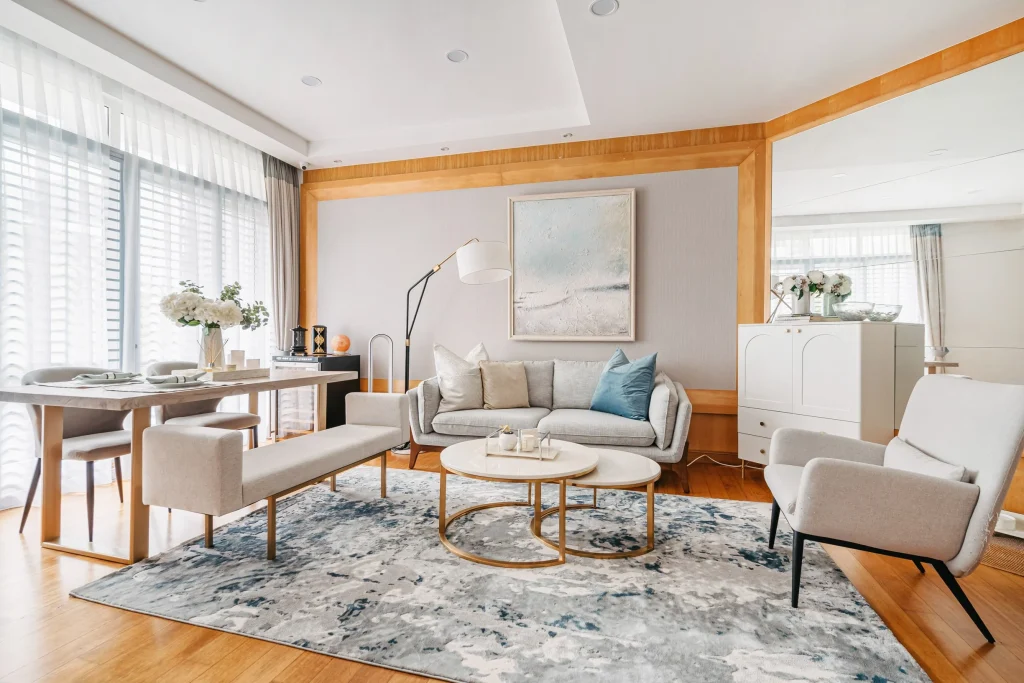
Small tables require more discipline than large tables because every decorative piece occupies a meaningful percentage of the available surface.
For a small coffee table, start with one compact tray and one low decorative object. Alternatively, use a small stack of books topped with a miniature vase or bowl. Keep the arrangement low enough that it does not interrupt sightlines across the room.
If your living room table is beside a sofa or accent chair, functionality becomes even more important. A small lamp, coaster, book, or decorative box may be more useful than several purely decorative accessories.
For apartments and compact American living rooms, nesting tables can provide flexibility. When additional surface space is needed, the smaller table can be pulled out. When it is not needed, the tables can be nested to reduce visual bulk.
Small-space living room table decor should therefore prioritize flexibility. Every item should earn its place by contributing either beauty, function, or ideally both.
9. Combine Natural Materials for a Warm Look

Natural materials can make living room table decor feel warm, sophisticated, and connected to the rest of the room. Wood, stone, ceramic, woven fibers, linen, and greenery can be combined to create layers without relying on excessive color.
For example, a wooden tray can hold a ceramic bowl and a small plant. A stone coffee table can be softened with a woven tray and a stack of books. A glass table can gain warmth from natural wood, linen-covered books, or greenery.
Texture is particularly valuable when the color palette is neutral. A beige room does not have to look boring if it contains varied materials. Smooth stone, rough ceramic, natural wood grain, woven fibers, and soft textiles can all create visual interest.
The key is contrast. If every item has the same smooth finish, the arrangement may feel flat. Mixing tactile surfaces gives the eye more to discover.
This approach is especially effective for organic-modern, farmhouse, coastal, Scandinavian-inspired, and transitional interiors.
10. Use Sculptural Decor for a Modern Statement

If your goal is more contemporary living room table decor, consider replacing several small accessories with one sculptural piece.
A sculptural object can be made from ceramic, stone, metal, wood, glass, or another material that complements the room. Its unusual shape can become a focal point without requiring a large number of additional accessories.
Place the sculpture where it can be appreciated from multiple angles, particularly if your coffee table sits in the center of the room.
On a large table, pair the sculpture with books or a low tray. On a smaller table, let the sculpture stand alone.
The most successful sculptural arrangements usually include some contrast. A smooth sculpture can work against a textured tray. A heavy stone object can be balanced with lightweight greenery. A geometric sculpture can soften a room full of traditional curves.
Modern decor living room table does not need to be cold or sterile. Warm materials and natural textures can make sculptural styling feel sophisticated while remaining comfortable.
11. Coordinate the Table With the Rest of the Living Room
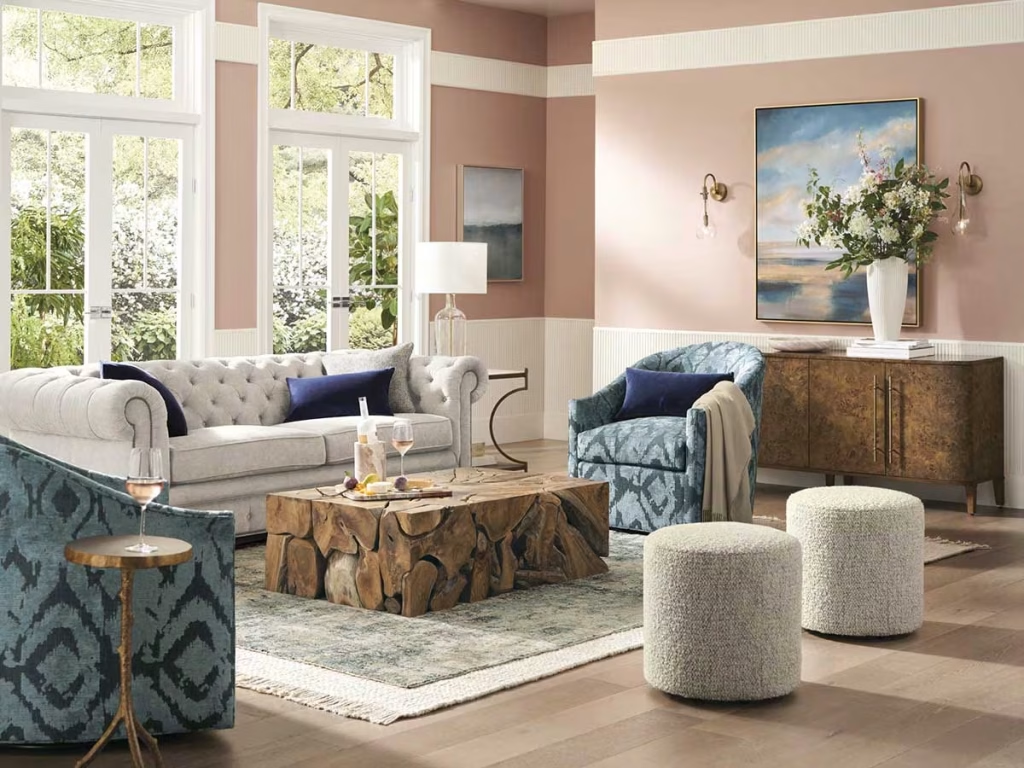
The final idea is perhaps the most important: treat the table as part of the room rather than an isolated decorating project.
Your living room table decor should connect with at least a few elements already present in the room. Look at the rug, sofa, curtains, artwork, lighting, flooring, and nearby furniture. Then identify colors or materials that can be subtly repeated on the table.
For example, if your rug contains warm brown accents, a wooden tray or brown-toned book cover can create a visual connection. If your lighting has brass details, a small brass accessory can repeat the finish. If your room contains greenery, a small plant on the table can reinforce that natural element.
This does not mean everything should match. Matching every accessory can make a room look overly coordinated. Instead, repeat selected colors, materials, or shapes so the room feels connected.
A recent House Beautiful designer guide makes a similar point: the coffee table should relate to the sofa, rug, shelving, and other elements rather than being treated as an isolated decorative display. House Beautiful: Designer Coffee Table Styling Advice
Living Room Table Decor Ideas for Different Table Shapes
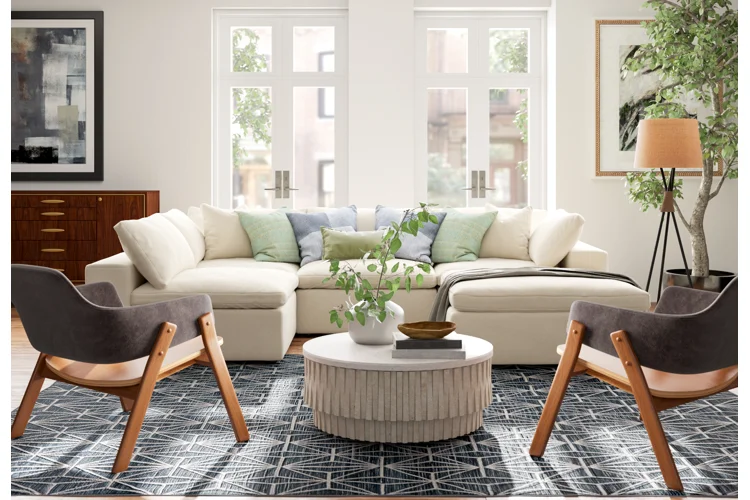
The shape of your table should influence the arrangement. A rectangular coffee table provides more horizontal space and can support multiple visual zones. You might create one arrangement toward one end and a second smaller grouping toward the opposite side, leaving a clear area between them.
A round table usually benefits from a more centralized arrangement. A tray, bowl, vase, or compact grouping can emphasize the circular shape instead of fighting against it. Avoid creating an arrangement that is so wide that it visually overwhelms the table.
Square tables offer flexibility because their balanced proportions can support symmetrical or asymmetrical styling. A pair of similar arrangements can create order, while one strong centerpiece can produce a more minimalist look.
Oval tables combine some of the characteristics of rectangular and round tables. They can support elongated arrangements while still benefiting from softer, curved accessories.
The material also affects the styling. Glass tables often benefit from fewer objects because their transparency is part of their visual appeal. Solid wood tables can handle heavier accessories because the surface already has substantial visual weight. Marble tables may look best with carefully selected pieces that complement rather than compete with the stone.
Living Room Table Decor by Design Style

Modern living room table decor generally works best with clean silhouettes, limited color, and carefully selected statement objects. A sculptural ceramic piece, simple tray, design book, or low vase can create a polished arrangement without making the surface feel busy.
Farmhouse styling often uses natural wood, ceramic, woven materials, greenery, and warm neutral colors. A wooden tray with pottery and greenery can create a relaxed composition that feels comfortable rather than overly formal.
Luxury decor living room table arrangements often focus on materials and restraint. Marble, glass, brass, bronze, stone, quality ceramics, and sophisticated coffee-table books can create richness when combined carefully. The goal is not to fill the table with expensive-looking objects but to create a strong visual hierarchy.
Coastal styling can use light wood, woven materials, glass, pale ceramics, greenery, and subtle blue accents. Avoid turning the table into a collection of obvious beach-themed objects. A restrained palette will usually feel more sophisticated.
Boho arrangements can be more eclectic. Mix natural materials, handmade ceramics, plants, books, sculptural objects, and varied textures. The key is to create enough repetition in color or material that the collection still feels connected.
If you are working toward a more luxurious overall living room, our related guide on how to design a luxury living room provides additional guidance on furniture scale, lighting, materials, rugs, colors, and decorative details.
How to Make Living Room Table Decor Look Expensive
Expensive-looking living room table decor is usually more about proportion and editing than price. A small number of well-selected pieces can look considerably more sophisticated than a large collection of inexpensive accessories.
Start by choosing a coherent color palette. Neutral colors can create a sophisticated foundation, but you can also use richer colors when they connect with the rest of the room. Repetition is more important than matching.
Next, pay attention to scale. A tiny vase on a huge coffee table may disappear, while an oversized sculpture on a small table can overwhelm the room. Choose objects that have enough visual presence to relate to the furniture around them.
Material quality also affects perception. Natural wood, stone, ceramic, glass, metal, and woven materials can introduce texture and depth. You do not need all of them at once. Two or three complementary materials are often enough.
Finally, edit aggressively. Remove anything that looks random, duplicates another object, or does not contribute to the overall arrangement. Sophisticated decor living room table styling often comes from knowing what to leave out.
Common Living Room Table Decor Mistakes to Avoid
One common mistake is placing too many objects in the center of the table. When everything is concentrated in one area, the arrangement can look heavy and interfere with everyday use. Instead, create a clear focal point and allow the surrounding surface to breathe.
Another mistake is using objects that are all the same height. A row of similarly sized accessories creates very little visual movement. Introducing different heights and shapes makes the composition more dynamic.
Ignoring the table’s size is another problem. A small table covered with large decorative pieces can feel cramped, while a large table with tiny accessories may look unfinished. Always consider the relationship between the decor and the furniture.
Many homeowners also make the mistake of making the table match everything too literally. Your vase does not need to match your pillows, and your tray does not need to be the same color as your coffee table. Repetition should be subtle.
Finally, do not sacrifice function for decoration. If your family regularly uses the table for drinks, games, reading, or entertaining, leave enough clear space for those activities. The best living room table decor should make the room more enjoyable, not more difficult to live in.
How to Refresh Living Room Table Decor Seasonally
You do not need to completely redesign your table every season. Small changes can keep the arrangement fresh while maintaining the room’s overall identity.
In spring and summer, introduce lighter colors, fresh greenery, flowers, glass accessories, and natural textures. These elements can make the room feel brighter without requiring major changes.
For fall, warmer ceramics, wood, amber glass, dried branches, and deeper neutral colors can create a cozy atmosphere. You do not need novelty seasonal signs or excessive themed decorations. A few natural changes are usually enough.
Winter styling can introduce candles, richer textures, darker accents, metallic details, or evergreen elements. Keep the arrangement practical, particularly if the table will be used for entertaining.
The easiest approach is to maintain a basic structure and replace one or two elements. A tray can remain throughout the year while the vase, flowers, books, or smaller accessories change.
How to Keep Your Living Room Table Functional Every Day
A beautiful table should still work for real life. If you frequently use the table for drinks, keep coasters accessible. If remote controls are always scattered across the room, use a decorative box or tray to contain them.
If you enjoy reading, leave enough space for books. If your family plays games, consider a more open arrangement that can be cleared quickly.
House Beautiful’s 2025 coffee-table guide similarly emphasizes that a coffee table needs to provide functional space for drinks and activities rather than becoming purely decorative. House Beautiful: Intentional Coffee Table Decor
This is particularly important in family homes. The most beautiful living room table decor arrangement is not necessarily the one with the most accessories. It is the one that balances the room’s visual needs with the way the household actually uses the furniture.
Frequently Asked Questions About Living Room Table Decor
What should you put on a living room table?
The best living room table decor depends on the table’s size and purpose, but common choices include decorative trays, coffee-table books, vases, greenery, bowls, candles, sculptures, and small functional accessories. Start with one anchor piece and add supporting objects with different heights and textures while leaving some open space.
How do you decorate a living room table without making it look cluttered?
Use fewer, larger-impact pieces rather than filling every inch. A tray can group small accessories, while books, a vase, greenery, or a bowl can create layers. Vary heights and shapes, maintain a cohesive color palette, and leave clear space for everyday activities.
What looks good on a coffee table?
Coffee-table books, decorative trays, low bowls, ceramic vases, greenery, candles, sculptural objects, and personal accessories can all work well. The best combination depends on the table’s shape, the room’s style, and how much of the surface needs to remain available for everyday use.
How do you style a small living room table?
Small tables usually look best with a simple arrangement. Try one compact tray, a small book stack, a low bowl, or a small vase. Avoid oversized accessories and keep enough open space for drinks and other everyday activities.
How many decorative items should be on a living room table?
There is no universal number that works for every table. A small table may need only one or two pieces, while a large coffee table can support several objects arranged into separate visual groupings. The important factors are scale, balance, function, and negative space.
How do you make a living room table look elegant?
Choose a limited color palette, mix materials and textures, vary object heights, and avoid overcrowding. Natural wood, stone, ceramic, glass, metal, greenery, and quality-looking books can all contribute to an elegant arrangement when used selectively.
Should a coffee table be centered in the living room?
A coffee table generally works best when it relates naturally to the seating arrangement rather than simply being centered within the entire room. Its position should provide comfortable access from the sofa and chairs while maintaining clear walking paths.
Final Thoughts on Living Room Table Decor
The best living room table decor is a balance between beauty and everyday function. Your table should feel styled, but it should not feel untouchable. It should support the room’s overall design while remaining useful for the people who live there.
Start by considering the table’s size, shape, material, and location. Then choose one anchor piece and build around it with books, trays, vases, greenery, bowls, candles, or sculptural objects. Use differences in height and texture to create visual interest, but always leave enough negative space to prevent the arrangement from becoming cluttered.
Remember that there is no single formula for perfect decor living room table styling. A minimalist room may need only one beautiful object, while a large traditional living room may support several carefully balanced groupings. The right arrangement is the one that suits your furniture, your style, your available space, and the way your household uses the room.
For additional living-room inspiration, explore our guide to mirror wall decor for living room to learn how mirrors can complement furniture, improve visual depth, and create stronger focal points. You can also explore our other HomeStylingGuide living-room decorating resources as you continue refining your space.
With the right proportions, thoughtful materials, controlled color, and a little editing, your living room table can become more than a surface for accessories. It can become one of the details that makes the entire room feel polished, comfortable, and intentionally designed.