
Discover 12 kitchen shelves decor ideas for a stylish and organized kitchen, with practical tips for open shelves, small spaces, color, storage, and clutter free styling.
Open kitchen shelves can completely change the personality of a kitchen. They can make a small room feel more open, put everyday dishes within easy reach, and give you a place to display beautiful pieces that might otherwise stay hidden behind cabinet doors. However, styling them successfully takes more than placing a few plates, mugs, and decorative objects on a shelf.
The best kitchen shelves decor ideas balance beauty with everyday function. Your shelves should look intentional while still being easy to use, clean, and maintain. When everything is displayed without a clear arrangement, even attractive shelves can quickly become visually overwhelming.
If you are looking for kitchen shelves decor ideas because your open shelving feels empty, cluttered, or difficult to arrange, you are in the right place. This guide covers 12 practical ways to style kitchen shelves, from layered dinnerware and cookbooks to plants, ceramics, baskets, artwork, and carefully chosen accent colors.
You can also explore our broader guide to 11 Kitchen Decor Ideas to Make Your Space Feel Stylish & Cozy 2026 for additional ideas involving countertops, lighting, greenery, kitchen islands, and other decorating details. The shelf ideas in this article can easily be combined with those broader kitchen decorating principles.
How to Style Kitchen Shelves Without Making Them Look Cluttered

Before trying different kitchen shelves decor ideas, start by deciding what role your shelves need to play. Open shelving does not have to be purely decorative. In fact, some of the most attractive shelves contain everyday objects such as plates, bowls, mugs, glasses, and serving pieces.
Begin by removing everything from the shelves and cleaning the surfaces. Starting with an empty shelf makes it much easier to understand the available space and decide what actually deserves to be displayed. Houzz also recommends beginning with empty shelves when styling open kitchen shelving because it allows you to see the arrangement more clearly before rebuilding it.
Next, think about visual weight. Large objects should not all sit together on one side while tiny objects occupy the other. Instead, distribute different heights and shapes throughout the shelving unit. A tall cutting board can balance a stack of plates, while a small vase or plant can fill a smaller visual gap.
Use a Simple Styling Formula
A useful approach for kitchen shelves decor ideas is to think in layers rather than individual objects. Start with one anchor piece, add a stack or group of functional items, introduce something vertical, and finish with a small natural or decorative accent.
For example, a shelf might begin with a large wooden cutting board leaning against the wall. In front of it, you could place a stack of neutral plates and a small ceramic bowl. A small plant or vase can then soften the arrangement.
The goal is not to fill every inch. Negative space is part of the design. Leaving a little room around each group allows the eye to separate the objects and makes the entire shelf feel calmer.
12 Kitchen Shelves Decor Ideas for a Stylish and Organized Kitchen

The following kitchen shelves decor ideas are designed to work across different kitchen styles and sizes. You do not need to use all 12 at once. In most kitchens, choosing a few complementary approaches will create a more polished result than trying to display everything you own.
1. Layer Neutral Dinnerware for a Clean, Timeless Look

One of the easiest kitchen shelves decor ideas is to turn everyday dinnerware into part of the decoration. White, cream, beige, soft gray, and other neutral dishes create a clean backdrop that works particularly well with modern, farmhouse, transitional, and minimalist kitchens.
Instead of placing every plate individually, stack several dinner plates together and place smaller bowls or side plates nearby. The repetition of similar shapes creates visual consistency, while different sizes provide enough variation to keep the shelf from looking flat.
You can make the arrangement more interesting by placing a few plates vertically behind the stack. A plate stand or properly secured shelf arrangement can create height while keeping the display practical. If you have attractive handmade ceramics, stoneware, or subtly textured dishes, they can add personality without requiring additional decorative objects.
Neutral dinnerware is especially useful when the kitchen already has a strong backsplash, colorful cabinets, or patterned countertops. Keeping the shelf palette calm prevents the display from competing with permanent kitchen features.
For a more collected look, combine cream or white dishes with one natural material such as wood. A wooden bowl or cutting board can add warmth while maintaining the simple appearance.
2. Create a Display With Wooden Cutting Boards

Wooden cutting boards are among the most useful kitchen shelves decor ideas because they combine function, texture, and warmth. Instead of hiding attractive boards inside a cabinet, you can display a few of them vertically on an open shelf.
Choose boards with different shapes or sizes, but avoid displaying an entire collection. One large rectangular board paired with a smaller rounded board can create enough variation without making the shelf feel crowded.
The natural grain of wood looks particularly attractive against white tile, neutral cabinetry, stone countertops, and darker paint colors. It can also soften a kitchen filled with hard surfaces such as stainless steel, glass, stone, and glossy cabinetry.
You can layer a small ceramic bowl or vase in front of the boards to create depth. The combination of wood and ceramic is particularly effective in farmhouse, rustic, cottage, and organic-modern kitchens.
If the boards are actually used for food preparation, keep them clean and maintained appropriately. Decorative presentation should never interfere with food hygiene. For boards that are mainly decorative, make sure they remain free from dust and grease, particularly if the shelf is close to the cooking area.
3. Style a Small Cookbook Collection
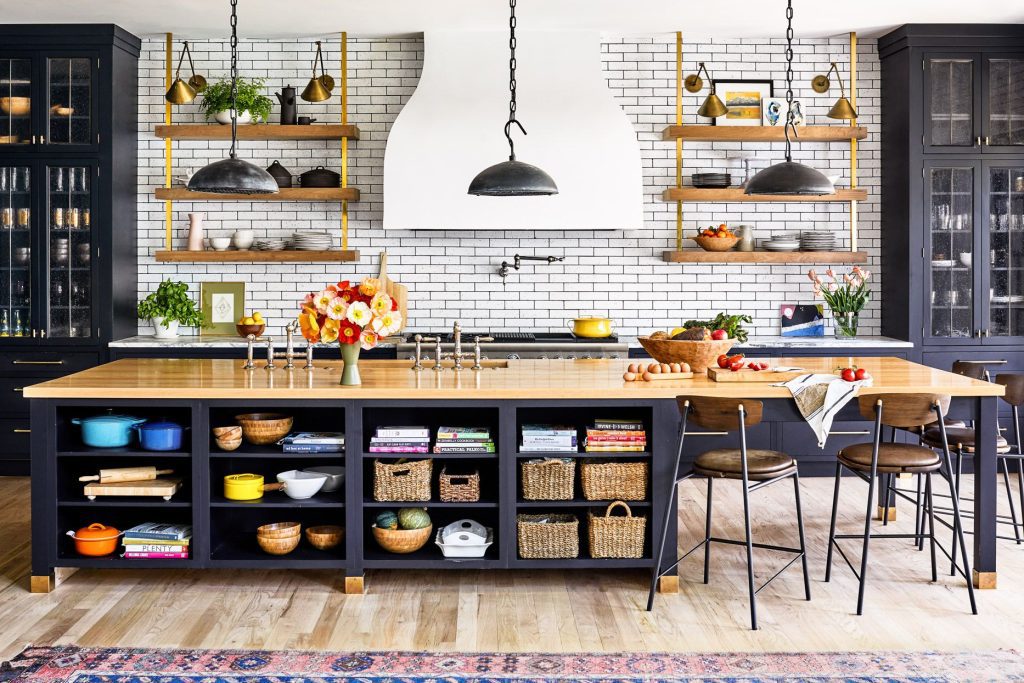
Cookbooks can turn ordinary shelving into a warm and personal kitchen feature. Among the most practical kitchen shelves decor ideas, this one works especially well because the objects have an obvious connection to the room.
Instead of standing every book vertically, try mixing horizontal and vertical arrangements. A small horizontal stack can create a platform for a ceramic bowl, measuring cup, or other lightweight decorative piece.
Choose cookbooks that complement your existing color palette. You do not need every cover to match, but if your kitchen already has many strong colors, consider displaying books with relatively calm covers and spines.
Cookbooks also work well on shelves that are slightly higher or farther from the main preparation area, provided they remain safely accessible. For everyday cooking, place your most frequently used books at a comfortable height rather than forcing yourself to reach awkwardly.
This idea is particularly effective in farmhouse, cottage, traditional, and eclectic kitchens because books add a lived-in feeling. A small cookbook collection can make the kitchen look personal rather than staged.
4. Display Matching Glass Jars and Canisters

Glass jars and coordinated canisters can make open shelving look organized while giving everyday pantry ingredients a decorative appearance. They are especially useful when you want kitchen shelves decor ideas that combine storage and visual appeal.
Use clear jars for items such as pasta, rice, grains, coffee beans, dried beans, or baking ingredients when appropriate for your storage needs. The transparency creates visual continuity, while the repeated shapes make the shelf feel more intentional.
For a more refined appearance, choose containers with similar silhouettes rather than mixing many unrelated shapes. You can also introduce subtle labels if they help with organization.
Avoid turning the shelf into a miniature grocery store display. Too many different packages, labels, and colors can create visual noise. If packaged foods need to remain accessible, consider storing them behind cabinet doors and using open shelving for the more visually cohesive containers.
This approach works particularly well in modern farmhouse, minimalist, Scandinavian-inspired, and transitional kitchens.
5. Add Greenery or a Small Herb Display

Greenery is one of the easiest ways to soften kitchen shelving. A small plant, herb pot, or simple vase can introduce an organic element to a display dominated by ceramics, glass, wood, and metal.
When considering kitchen shelves decor ideas, greenery is most effective when it is used selectively. One or two plants can create a fresh focal point, while several plants on every shelf can make the display feel busy.
If you want to grow herbs, consider whether the shelf receives enough suitable light and whether the location is convenient for watering and harvesting. A small herb pot near an appropriate window can be both decorative and useful.
For kitchens with limited natural light, choose plants that genuinely suit the available conditions rather than choosing solely based on appearance. You can also use dried branches or a simple floral arrangement when live plants are impractical.
Greenery works particularly well with wood, white ceramics, woven baskets, and warm neutral colors. It can add life to modern kitchens while also fitting naturally into farmhouse, cottage, rustic, and organic-modern spaces.
6. Create a Coffee Station With Open Shelves

If coffee is part of your daily routine, turn that routine into a deliberate design feature. A coffee station is one of the most functional kitchen shelves decor ideas because the objects on display are actually used.
Place your everyday mugs, coffee canister, favorite cups, or a small tray on a shelf above or beside the coffee-making area. A small framed print, ceramic container, or plant can provide a decorative finishing touch.
Keep the arrangement simple enough that you can grab what you need quickly. If the shelf becomes difficult to use because decorative pieces are blocking the mugs or supplies, the styling has gone too far.
For a cohesive look, repeat one or two colors from the kitchen. For example, white mugs with natural wood and black accents can create a simple modern display, while cream ceramics, wood, and woven textures can produce a warmer farmhouse feel.
A coffee shelf can be especially useful in smaller kitchens because it turns a narrow section of wall into both storage and decoration without requiring a major renovation.
7. Use Baskets to Add Texture and Hide Small Items
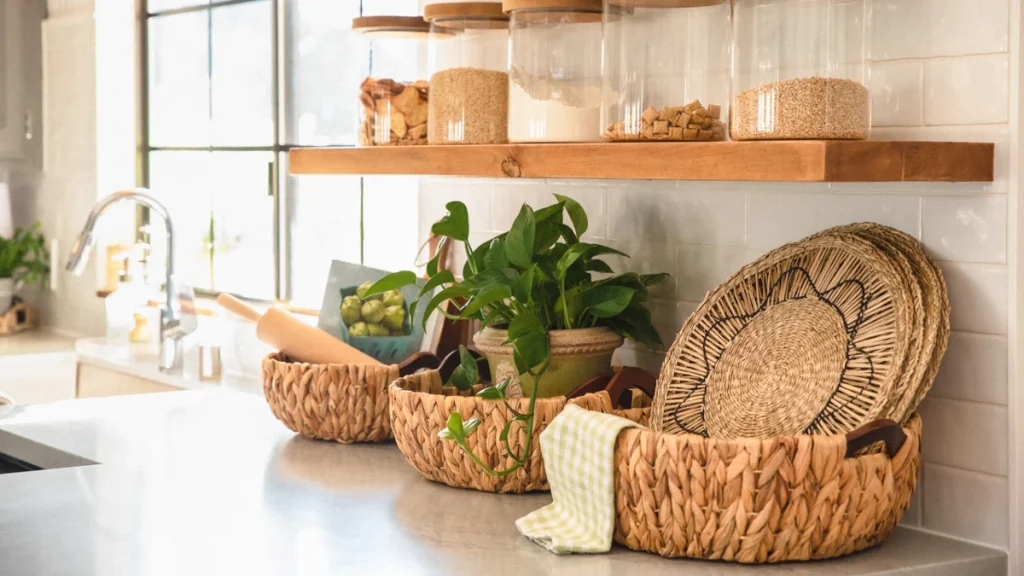
Open shelves do not have to expose every object you own. Baskets can help solve the storage problem while making the shelving look warmer and more organized.
Choose baskets that fit comfortably on the shelf without forcing them into place. Woven baskets can soften kitchens dominated by cabinets, tile, stone, and metal.
Use them for lightweight items that you do not want displayed individually. Depending on the shelf location and your household needs, baskets can hold linens, small kitchen accessories, or other items that benefit from contained storage.
The key is consistency. Two or three coordinated baskets generally create a stronger visual effect than several unrelated containers.
This is one of the kitchen shelves decor ideas that works especially well in farmhouse, rustic, cottage, coastal, and organic-modern kitchens. Natural fibers can introduce texture without adding another bold color.
8. Add One Statement Ceramic or Pottery Piece

Sometimes the strongest shelf display needs only one memorable object. A large ceramic pitcher, handmade bowl, pottery vase, sculptural vessel, or other substantial piece can act as the focal point of an otherwise simple arrangement.
This approach is useful when you want your kitchen shelves decor ideas to feel sophisticated rather than heavily accessorized. Instead of filling a shelf with many small decorative objects, choose one larger item and surround it with a few functional pieces.
Think about scale carefully. A statement piece should fit the shelf without appearing squeezed between other objects. If the shelf is narrow, choose something with an appropriate depth so that it does not extend dangerously beyond the edge.
A handmade ceramic piece can also provide subtle variation through texture. Slight imperfections, uneven glazing, or natural finishes can make a display feel more collected and authentic.
Pair the statement piece with simple plates, glasses, or cookbooks so that the decorative object remains the focal point without looking isolated.
9. Mix Functional Items With Decorative Objects
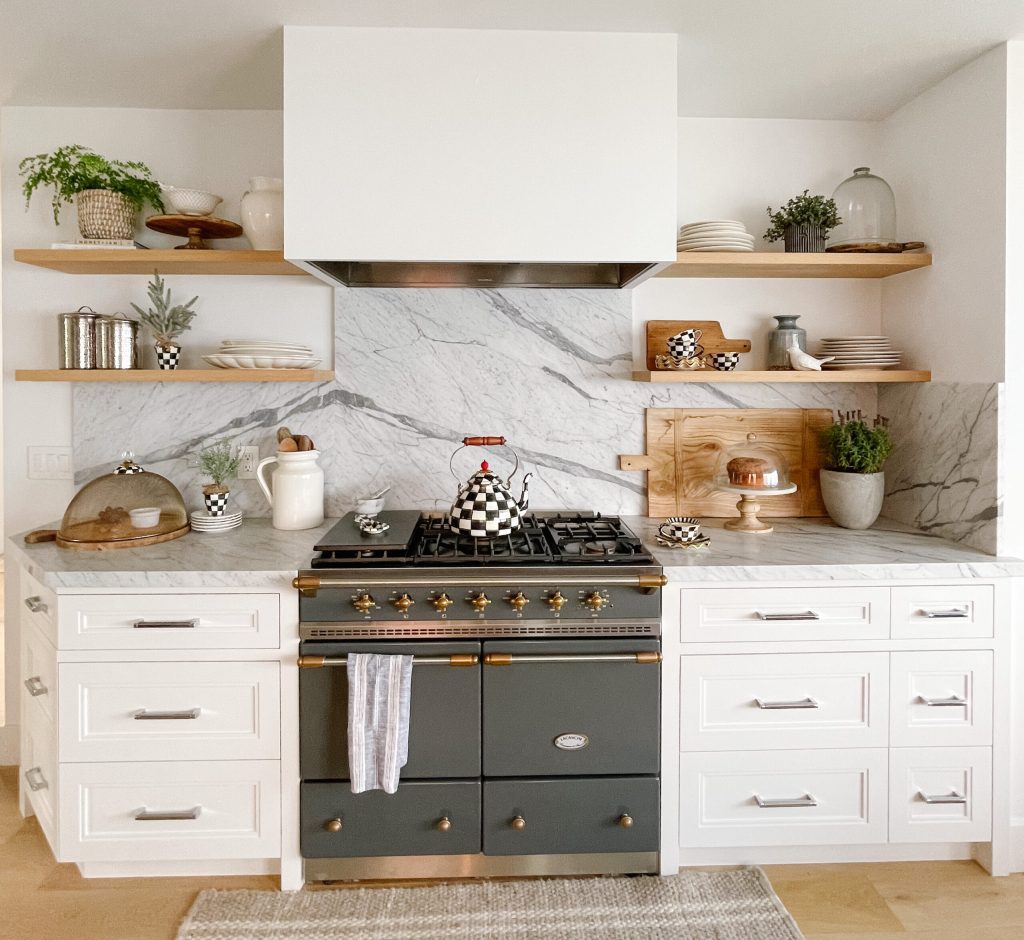
One of the most successful kitchen shelves decor ideas is to stop treating function and decoration as separate categories. Your shelves can look beautiful because of the things you genuinely use.
For example, a shelf might contain everyday bowls, a stack of plates, a wooden cutting board, a small ceramic vase, and a few cookbooks. Every object has a purpose, but together they create a coordinated composition.
Houzz similarly recommends using daily essentials such as mugs, plates, and bowls on open shelves while arranging them in ways that create visual appeal.
This approach also makes the shelves easier to maintain. Instead of purchasing dozens of decorative objects, you can work with things you already own.
The important part is editing. If you have 20 mugs but only three coordinate with your kitchen, you do not need to display all 20. Keep the most attractive or frequently used pieces accessible and store the rest behind closed doors.
10. Use Framed Artwork to Create a Focal Point

Kitchen shelving does not have to be limited to traditional kitchen objects. A small framed artwork or print can give an open shelf personality and make the entire arrangement feel more like part of the home.
When choosing artwork, consider the colors already present in the kitchen. You can repeat a shade from the backsplash, cabinet hardware, runner, countertop accessories, or nearby room.
A small frame can be leaned against the wall behind a stack of dishes or placed toward the back of a shelf. Layering it behind functional objects gives the arrangement depth without taking up too much usable space.
Avoid placing delicate artwork in locations where it may be exposed to excessive heat, moisture, grease, or splashing. Shelf location matters just as much as appearance.
Artwork is particularly useful in minimalist and modern kitchens because it prevents the shelving from feeling overly utilitarian. It can also work beautifully in cottage, eclectic, and transitional spaces.
11. Create a Color Coordinated Shelf Display
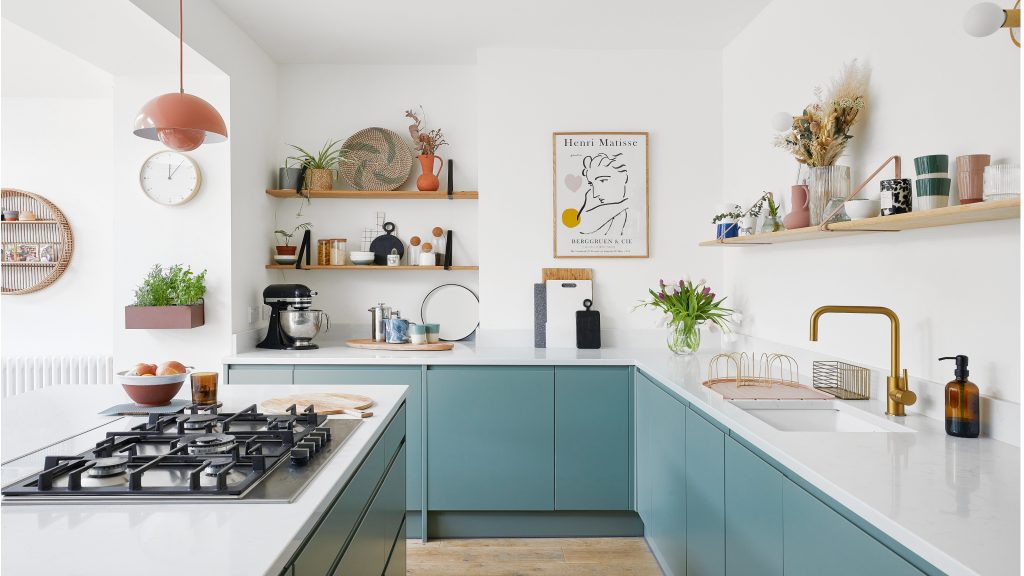
Color can turn several unrelated objects into one cohesive arrangement. This is why color coordination is one of the most versatile kitchen shelves decor ideas for homeowners who feel that their shelves look random.
Start with the existing kitchen palette rather than choosing shelf colors in isolation. If the cabinets and backsplash are neutral, you can introduce a stronger accent through ceramics, glassware, artwork, or textiles.
For a calmer look, choose two or three dominant tones. Cream, natural wood, and muted blue can create a relaxed palette, while white, black, and warm wood can feel more contemporary.
You do not need every item to match. In fact, exact matching can sometimes make a display look too staged. Repeating colors in different shapes is usually more interesting.
For example, a muted blue might appear once in a mug, again in a small artwork, and again in a ceramic bowl. The repetition connects the pieces without making them identical.
Houzz also recommends using a simple color palette and repeating colors to create a cohesive open-shelf arrangement.
12. Leave Breathing Room for a Minimalist Look

Sometimes the best of all kitchen shelves decor ideas is simply displaying less. If your shelves are already full, removing several objects may make a bigger improvement than buying anything new.
Minimalist shelf styling focuses on proportion, spacing, and visual quality. Instead of filling every shelf from edge to edge, select a few objects that have enough size and character to stand on their own.
For example, one shelf might contain a small stack of plates and a single vase. Another might hold several bowls and one wooden cutting board. A third shelf could remain almost completely empty.
Leaving some shelving unused is not a design failure. It creates negative space and allows the objects that remain to become more noticeable.
This is especially valuable in small kitchens. Houzz notes that overstuffing open shelves can defeat the space-enhancing effect of open shelving, while a more edited arrangement can help a compact kitchen feel lighter.
How to Arrange Kitchen Shelves for Better Visual Balance

After choosing your favorite kitchen shelves decor ideas, arrangement becomes the next important step. Even beautiful objects can look awkward if they are placed without considering height, shape, color, and visual weight.
Start with your largest pieces. These become the anchors of the composition. Place them first, then add medium-sized pieces and finally small accents.
Avoid creating a perfect vertical line of identical objects. If three stacks of dishes are directly aligned above one another, the arrangement can look rigid. Slight variations in height and placement create a more natural rhythm.
Create Groups Instead of Spreading Everything Apart
Grouping objects can make open shelves look more intentional. A stack of plates, a small bowl, and a cutting board can become one visual group rather than three unrelated objects.
Try creating groups with different heights. A vertical cutting board can balance a horizontal stack of plates, while a small vase can fill the remaining space.
The important thing is to leave some empty space between groups. If every object touches another object, the entire shelf begins to look like crowded storage.
Keep Frequently Used Items Within Easy Reach
Function should always influence shelf placement. Everyday mugs, bowls, and plates make sense on shelves that are comfortable to access.
Less frequently used decorative pieces can go higher, provided they are safe and appropriate for the shelf. Extremely heavy objects should not be placed high simply because there is empty space there.
Houzz specifically advises against placing extremely heavy items on top shelves because lifting and lowering them from a high position can be unsafe.
Kitchen Shelves Decor Ideas for Small Kitchens
Small kitchens can benefit significantly from open shelves because shelves can provide storage without the visual heaviness of large solid cabinet doors. However, small spaces require more editing.
Use fewer objects and allow more visible wall space between them. Light-colored ceramics, clear glass, pale wood, and restrained color palettes can help maintain an airy appearance.
Vertical space is also valuable. A tall cutting board, narrow vase, or vertically arranged cookbook can draw the eye upward without requiring a large amount of shelf depth.
Avoid using every shelf as a decorative display. If you have limited storage, let attractive everyday objects do double duty as decoration.
For additional small-kitchen decorating ideas, you can also explore the broader Kitchen Decor Ideas guide on Home Styling Guide, which covers vertical space, color, countertops, lighting, and budget-friendly updates.
Kitchen Shelves Decor Ideas for Different Design Styles
Your shelf arrangement should support the overall character of your kitchen rather than looking like a separate decorative display.
Modern Kitchen Shelves
Modern kitchens usually benefit from fewer, larger objects and a restrained palette. White ceramics, clear glass, natural wood, black accents, simple artwork, and clean-lined containers can create a sophisticated display.
Avoid filling every shelf with tiny decorative pieces. Modern styling generally becomes stronger when the eye has space to rest between objects.
Farmhouse Kitchen Shelves
Farmhouse shelving works beautifully with natural wood, white or cream ceramics, woven baskets, vintage-inspired pieces, cookbooks, and simple greenery.
The goal should be warmth rather than a collection of themed signs. Mixing old-looking and contemporary pieces usually feels more natural than making every object match.
Rustic Kitchen Shelves
Rustic shelves can use darker wood, stoneware, aged finishes, woven textures, iron details, and handmade ceramics. The materials themselves can become the decoration.
Keep the arrangement grounded by repeating a few natural textures rather than adding many unrelated colors.
Minimalist Kitchen Shelves
Minimalist styling is about editing. Choose only the pieces that genuinely contribute to the room.
A small collection of neutral ceramics, one wooden object, and a little greenery can be enough to make a shelf feel finished.
What Should You Not Put on Open Kitchen Shelves?
One of the most overlooked parts of kitchen shelves decor ideas is deciding what should stay hidden. Open shelving works best when the items displayed are visually cohesive and practical for the location.
Avoid filling shelves with random plastic containers, excessive packaged foods, bulky appliances, mismatched promotional mugs, cleaning products, and large collections of tiny decorative objects.
Better Homes & Gardens recently consulted designers about items they would remove from open kitchen shelves, including bulky cookware, small appliances, plastic food containers, packaged foods, mismatched mugs, and other visually distracting objects.
Location matters too. Objects placed close to a range or cooktop can be exposed to more grease and heat, so choose pieces that are easy to clean and suitable for that environment.
You should also avoid putting extremely heavy or fragile pieces in awkward high positions. The most attractive shelf is not successful if it creates a safety or usability problem.
How to Keep Open Kitchen Shelves Clean
Cleaning is an important consideration when choosing kitchen shelves decor ideas. Unlike closed cabinets, open shelves expose both the shelf surface and the objects to dust.
Shelves close to cooking areas can also collect grease more quickly. Houzz notes that open shelves can accumulate dust and grease, particularly when they are located near the stove.
One way to make maintenance easier is to display objects that you regularly use and wash. Frequently used plates, bowls, and glasses are naturally less likely to sit untouched for long periods.
For decorative pieces, choose materials that are relatively easy to wipe down. Avoid filling high shelves with numerous tiny objects that are difficult to remove and clean individually.
A lightly edited shelf is usually easier to maintain than an overcrowded one. This is another reason negative space is valuable: it improves both the appearance and practicality of your kitchen.
Common Kitchen Shelf Decorating Mistakes to Avoid
Even attractive kitchen shelves decor ideas can fail when the arrangement becomes too crowded or disconnected from the kitchen’s function.
Filling Every Inch of the Shelf
A common mistake is assuming that empty space means the shelf is unfinished. In reality, negative space helps individual objects stand out.
If the shelves look crowded, remove a few pieces before adding anything new.
Using Too Many Colors
Color variation can create personality, but too many unrelated colors can make the shelf look chaotic.
Choose a small palette and repeat those colors through different objects. You can still use contrast, but the overall arrangement should feel connected.
Making Every Object the Same Height
Uniformity can make the display feel flat. Mix tall and short pieces to create visual movement.
A vertical cutting board, medium ceramic pitcher, stack of plates, and small plant will generally create more interest than four objects of similar height.
Displaying Too Many Tiny Accessories
Tiny objects can quickly create visual clutter. If you have many small pieces you love, consider grouping them into a tray or storing some of them behind cabinet doors.
A few larger pieces often create a more sophisticated result than a shelf packed with miniature decorations.
Ignoring Function
Your kitchen shelves should work for the people who use the kitchen. If you have to move six decorative objects just to reach a bowl every morning, the arrangement is not practical.
Houzz recommends thinking about everyday use when arranging open shelving and suggests placing frequently used items where they are easy to reach.
How to Make Kitchen Shelves Look More Expensive
You do not need expensive accessories to make kitchen shelves decor ideas look sophisticated. The most important factor is usually editing.
Choose fewer pieces and give each one enough space. Repeat materials such as wood, ceramic, glass, or metal rather than introducing every possible finish.
A cohesive color palette can also make inexpensive pieces look more intentional. Cream dishes, natural wood, and one muted accent color can create a refined appearance without requiring designer accessories.
Texture matters too. A smooth ceramic bowl next to a rough wooden cutting board creates contrast, while a woven basket can soften a collection of hard surfaces.
Finally, avoid decorating simply to fill empty space. A shelf with three beautiful and useful objects can look more expensive than a shelf containing fifteen unrelated accessories.
How to Style Kitchen Shelves on a Budget
Some of the best kitchen shelves decor ideas cost little or nothing because they use objects you already own.
Start by shopping your own kitchen. Look for attractive cutting boards, serving bowls, cookbooks, mugs, ceramics, glassware, baskets, and trays that could be rearranged into a new display.
You can also move a small plant, framed print, or decorative object from another room if it works with the kitchen’s color palette. This can create a fresh look without purchasing new decor.
If you decide to buy something, prioritize one or two pieces that solve a visual problem. A single statement ceramic vessel may have more impact than buying ten small accessories.
For a broader budget-friendly approach, Home Styling Guide’s existing kitchen decor guide also recommends decluttering, rearranging existing items, and prioritizing high-visibility changes such as artwork, lighting, textiles, and hardware before considering major renovations.
How to Make Open Shelves Feel Organized and Personal
The best kitchen shelves decor ideas are not necessarily the ones that look like a showroom. A kitchen should still feel like someone’s home.
Include objects that have meaning to you. A favorite cookbook, handmade ceramic bowl, inherited serving piece, or beautiful cutting board can make the shelf feel personal.
At the same time, not everything needs to be displayed. Open shelving works best when you choose the objects that contribute to both the function and personality of the room.
Think of your shelves as a curated collection rather than a storage overflow area. The goal is to show enough to make the kitchen feel interesting while leaving enough empty space for the arrangement to breathe.
Frequently Asked Questions About Kitchen Shelves Decor Ideas
What should I put on my kitchen shelves?
The best options include everyday plates, bowls, mugs, glasses, cookbooks, wooden cutting boards, attractive jars, baskets, ceramics, plants, and a small amount of artwork. Choose items that fit your kitchen’s color palette and are practical for the shelf’s location.
How do I decorate kitchen shelves without making them look cluttered?
Start by removing unnecessary objects and choose a small number of coordinated pieces. Mix different heights, group related items together, repeat two or three colors, and leave visible negative space between groups. If the shelf becomes difficult to use, remove some decoration.
How do I style open kitchen shelves?
Begin with large anchor pieces, then add functional items such as dishes or bowls, followed by smaller decorative accents. Use layering, height variation, color repetition, and negative space to create balance. Keep frequently used objects within easy reach.
How many items should I put on a kitchen shelf?
There is no universal number because shelf length, depth, and object size vary. Instead of counting objects, focus on visual balance. A few larger coordinated pieces can often look better than many small accessories packed together.
What looks good on floating kitchen shelves?
Neutral ceramics, wooden cutting boards, cookbooks, glass jars, small plants, baskets, artwork, and handmade pottery all work well on floating shelves. Choose objects according to the shelf’s depth and weight capacity, and keep heavier pieces lower when practical.
How do I decorate kitchen shelves in a small kitchen?
Use fewer objects, lighter colors, vertical pieces, and functional decor. Keep enough empty space around displays so the shelves do not visually overwhelm the room. Let attractive everyday kitchen items provide both storage and decoration.
What should I avoid putting on open kitchen shelves?
Avoid unnecessary clutter, excessive packaged foods, bulky appliances, random plastic containers, cleaning supplies, too many tiny decorative objects, and heavy items placed high above comfortable reach. Items near cooking areas should also be suitable for the heat, grease, and cleaning demands of that location.
Are open kitchen shelves difficult to maintain?
They can require more regular cleaning than closed cabinets because the shelf surfaces and displayed objects are exposed to dust and, depending on placement, cooking residue. Using frequently used dishes and limiting decorative clutter can make maintenance easier.
Final Thoughts on Kitchen Shelves Decor Ideas
The most successful kitchen shelves decor ideas combine beauty, organization, and everyday practicality. Open shelving should not become a place where every attractive object in your kitchen is placed simply because there is room.
Instead, choose a few pieces that work together through color, material, shape, texture, and scale. Use everyday dishes as decoration, add warmth with wood, bring in greenery when appropriate, introduce personality through artwork or ceramics, and use baskets or containers when you need to hide smaller items.
If your shelves currently feel cluttered, start by taking everything off and rebuilding the display slowly. Begin with your largest anchor pieces, add useful items, introduce one or two decorative accents, and then step back to evaluate the negative space.
Remember that the best kitchen shelves decor ideas are the ones that fit your actual lifestyle. A beautiful shelf that is difficult to clean or inconvenient to use will eventually become frustrating. A carefully edited shelf that makes your everyday kitchen routines easier can look beautiful while remaining genuinely useful.
Whether your kitchen is modern, farmhouse, rustic, minimalist, cottage-inspired, or somewhere in between, thoughtful shelf styling can add character without requiring a full remodel. With the right balance of function and decoration, your open shelves can become one of the most attractive features in the room.



3 thoughts on “12 Kitchen Shelves Decor Ideas for a Stylish and Organized Kitchen”