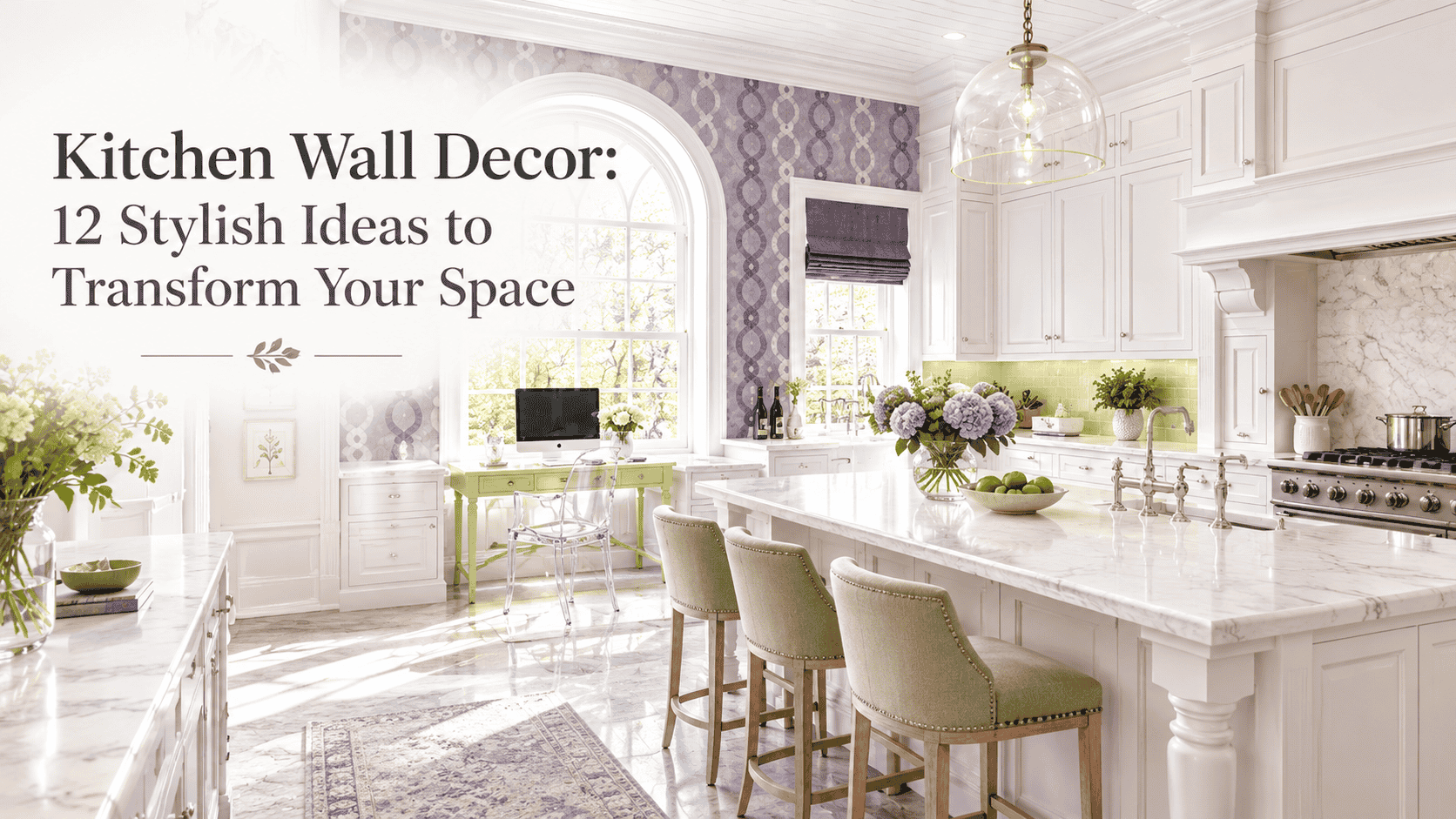
Discover 12 stylish kitchen wall decor ideas, from gallery walls and floating shelves to vintage plates and budget-friendly artwork, to transform your kitchen.
The kitchen is more than a place to prepare meals. It is where families gather for breakfast, friends enjoy a cup of coffee, and everyday routines become part of home life. However, even a beautiful kitchen can feel unfinished when its walls are empty, dull, or disconnected from the rest of the interior. Thoughtful kitchen wall decor can bring personality, warmth, and visual balance into this important space without requiring an expensive renovation.
The best kitchen wall decor ideas combine beauty with practicality. Unlike living rooms and bedrooms, kitchens experience cooking grease, steam, temperature changes, and frequent cleaning. That means artwork, shelves, decorative plates, and other accessories need to look attractive while remaining appropriate for their location.
Fortunately, you do not need a designer’s budget to create a beautiful kitchen. A carefully arranged gallery wall, a few floating shelves, vintage artwork, or a simple accent wall can make a noticeable difference. Even a small apartment kitchen can look more inviting when you use its available wall space thoughtfully.
In this guide, you will discover 12 stylish kitchen wall decor ideas for modern, farmhouse, traditional, rustic, minimalist, and transitional interiors. You will also learn how to choose artwork, decorate awkward spaces, style small kitchens, avoid common mistakes, and create a coordinated look that feels personal rather than overcrowded.
Why Kitchen Wall Decor Matters?
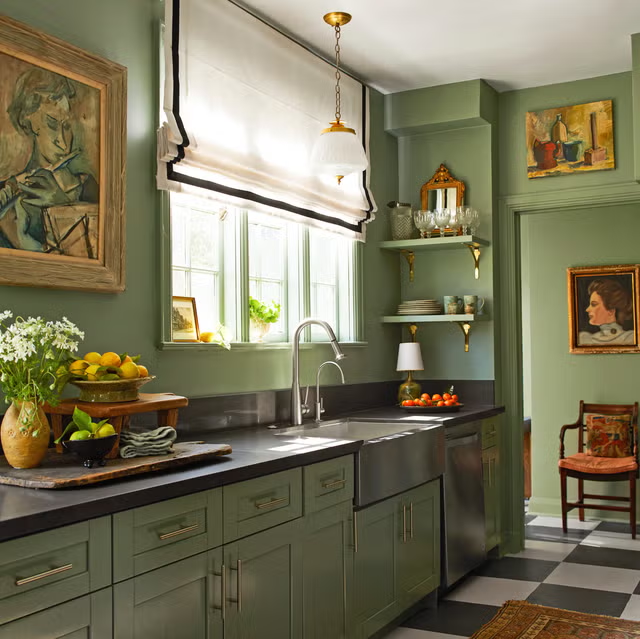
Kitchen walls influence how the entire room looks and feels. Cabinets and countertops usually receive the most attention during a renovation, but the open wall areas between windows, above dining benches, beside refrigerators, and near breakfast stations can offer valuable decorating opportunities.
Well planned kitchen wall decor helps connect the room’s colors, materials, and furniture. For example, framed artwork can repeat the warm tones of wooden cabinets, while black picture frames can complement dark cabinet hardware. Ceramic plates can introduce a subtle accent color, and botanical prints can soften the appearance of stone, metal, and glossy surfaces.
Decorating your walls can also make a kitchen feel more personal. Family photographs, inherited dishes, vintage prints, handmade ceramics, and meaningful objects give the room character that mass-produced accessories cannot always provide. The goal is not to fill every empty surface but to choose a few elements that make the space feel intentional.
Before choosing decorations, consider the kitchen’s layout, lighting, wall size, and cooking zones. A wall beside a breakfast nook may be suitable for a large artwork, while the area directly behind a stove requires materials designed to handle heat, grease, and frequent cleaning. Understanding these differences will help you create kitchen wall decor that remains attractive and functional over time.
12 Kitchen Wall Decor Ideas to Transform Your Space
1. Create a Stylish Kitchen Gallery Wall

A gallery wall is one of the most versatile kitchen wall decor ideas because it allows you to combine different artworks, photographs, and decorative prints into one cohesive arrangement. It works particularly well on a large empty wall, beside a breakfast table, or in a kitchen that opens into a dining or living area.
For a classic arrangement, choose three to five framed pieces and organize them around a shared color palette. Botanical illustrations, vintage food prints, landscape photography, abstract artwork, and simple line drawings can work together when their colors and frame finishes complement one another. For example, black frames with cream mats can create a clean, contemporary appearance, while natural wood frames provide warmth in a farmhouse or cottage-style kitchen.
The size of your gallery wall should reflect the available space. A large wall can support a wider collection, while a narrow section may look better with two or three vertically arranged frames. Before hanging anything, place the frames on the floor and experiment with their positions. You can also cut paper templates matching the frame sizes and temporarily attach them to the wall to test the arrangement.
Spacing is just as important as the artwork itself. Keep the gaps between frames consistent so the collection looks intentional rather than random. If the wall is already visually busy because of patterned cabinets or a detailed backsplash, choose simpler artwork to prevent the room from feeling overwhelming.
Kitchen wall decor should also be practical. Keep framed pieces away from direct cooking splashes and areas exposed to heavy grease. Use secure hanging hardware appropriate for the wall material, and choose frames that can be cleaned easily.
A gallery wall is especially effective when you want to display personal memories without sacrificing countertop space. It turns an ordinary wall into a feature that reflects your taste while keeping the kitchen organized.
2. Display Food Inspired Artwork for a Fresh Look
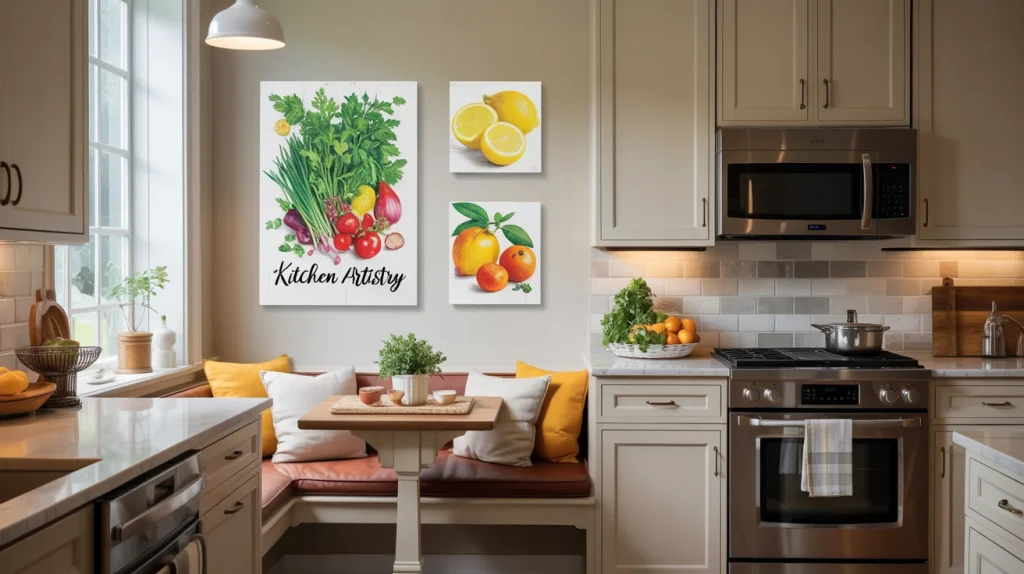
Food-inspired artwork is a natural choice for kitchen wall decor because it connects the room’s purpose with its visual design. Illustrations of lemons, pears, tomatoes, herbs, bread, coffee, or wine can introduce color and charm without requiring complicated decorating techniques.
For a modern kitchen, consider oversized fruit illustrations, minimalist drawings, or abstract food-inspired prints. A simple lemon illustration in a slim black frame can add a bright accent to a neutral kitchen. In a traditional space, vintage botanical prints or classic still-life paintings may create a more timeless appearance.
The key is to avoid making the kitchen look like a themed restaurant unless that is the style you genuinely enjoy. You do not need matching signs about coffee, cooking, and food to establish a kitchen-inspired look. One carefully selected artwork or a coordinated pair of prints can create a stronger result than a wall filled with unrelated slogans.
Consider the colors already present in your kitchen. If your cabinets are white or cream, artwork featuring terracotta, muted blue, olive, or warm yellow can add contrast. If your kitchen already contains colorful cabinets or patterned tiles, choose prints that repeat one or two existing shades.
Placement also influences the result. Food artwork looks attractive above a breakfast nook, beside a pantry, near a coffee station, or on a small wall that needs a visual focal point. If you are decorating a narrow space, a vertical print can make better use of the wall than a wide horizontal frame.
Choose framed prints with a protective surface when possible, particularly if the artwork will be displayed in an area where dust and cooking residue may accumulate. Keep paper artwork away from direct splashes and excessive steam to help prevent fading, warping, or damage.
Food-inspired artwork offers an affordable way to personalize your kitchen. You can use a single statement print, a pair of coordinated illustrations, or a small collection that reflects your favorite ingredients and cooking traditions.
3. Install Floating Shelves for Decor and Storage

Floating shelves are an excellent kitchen wall decor solution when you want to combine visual interest with useful storage. They can make an empty wall feel finished while providing space for attractive dinnerware, cookbooks, ceramic bowls, small framed prints, and other everyday objects.
Natural wood shelves are particularly effective in kitchens with white cabinetry, stone countertops, or stainless-steel appliances. The wood introduces warmth and texture, making the room feel less clinical. Black shelves can create contrast in a modern kitchen, while painted shelves can connect the wall to a cabinet or accent color.
The most important part of shelf styling is balance. Begin with larger objects such as plates, bowls, cutting boards, or cookbooks. Then add a few smaller items, such as a ceramic vase or framed print, to create variety. Leave some open space between groups so the arrangement does not look like a crowded storage cabinet.
For a small kitchen, one or two shelves may be enough. Installing too many shelves can make the wall feel busy and create additional cleaning work. A larger kitchen may support a longer shelf arrangement, especially when the display follows the lines of nearby cabinetry.
Before installation, check the wall material and choose appropriate mounting hardware. Heavy shelves and breakable objects need secure support. If you are installing shelves into drywall, identify suitable studs or use mounting systems rated for the expected load. Follow the shelf manufacturer’s instructions and avoid placing fragile items where they could fall onto work surfaces.
Location matters as well. Shelves close to the stove may collect grease quickly, while shelves beside a sink may experience splashes. Display objects that are easy to clean in these areas, and keep fragile or rarely used decorative pieces farther from cooking zones.
For more inspiration, explore our guide to 12 Kitchen Shelves Decor Ideas for a Stylish and Organized Kitchen. It offers additional ideas for arranging shelves with everyday kitchen items and decorative accessories.
Floating shelves are among the most adaptable kitchen wall decor ideas because they allow you to change the display whenever your style or storage needs evolve. You can update the appearance seasonally without renovating the entire room.
4. Arrange Decorative Plates on an Empty Wall
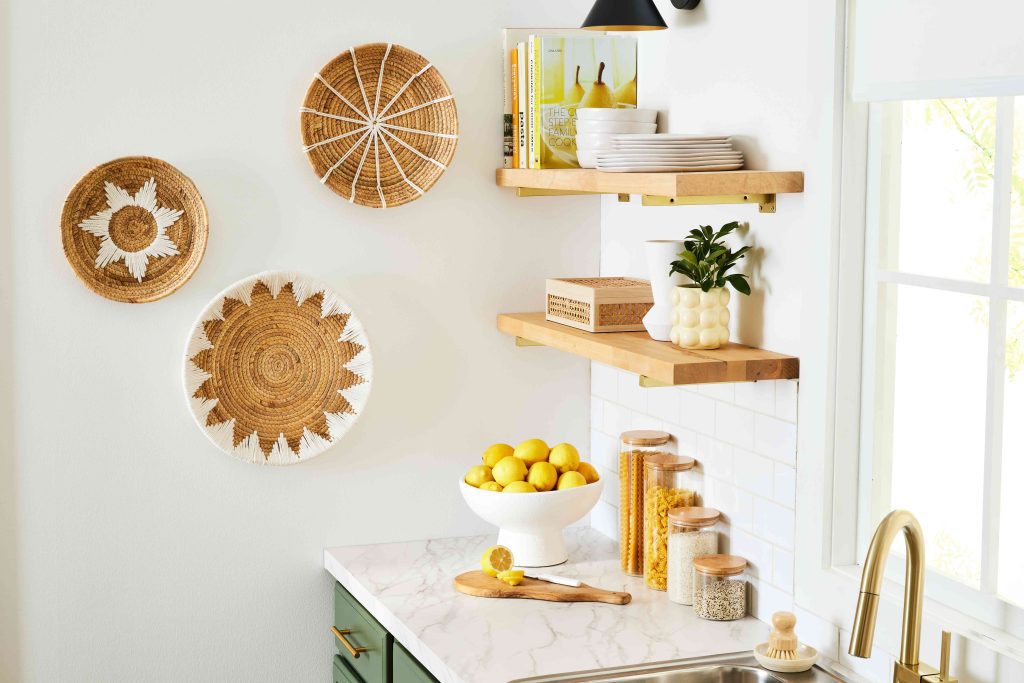
Decorative plates can turn ordinary dinnerware into an attractive wall display. This approach works particularly well in traditional, cottage, farmhouse, Mediterranean, and eclectic kitchens, but it can also complement modern interiors when the plates have simple shapes and coordinated colors.
Begin by selecting a collection with a visual connection. The plates do not have to match exactly, but repeating colors, patterns, or materials helps create a cohesive arrangement. Blue-and-white plates can look elegant against a cream wall, while handmade ceramics in earthy shades can add warmth to a kitchen with natural wood cabinetry.
You can arrange plates symmetrically for a formal appearance or use different sizes to create a more relaxed display. A central large plate surrounded by smaller pieces can provide a clear focal point. Alternatively, a horizontal arrangement can work well above a breakfast bench or dining area.
Before hanging the plates, arrange them on the floor or create paper templates. This allows you to test the spacing and overall shape without making unnecessary holes. Use appropriate plate hangers or mounting systems designed for the weight and shape of each piece. Do not rely on ordinary adhesive alone for heavy or valuable ceramics.
The wall surface also influences the final appearance. Decorative plates stand out against a simple painted wall, but they may compete with a detailed backsplash or strongly patterned wallpaper. If your kitchen already contains several patterns, choose plates with calmer designs or display fewer pieces.
Keep the collection away from the stove and other areas exposed to grease, heat, or frequent splashing. Plates near cooking zones can become difficult to maintain, particularly when their designs include delicate finishes or raised details.
Decorative plates offer a meaningful way to display inherited china, souvenirs, handmade ceramics, or pieces collected over time. Rather than purchasing an entirely new collection, consider whether dishes you already own could become part of your kitchen wall decor.
5. Choose One Large Statement Artwork

Sometimes the most effective kitchen wall decor is a single oversized artwork. Instead of filling a wall with many small accessories, one well-proportioned painting, photograph, or print can create a strong focal point and give the kitchen a more polished appearance.
This idea is particularly useful for kitchens with open floor plans. If your kitchen connects directly to a dining room or living room, a statement artwork can visually link the spaces. Choose a piece that shares at least one color or material with the surrounding interior without trying to match every element perfectly.
For example, a warm abstract painting may complement oak cabinets and brass hardware, while a muted landscape can soften a contemporary kitchen with white cabinets and stone countertops. Black-and-white photography can create contrast in a neutral space, and colorful artwork can bring energy to an otherwise restrained palette.
Scale is essential. Artwork that is too small may look lost on a wide wall, while a very large piece can overwhelm a narrow section. Measure the available wall area before shopping and consider the nearby cabinets, windows, furniture, and ceiling height.
A useful approach is to choose artwork that visually relates to the furniture below it. If the piece will hang above a breakfast bench or dining table, its width should feel proportionate to that area rather than appearing disconnected from it.
Protect your artwork by choosing a suitable location. Canvas, paper, and delicate frames may not be appropriate for areas exposed to direct heat, grease, or moisture. A frame with a protective front may be easier to maintain, but it should still be kept away from harsh kitchen conditions.
A statement artwork is a strong option when you want kitchen wall decor that looks intentional with minimal effort. It gives the eye a clear place to rest and allows the rest of the room to remain relatively simple.
6. Add Vintage Finds for Character and Personality

Vintage kitchen wall decor brings a sense of history and individuality into the home. Old advertisements, antique-looking food illustrations, reclaimed wooden signs, vintage clocks, and traditional kitchen tools can create a collected appearance that feels warmer than a display made entirely from new accessories.
You can find suitable pieces at antique shops, flea markets, estate sales, secondhand stores, and online marketplaces. The goal is not to purchase everything that looks old but to select objects that fit your kitchen’s style and color palette.
For a farmhouse kitchen, weathered wood, old botanical prints, and simple metal accessories can complement natural textures. In a traditional kitchen, framed vintage illustrations and classic clocks may feel more appropriate. A modern kitchen can also benefit from one unexpected vintage piece, such as an antique landscape or an unusual framed print.
Mixing old and new creates a more interesting arrangement than using only one period. For example, a vintage artwork can look fresh when placed beside contemporary cabinets or a modern pendant light. Repeating a color from the artwork elsewhere in the kitchen helps the combination feel intentional.
Avoid displaying too many unrelated vintage objects on the same wall. A large collection can look charming when carefully organized, but it can also become visually overwhelming. Select a few pieces that share a theme, finish, or color, and allow them enough space to stand out.
Before hanging an older object, inspect its condition. Check for loose parts, damaged frames, sharp edges, unstable attachments, or finishes that may be difficult to clean. Do not place valuable or delicate items in locations exposed to steam, grease, or direct sunlight.
Vintage kitchen wall decor is also a way to make a room feel personal without buying expensive designer accessories. A meaningful object from a family member or a secondhand artwork can provide more character than a generic decorative sign.
7. Transform a Wall With Wallpaper or an Accent Color
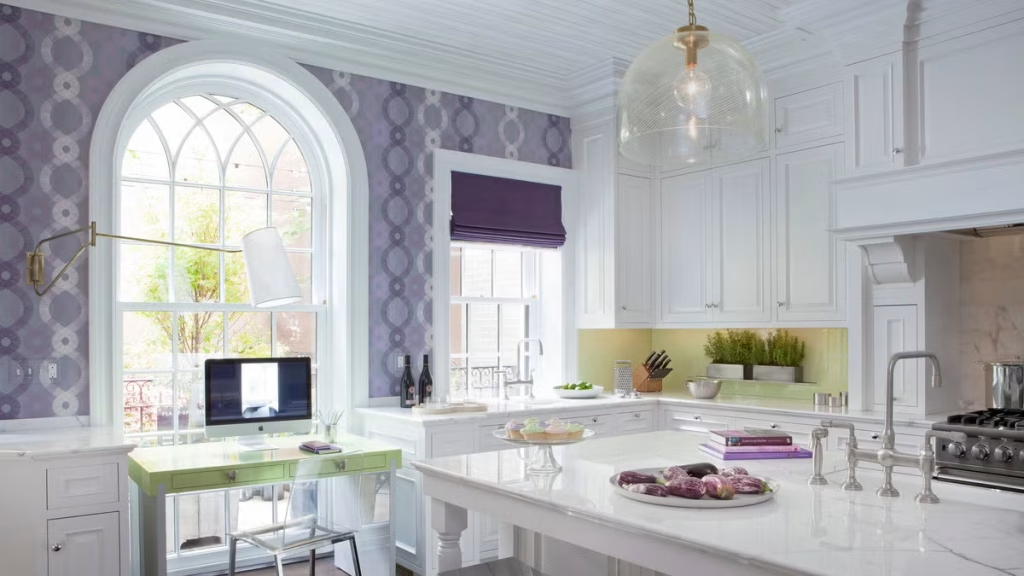
Wallpaper and accent paint can create a dramatic change without requiring a complete kitchen renovation. This approach is particularly useful when a large wall feels empty or the kitchen lacks a clear focal point.
For a subtle appearance, consider a small-scale botanical pattern, a textured neutral wallpaper, or a soft geometric design. If you prefer a stronger look, a bold floral print, colorful pattern, or deep accent color can make a breakfast nook or dining wall stand out.
The best choice depends on the kitchen’s existing finishes. If the cabinets, counters, and backsplash already have strong patterns, a simpler wall treatment may provide better balance. A kitchen with plain cabinetry and neutral countertops can usually accommodate a more expressive wallpaper design.
Color also affects how the room feels. Cream, warm white, beige, and muted taupe can create a calm backdrop, while navy, terracotta, muted blue, or earthy brown can add depth. You do not need to follow every current trend; choose a color that complements the finishes you intend to keep for several years.
For renters, removable wallpaper may offer a temporary way to introduce pattern. However, product performance depends on the wall surface, paint condition, humidity, and manufacturer’s instructions. Test a small area first and confirm that the material is appropriate for the intended location.
In kitchens, not all wallpaper is suitable for every wall. Areas close to a stove or sink may experience heat, grease, moisture, and frequent cleaning. Follow the product’s guidance regarding ventilation, cleanability, and placement. For direct splash zones, a properly installed backsplash material is usually more appropriate than ordinary decorative wallpaper.
If you are painting, prepare the wall correctly and choose a finish suitable for the surface and expected cleaning. Use products according to their labels and allow adequate drying and ventilation.
Wallpaper and accent paint can give kitchen wall decor a strong visual identity. When used strategically, they make a room feel more designed without requiring you to change every cabinet, appliance, or countertop.
8. Use Mirrors to Reflect Light and Create Depth

Mirrors can be a useful addition to kitchen wall decor, particularly in smaller kitchens, darker rooms, and spaces with limited natural light. They reflect light and surrounding details, which can help the room feel brighter and visually more open.
A round mirror can soften a kitchen dominated by rectangular cabinets, square tiles, and straight countertop edges. A rectangular mirror may work better above a breakfast bench or on a long wall. Choose a frame that complements your other finishes, such as natural wood for warmth, black for contrast, or a simple metallic finish for a more refined appearance.
Placement is important because a mirror reflects whatever is opposite it. Before installing one, consider whether it will reflect a window, an attractive light fixture, a dining area, or an appealing part of the kitchen. Avoid placing a mirror where it mainly reflects clutter or a busy work surface.
Mirrors are not always the best option for every wall. In a kitchen with many reflective finishes, a large mirror may create too much visual activity. In a very narrow walkway, a projecting frame may also interfere with comfortable movement.
Choose a mirror designed for the intended environment and install it securely using appropriate hardware. Keep it away from direct heat and locations where repeated splashing or grease could make cleaning difficult. Clean the surface regularly so fingerprints and cooking residue do not reduce its appearance.
For a small apartment kitchen, a well-positioned mirror can provide visual interest without consuming valuable storage space. Pair it with simple artwork or a single shelf rather than adding several competing features to the same wall.
Mirrors work best when they solve a specific design problem. If your kitchen feels dark, cramped, or visually flat, a carefully placed mirror may be more effective than adding several small decorations.
9. Display Wooden Cutting Boards and Functional Kitchen Tools
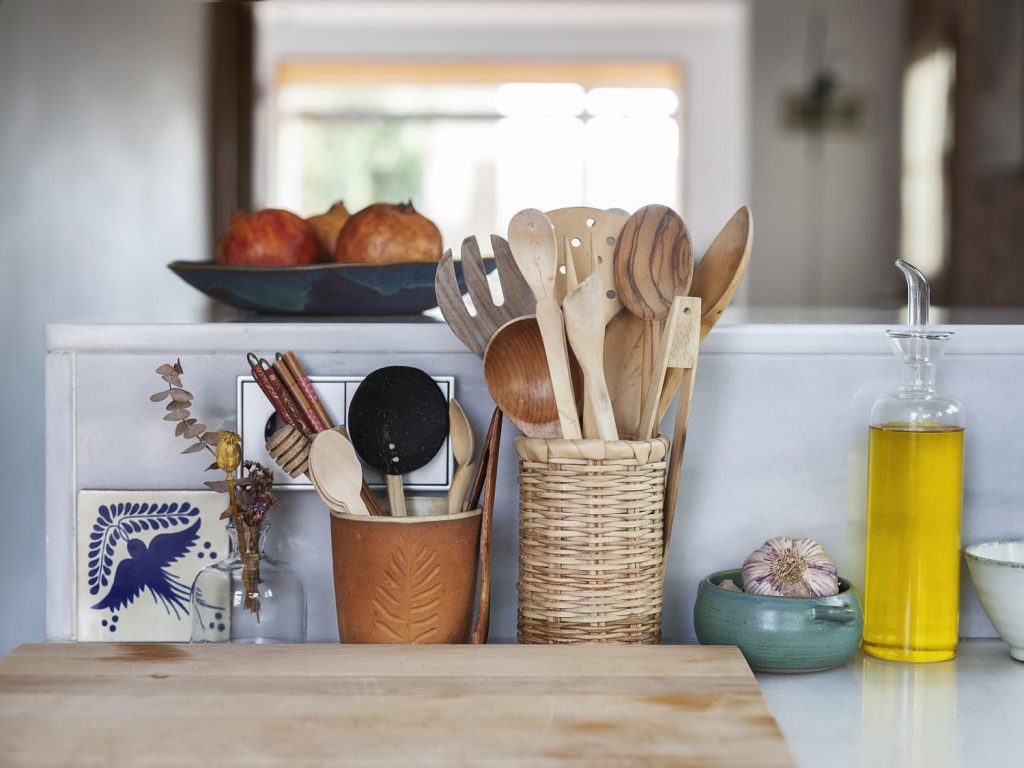
Some of the most attractive kitchen wall decor comes from objects that already have a practical purpose. Wooden cutting boards, rolling pins, attractive utensils, and carefully selected kitchen tools can add texture while keeping everyday essentials accessible.
Wood is especially effective in kitchens with stone countertops, white cabinets, stainless-steel appliances, or glossy finishes. Its natural grain introduces warmth and helps balance the cooler appearance of metal, glass, and polished surfaces.
To create a simple display, group two or three cutting boards with different shapes or sizes. A large rectangular board can be paired with a smaller rounded board to introduce variety. You can display them on a suitable shelf or use a secure wall-mounted system designed for the objects.
Hanging rails can also provide space for lightweight utensils, oven mitts, or frequently used tools. This is particularly helpful in compact kitchens where drawers and cabinets are limited. However, the display should be organized so that the tools remain easy to access without creating a cluttered appearance.
Safety should come first. Keep wooden accessories and hanging tools away from direct flame, excessive heat, and areas where they could fall into food-preparation zones. Do not hang heavy objects using hardware that is not rated for their weight. Functional items should also be clean and maintained appropriately, especially when they are used for preparing food.
If you use cutting boards for food preparation, store them in a way that allows them to dry properly and prevents contamination. A decorative display should never replace good kitchen hygiene.
This style of kitchen wall decor works well in farmhouse, rustic, cottage, and organic-modern interiors. It can also suit contemporary kitchens when you choose boards with clean shapes and avoid overcrowding the display.
The advantage is that you can often create the look with objects you already own. Instead of purchasing a separate collection of wall decorations, select attractive tools that serve a purpose and arrange them thoughtfully.
10. Bring Nature Indoors With Botanical Prints and Greenery
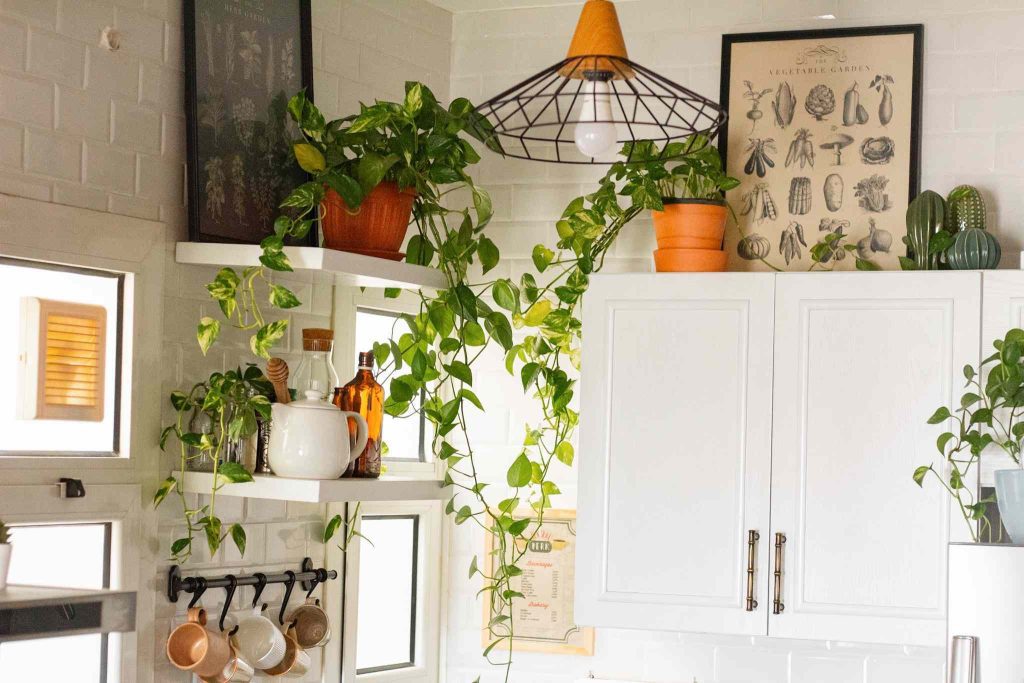
Botanical kitchen wall decor adds a fresh, natural quality to the room. Leaf illustrations, herb prints, pressed botanical artwork, and nature photography can introduce subtle color without overwhelming the kitchen’s existing design.
For a traditional look, consider vintage botanical illustrations in matching frames. For a contemporary kitchen, minimalist leaf drawings or large-scale plant photography can create a cleaner appearance. A set of three related prints can provide structure on a wide wall, while one vertical print may suit a narrow area beside a pantry or window.
Choose artwork that complements the room’s existing colors. Soft green, muted blue, cream, and earthy brown can work well with natural wood and neutral cabinets. If your kitchen already includes colorful tiles or patterned countertops, botanical prints with restrained backgrounds can provide visual balance.
Live plants can complement wall artwork, but their placement needs careful consideration. A small herb planter near a suitable window can introduce greenery and may also provide fresh ingredients for cooking. If the kitchen does not receive enough natural light, consider low-maintenance alternatives appropriate for the available conditions or use botanical artwork instead.
Avoid placing plants where water can damage the wall or where leaves and containers interfere with cooking, food preparation, or movement. Use stable containers and appropriate saucers, and check the plant’s light and watering requirements before choosing its location.
Botanical prints and greenery can also soften kitchens that contain many hard surfaces. Stone, metal, glass, tile, and cabinetry can create a visually rigid environment, while organic shapes and natural imagery introduce contrast.
For the best result, repeat a small number of natural elements rather than covering every surface with plants and botanical patterns. A framed herb illustration, a wooden shelf, and one suitable plant can create a more balanced look than an overcrowded display.
This is one of the easiest kitchen wall decor ideas to adapt to changing seasons. You can replace prints, update a small plant arrangement, or switch decorative accessories without making permanent changes to the room.
11. Decorate Small or Awkward Kitchen Walls
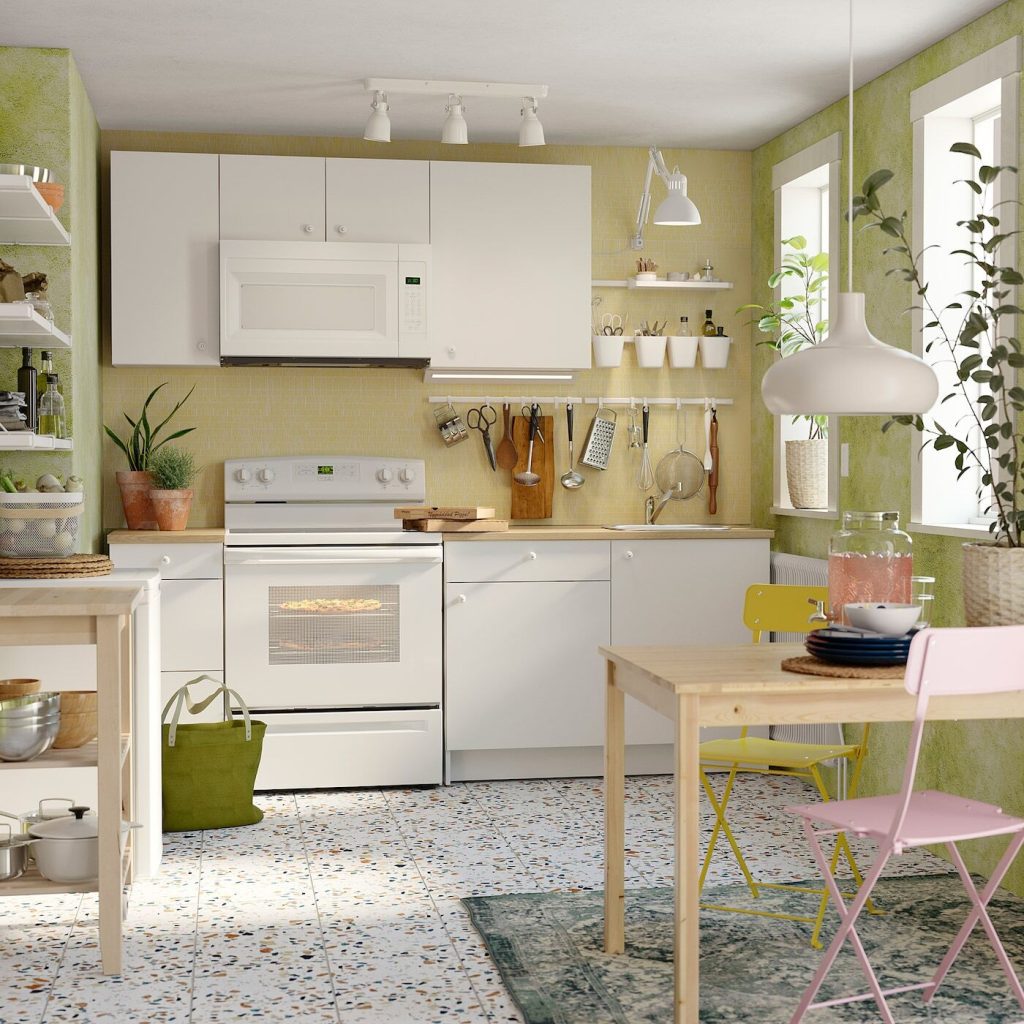
Small kitchens often contain narrow spaces that seem difficult to decorate. The wall beside a refrigerator, the area near a pantry, the end of a cabinet run, or a slim section between a window and a doorway may appear too small for conventional artwork. However, these spaces can become attractive features when you choose decorations that fit their proportions.
For a narrow wall, consider one vertical artwork, a small framed print, or a compact arrangement of two pieces. A tall, slim frame can use the available height without making the wall feel crowded. A tiny gallery arrangement may also work, but the frames should be sized appropriately for the space.
If the wall is close to a dining nook, a small clock or a carefully placed mirror may provide both visual interest and practical value. A narrow floating shelf can also work when the wall and mounting conditions support it, although the display should remain shallow enough to avoid interfering with movement.
In a small kitchen, wall-mounted decor can help preserve countertop and floor space. However, using every available wall is not necessarily the best strategy. Too many shelves, frames, hooks, and signs can make the room feel visually smaller even if the floor remains clear.
Instead, choose one main focal point and allow the surrounding areas to remain relatively simple. If the cabinets already provide strong visual structure, a single artwork or small shelf may be enough to finish the space.
Scale is especially important in compact kitchens. An oversized piece can overwhelm a narrow wall, while several tiny objects may appear scattered. Measure the area before buying decor and consider the visual relationship between the wall, nearby cabinets, and furniture.
Always keep walkways clear and ensure that wall-mounted objects cannot easily be knocked down when doors open or people move through the kitchen. Decorations near refrigerators, cabinet doors, and pantry entrances should not obstruct access.
Small kitchen wall decor works best when it solves a real problem. A vertical print can fill an awkward gap, a shelf can display useful items, and a mirror can create a sense of depth. With careful selection, even a small wall can contribute to the kitchen’s overall design.
12. Style a Coffee or Breakfast Nook With Wall Decor
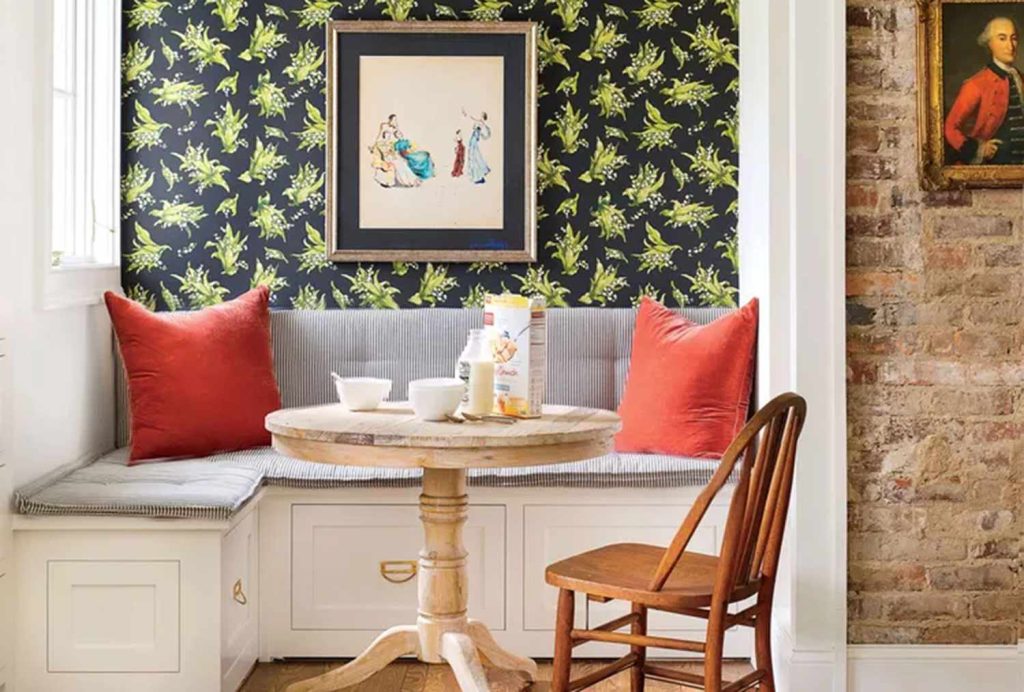
A coffee or breakfast nook offers a natural place to introduce a more personal decorating style. Because this area is often used for morning routines, quick meals, and casual conversation, it can benefit from artwork and accessories that make the kitchen feel welcoming.
Start by identifying the wall behind or beside the seating area. A framed coffee illustration, a small gallery wall, a round mirror, or a simple shelf can establish a focal point without requiring a major renovation. If the nook already includes colorful cushions or a patterned seat, choose wall decor that repeats one of those colors.
Floating shelves can hold a few attractive mugs, a small framed print, or decorative ceramics. However, avoid using the shelves as a place to store every mug and accessory you own. A limited selection creates a more polished appearance and leaves space for the individual pieces to stand out.
For a modern nook, choose simple artwork and streamlined frames. A farmhouse breakfast corner may look better with natural wood, vintage prints, and warm neutral colors. A colorful kitchen can support more playful artwork, provided the palette remains coordinated.
If the nook sits beside a window, use the natural light to guide your design. Artwork on an adjacent wall can balance the visual weight of the window, while a mirror may reflect light into a darker corner. Avoid hanging delicate pieces where condensation, direct sunlight, or frequent cleaning could damage them.
Comfort and practicality should remain part of the design. Wall decor should not interfere with seating, chair movement, or access to the table. Shelves should be positioned securely and high enough to prevent accidental contact when people sit down or stand up.
A breakfast nook does not need to be large to feel special. A small table, comfortable seating, coordinated wall art, and one or two thoughtful accessories can create a defined area within an open-plan kitchen.
This approach also works well in apartments and smaller homes where a separate dining room is not available. By using kitchen wall decor to distinguish the breakfast area, you can make the kitchen feel more organized while giving everyday routines a more inviting setting.
How to Choose the Best Kitchen Wall Decor for Your Home

Choosing kitchen wall decor becomes easier when you begin with the wall itself rather than shopping for accessories first. Look at the size of the empty area, the amount of natural light, the nearby cabinets, and the colors already present in the room. This will help you determine whether the wall needs a focal point, more texture, a decorative display, or a practical storage solution.
For example, a large empty wall may benefit from a statement artwork or gallery arrangement. A small wall near a coffee station may need only one framed print. A wall beside a dining nook could support a mirror or a small collection of decorative plates. If the kitchen already has open shelving and a detailed backsplash, keeping the remaining walls simple may produce the most attractive result.
Think about your lifestyle as well. A busy family kitchen may need wall decorations that are easy to wipe clean and securely installed. A rental kitchen may benefit from lightweight frames or removable wallpaper, while a homeowner planning a long-term update may prefer permanent finishes or custom shelving.
The right kitchen wall decor should complement the way you use the room. If you cook frequently, avoid creating displays that collect grease or interfere with food preparation. If your kitchen is mainly a social gathering area, artwork and a thoughtfully styled breakfast nook may deserve more attention.
Kitchen Wall Decor for Different Design Styles
Modern Kitchen Wall Decor
Modern kitchens usually benefit from clean lines, simple frames, controlled colors, and carefully selected accessories. One large artwork, a small set of abstract prints, or a streamlined floating shelf can provide interest without making the room feel busy.
Black frames, natural wood, muted artwork, and simple ceramic objects can complement contemporary cabinets and stone countertops. The aim is to create contrast and texture while preserving the kitchen’s uncluttered appearance.
Farmhouse Kitchen Wall Decor
Farmhouse kitchen wall decor often features natural wood, vintage-inspired artwork, traditional plates, simple shelves, and warm neutral colors. These elements can make the room feel comfortable and lived-in without requiring a complete farmhouse renovation.
To keep the look fresh, combine traditional pieces with contemporary details. For example, vintage food artwork can sit beside simple black frames, while rustic wooden shelves can display clean-lined ceramics. Avoid filling every wall with matching signs, because a more collected arrangement often feels more personal.
Minimalist Kitchen Wall Decor
Minimalist kitchen wall decor focuses on a small number of meaningful elements. Instead of decorating every empty space, choose one statement artwork, a simple mirror, or a carefully styled shelf and allow the rest of the wall to remain open.
This approach works particularly well in small kitchens and contemporary interiors. It makes individual pieces more noticeable and reduces the visual clutter that can make a kitchen feel crowded.
Rustic and Cottage Kitchen Wall Decor
Rustic and cottage kitchens can use botanical prints, handmade ceramics, natural wood, vintage artwork, and decorative plates to create warmth. These materials complement the relaxed character of the style and can be introduced gradually over time.
Rather than purchasing a complete matching set, mix a few objects that share a color palette or material. A vintage print, a wooden shelf, and several ceramic pieces can create a layered appearance without making the kitchen look overly coordinated.
Common Kitchen Wall Decor Mistakes to Avoid
One common mistake is decorating every available wall. Empty space is not automatically a problem; it can help a room feel balanced and give important features more visual impact. Instead of adding artwork to every wall, identify one or two areas that would genuinely benefit from decoration.
Another mistake is choosing pieces that are too small for the wall. A tiny print can disappear on a wide wall, while several small objects may look scattered if they lack a clear arrangement. Measure the area before purchasing artwork and consider how the pieces will relate to nearby cabinets and furniture.
Ignoring kitchen conditions can also damage your decorations. Grease, steam, moisture, and splashes may affect paper artwork, delicate frames, wooden objects, and other materials. Keep sensitive pieces away from high-exposure areas, and select finishes that can be maintained according to the manufacturer’s instructions.
Poor installation is another issue. Heavy shelves, mirrors, and ceramics need appropriate mounting hardware. Always check the weight rating and wall material before installation, and seek professional help if you are uncertain about the structure or mounting requirements.
Finally, avoid choosing decor solely because it is popular. Trends can provide inspiration, but the best kitchen wall decor should complement your existing finishes, match your personal taste, and remain practical for everyday life.
How to Decorate Kitchen Walls on a Budget
You do not need a large budget to transform your kitchen walls. Start by looking at what you already own. Framed photographs, attractive plates, vintage finds, cookbooks, cutting boards, and unused artwork may provide everything you need for a fresh arrangement.
Rearranging existing objects can make a surprising difference. You might move a print from another room, group several smaller frames together, or display a few attractive kitchen tools on a suitable wall-mounted rail. These changes can give the room a new look without requiring major purchases.
If you want to buy something new, prioritize one item that makes a clear difference. A statement print, a small mirror, a pair of floating shelves, or a carefully chosen wallpaper panel may be more effective than purchasing numerous small accessories.
Secondhand shops and flea markets can also provide affordable vintage artwork, decorative plates, and unusual frames. Check the condition of each item before purchasing it, and make sure it is suitable for the kitchen environment.
Renters can focus on movable and removable options, such as lightweight artwork, freestanding display pieces, and removable wallpaper that is compatible with the wall surface. Always test removable products carefully and follow the manufacturer’s instructions to reduce the risk of paint damage.
The most important budget strategy is to decorate intentionally. A few well-chosen pieces usually create a more sophisticated result than many inexpensive accessories competing for attention.
Frequently Asked Questions About Kitchen Wall Decor
What Can I Put on an Empty Kitchen Wall?
You can decorate an empty kitchen wall with framed artwork, a gallery wall, decorative plates, a mirror, floating shelves, botanical prints, or a carefully arranged collection of vintage objects. The best choice depends on the size of the wall, your kitchen’s style, and how close the area is to cooking and cleaning zones.
For a large wall, one statement artwork or a gallery arrangement can create a focal point. For a smaller wall, a vertical print or a simple decorative shelf may be enough. Always consider cleaning requirements and safe installation before choosing the final arrangement.
What Is the Best Wall Decor for a Small Kitchen?
The best kitchen wall decor for a small kitchen makes use of vertical space without creating visual clutter. One large but appropriately scaled artwork, a small mirror, or a narrow floating shelf can add personality while preserving valuable countertop space.
Choose a limited color palette and avoid filling every wall with decorations. If the kitchen already has patterned tiles or colorful cabinets, simple artwork may provide a better balance than another strong pattern.
How Can I Decorate Kitchen Walls Without Drilling Holes?
You can use lightweight framed prints with suitable removable hanging strips, lean artwork on an existing stable shelf, or choose removable wallpaper designed for your wall surface. Renters may also use freestanding displays and existing furniture to introduce decorative elements without permanent changes.
Check the weight limits and surface requirements of adhesive products before using them. Humidity, paint type, wall texture, and temperature can affect their performance, so follow the manufacturer’s instructions and avoid using adhesive systems for heavy or fragile objects.
What Kind of Art Looks Best in a Kitchen?
Food-inspired illustrations, botanical prints, landscapes, abstract artwork, family photographs, and vintage illustrations can all look attractive in a kitchen. The best choice is artwork that complements the room’s colors and feels consistent with your personal style.
For a modern kitchen, simple abstract prints or black-and-white photography may work well. For a farmhouse or cottage kitchen, botanical artwork and vintage food illustrations can create warmth. You do not have to use food-themed art; the kitchen can feel connected to the rest of your home through colors, materials, and framing.
Can I Put Pictures Above Kitchen Cabinets or Counters?
Yes, pictures can work above cabinets or counters when the location is safe and the artwork is appropriately protected. Areas farther from the stove and sink are generally easier to maintain because they experience less direct heat, grease, and moisture.
Before hanging artwork, measure the available space and choose frames that fit comfortably without interfering with cabinet doors, windows, or ventilation. Keep the artwork securely mounted and follow any relevant product guidance for heat and moisture exposure.
How Can I Make Kitchen Wall Decor Look Expensive?
To make kitchen wall decor look more polished, focus on proportion, quality-looking materials, consistent framing, and a coordinated color palette. One well-sized artwork or a carefully arranged collection often looks more sophisticated than many small decorations placed randomly.
Natural wood, ceramic pieces, simple black frames, and restrained metallic accents can create a refined appearance. Leave enough empty space around the decorations so each item can stand out, and avoid overcrowding the wall.
What Kitchen Wall Decor Is Best for a Rental?
For a rental kitchen, consider lightweight artwork, removable wallpaper approved for your wall surface, freestanding decorative pieces, and displays that use existing shelves or furniture. These options can introduce color and personality without requiring major alterations.
Always check your lease and test removable products in a discreet location before using them extensively. Avoid installing heavy shelves or mirrors unless you have permission and can use appropriate mounting hardware.
Final Thoughts on Kitchen Wall Decor
The best kitchen wall decor does more than fill empty space. It creates a connection between your cabinets, countertops, furniture, lighting, and personal style while keeping the room practical for everyday use.
Whether you choose a gallery wall, food-inspired artwork, floating shelves, decorative plates, a statement painting, vintage finds, wallpaper, a mirror, wooden cutting boards, botanical prints, small-space decorations, or a beautifully styled breakfast nook, the key is to select pieces that suit your kitchen rather than copying an entire design trend.
Start by identifying the wall that needs the most attention. Consider its size, lighting, location, and exposure to cooking residue before choosing your decorations. Then select a few pieces that complement your existing finishes and allow enough space for the arrangement to breathe.
If your kitchen is small, focus on vertical space and avoid unnecessary clutter. If it is large, use a statement piece or coordinated display to create a clear focal point. If your budget is limited, rearrange existing accessories and add only the items that provide the greatest visual improvement.
Thoughtful kitchen wall decor can make even an ordinary kitchen feel warmer, more organized, and more personal. You do not need a complete renovation to create a beautiful space. With the right combination of artwork, texture, color, and practical styling, your kitchen walls can become one of the most attractive features of your home.



One thought on “Kitchen Wall Decor: 12 Stylish Ideas to Transform Your Space 2026”