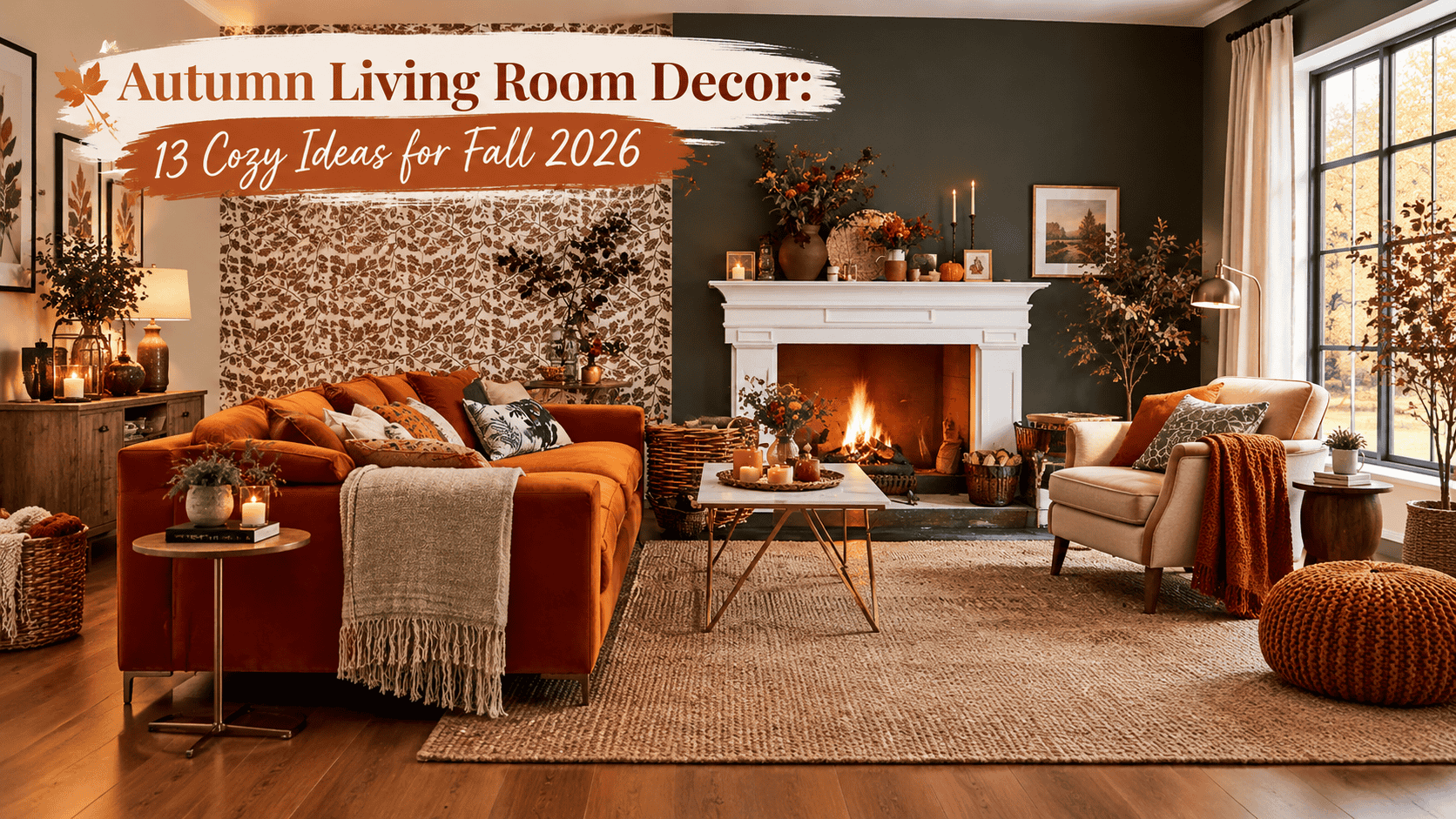
Discover 13 autumn living room decor ideas for fall 2026, from warm color palettes and cozy textures to seasonal pillows, lighting, natural accents, and budget friendly styling.
Autumn is one of the easiest seasons to bring into your living room because you do not need to completely redesign the space. A few carefully chosen changes in color, texture, lighting, and accessories can make an everyday room feel warmer, cozier, and ready for the season.
The best autumn living room decor does not have to mean covering every surface with pumpkins or using bright orange everywhere. Modern fall decorating is much more flexible. You can create an autumn-inspired room with rust and cream, olive and beige, burgundy and taupe, warm wood, soft textiles, dried branches, candles, and atmospheric lighting.
For a US home, the words “autumn” and “fall” are often used interchangeably when talking about seasonal decorating. That means your decorating approach can be described as autumn living room decor while still incorporating popular fall living room ideas that feel natural for American homes.
In this guide, you will discover 13 practical autumn living room decor ideas for 2026, along with advice for choosing colors, styling different sofa colors, decorating small living rooms, creating a sophisticated look without too much orange, and transitioning your room from summer into fall.
What Is Autumn Living Room Decor?
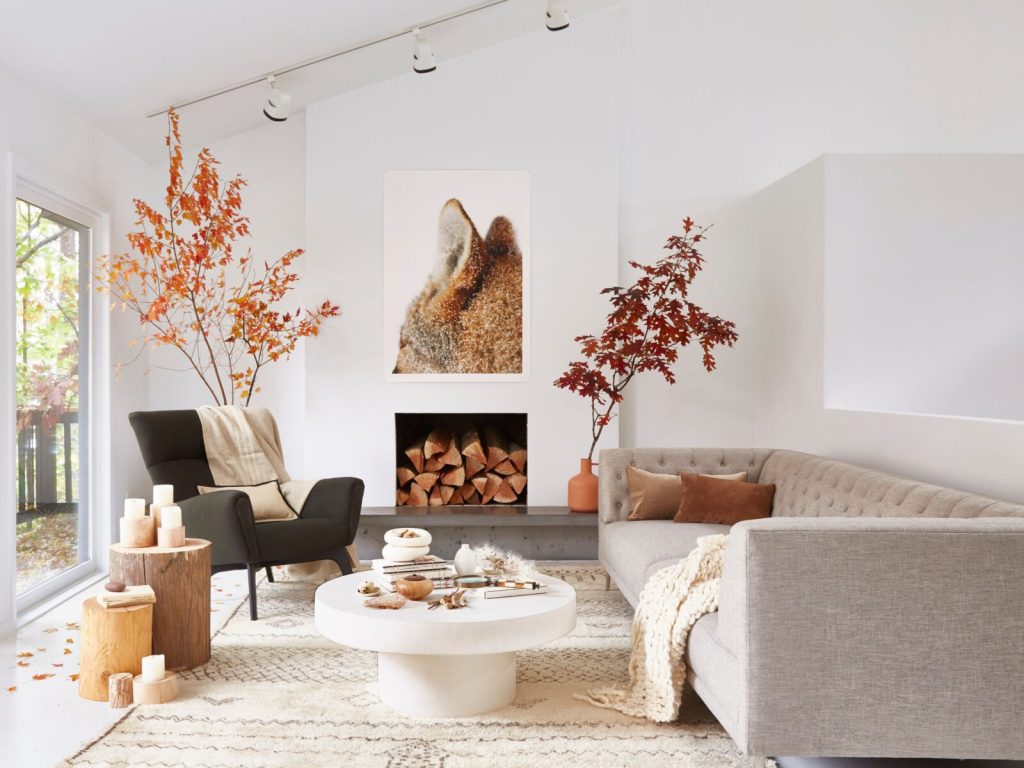
Autumn living room decor is seasonal styling designed to make a living room feel warmer, more comfortable, and visually connected to the fall season. Instead of changing the entire room, the approach usually focuses on smaller elements such as pillows, throws, rugs, artwork, foliage, candles, lighting, and tabletop accessories.
The strongest autumn living room decor looks connected to the permanent design of the room. If your living room already has a beige sofa, wood furniture, and neutral walls, you do not need to introduce an entirely new color scheme. Rust pillows, an olive throw, warm brass details, dried branches, and soft lighting may be enough to create a seasonal transformation.
Modern autumn decorating is also moving away from the idea that every fall room needs obvious seasonal decorations. A sophisticated living room can feel unmistakably autumnal through texture, color, natural materials, and lighting without looking themed.
That makes autumn living room decor especially useful for homeowners who want a seasonal refresh that still feels elegant and livable after the first few weeks of fall.
How to Choose an Autumn Color Palette for Your Living Room
The easiest way to create cohesive autumn living room decor is to start with the colors that already exist in your room. Look at your sofa, rug, curtains, flooring, walls, and larger furniture pieces before buying seasonal accessories.
Warm neutrals such as cream, beige, taupe, camel, brown, and warm white create an excellent foundation. From there, you can introduce one or two stronger autumn colors such as rust, terracotta, burgundy, olive, mustard, or deep green.
For example, a cream sofa can work beautifully with rust and brown accents, while a gray sofa may benefit from warmer shades such as terracotta, camel, burgundy, or olive. A blue sofa can be paired with rust or warm brown to create contrast without making the room feel overly seasonal.
If you want to use an actual wall color, sample it before committing. Sherwin-Williams describes Cavern Clay SW 7701 as a reddish-orange midtone and provides its coordinating colors on its official color page. This type of reference can help you evaluate whether a warm earthy shade works with the existing colors in your room.
The goal is not to use every autumn color at once. A restrained palette usually looks more sophisticated. Choose a foundation color, one seasonal accent color, and one supporting neutral, then repeat those shades through different textures.
How to Balance Warm and Dark Autumn Colors
Autumn colors can quickly make a living room feel darker if too many deep shades are used at the same time. To keep the space balanced, combine richer seasonal colors with lighter neutrals and natural materials.
For example, burgundy pillows can be softened with cream upholstery, while dark olive can be paired with warm white walls and light wood. Chocolate brown works well when balanced with beige, ivory, or oatmeal textiles.
The size of the room should also influence your color choices. A small living room may benefit from lighter autumn shades such as camel, cream, sage, and muted rust, while a larger room can handle deeper colors such as burgundy, forest green, and chocolate brown.
Instead of spreading a dark color across every surface, use it as an accent and repeat it in two or three places. This creates a cohesive autumn palette without making the living room feel heavy.
13 Autumn Living Room Decor Ideas for Fall 2026
1. Layer Rust and Cream Pillows on the Sofa
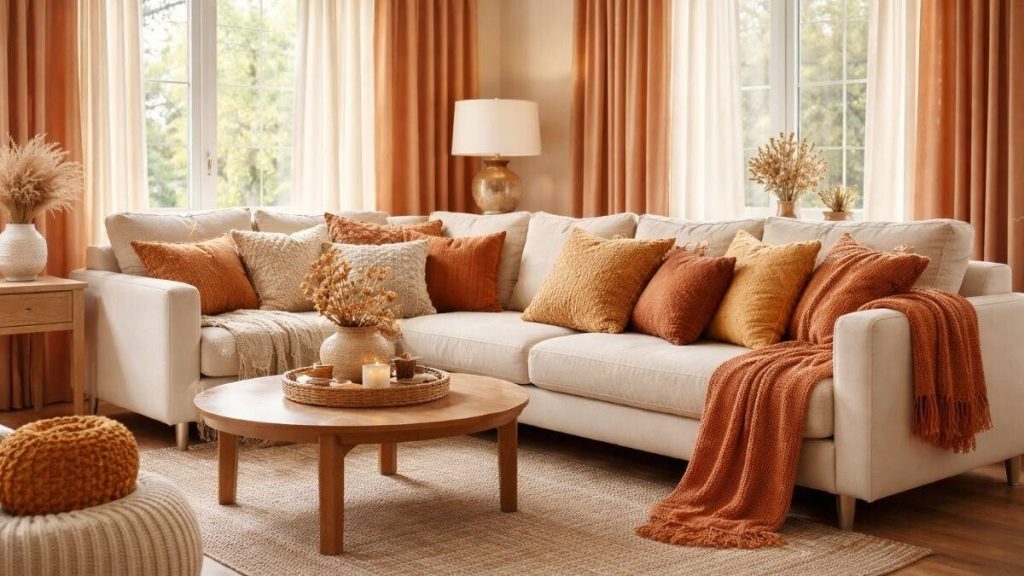
One of the easiest ways to introduce autumn living room decor is by changing the pillows on your sofa. Because pillows are relatively small, they can introduce strong seasonal color without permanently changing the room.
Rust and cream make an especially useful combination because the warm rust shade brings autumn character while cream keeps the arrangement soft and balanced. You can also introduce camel, beige, or muted brown to create additional depth.
Instead of buying several pillows that all look identical, combine different materials and shapes. A rust velvet pillow can sit beside a cream woven pillow, while a smaller patterned cushion adds subtle visual interest.
The goal is to create layers rather than a perfectly matching set. Repeating the same rust tone somewhere else in the room, such as artwork, a vase, or a small decorative object, can make the entire arrangement feel intentional.
This simple pillow update can make autumn living room decor feel immediate without requiring a new sofa, rug, or major furniture purchase.
How Many Seasonal Pillows Should You Use?
The number of pillows should depend on the size of the sofa rather than a fixed decorating rule. A compact sofa may only need two or three well-chosen pillows, while a larger sectional can accommodate a fuller arrangement.
Instead of making every pillow the same color, create a simple hierarchy. Use one dominant autumn shade, one lighter neutral, and one patterned or textured pillow. For example, rust velvet, cream linen, and a subtle brown-and-cream pattern can create depth without making the sofa look overly decorated.
Keep some of the original sofa visible. The goal is to enhance the furniture rather than cover it completely with seasonal accessories.
2. Add a Chunky Throw for Cozy Texture
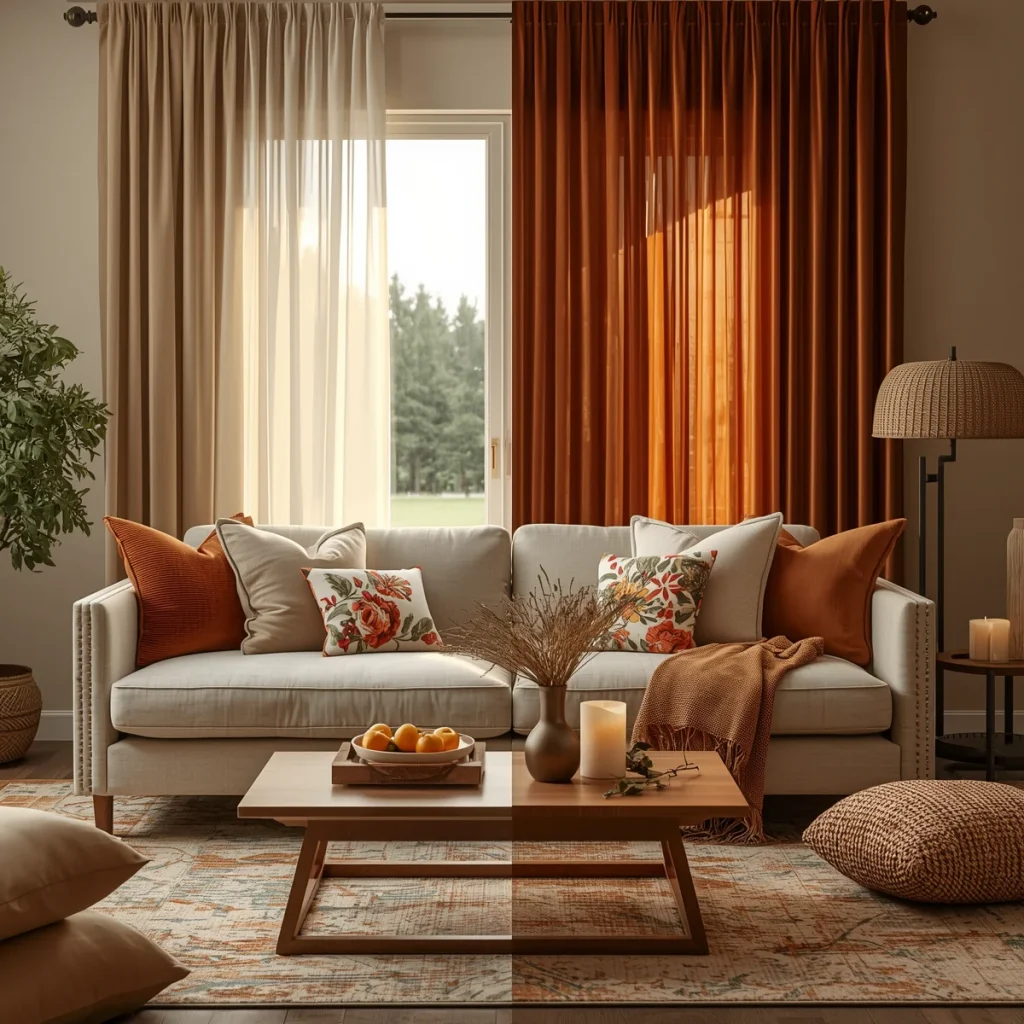
Texture is one of the most powerful tools in autumn living room decor because it can make a room feel seasonal without relying heavily on themed accessories.
A chunky knit throw draped casually over the sofa or accent chair can introduce softness and visual warmth. Wool-look, woven, boucle, quilted, and brushed textures can create a comfortable atmosphere while also making the room feel more layered.
Choose the throw according to your existing palette. Cream, oatmeal, camel, brown, rust, olive, and muted burgundy can all work beautifully for fall.
You can also use the throw to connect different parts of the room. If your sofa is neutral, choose a throw that repeats a color found in the rug or artwork. This creates continuity without requiring every item to match.
For a more sophisticated result, avoid covering every chair with a blanket. One or two strategically placed throws usually create more visual impact than several identical pieces.
3. Style an Autumn Coffee Table
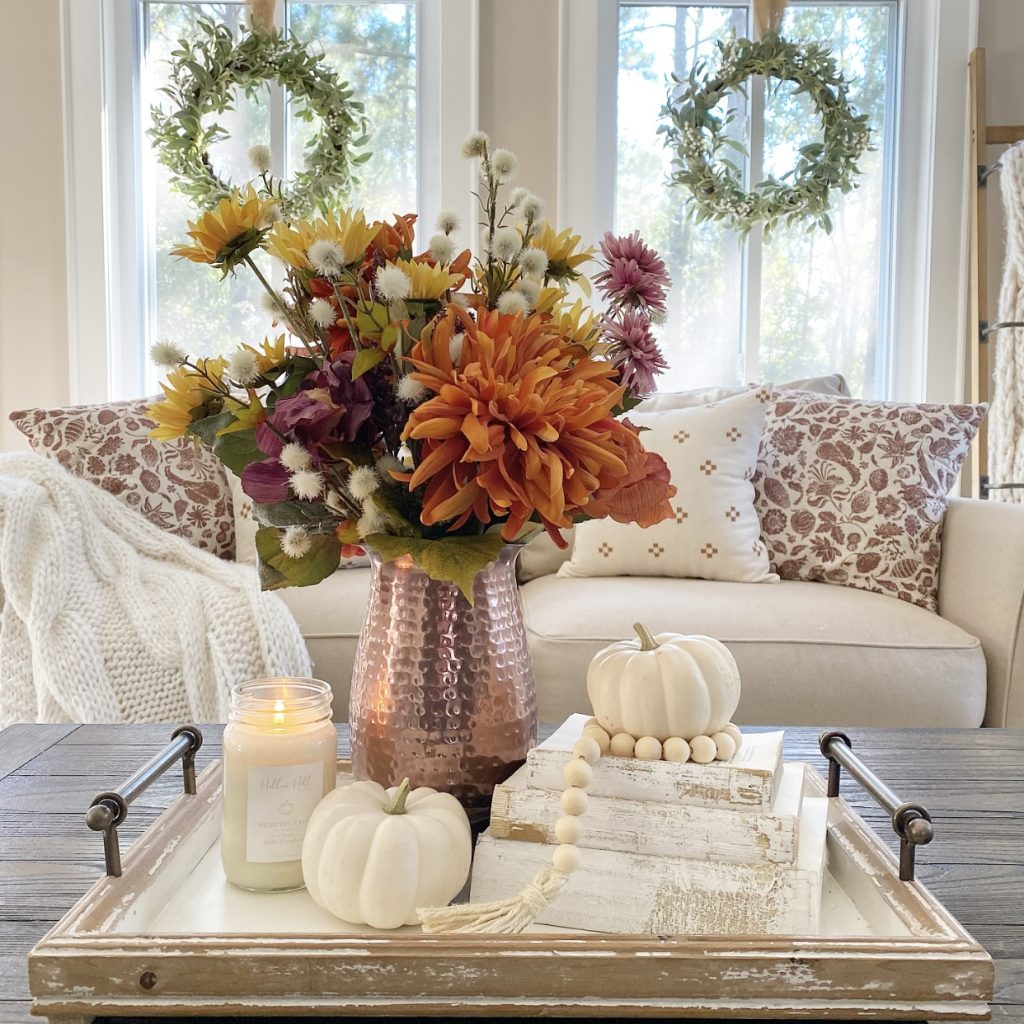
The coffee table is a natural focal point for autumn living room decor because it sits at the center of the seating area. It provides a place to introduce seasonal colors, natural elements, books, ceramics, and other small details.
Start with a tray or low decorative object that creates a visual boundary. Add a vase containing dried branches, seasonal foliage, or simple stems. A stack of books can add height, while a ceramic bowl or small sculptural object can provide another shape.
The important thing is to keep enough empty surface visible. A coffee table covered with decorations can quickly become impractical and visually crowded.
For a more modern autumn look, choose natural materials instead of obvious seasonal signs. A wooden bowl, amber glass vase, textured ceramic, dried branch arrangement, and neutral books can communicate the season without making the table look overly themed.
This is particularly useful if you prefer elegant autumn living room decor rather than traditional pumpkin-heavy fall decorating.
Create Height and Balance on the Coffee Table
A coffee table arrangement looks more intentional when the objects are not all the same height. Start with one taller element, such as a vase filled with dried branches, then add medium-height items such as a candle or ceramic object and a lower element such as a tray or stack of books.
Grouping smaller objects together can also prevent the table from looking scattered. A tray is particularly useful because it visually connects several pieces while still allowing you to move the entire arrangement when the table is needed.
Leave enough open space for everyday use. Seasonal styling should make the coffee table more attractive without preventing people from placing down a drink, book, or remote.
4. Create a Warm Autumn Fireplace Mantel
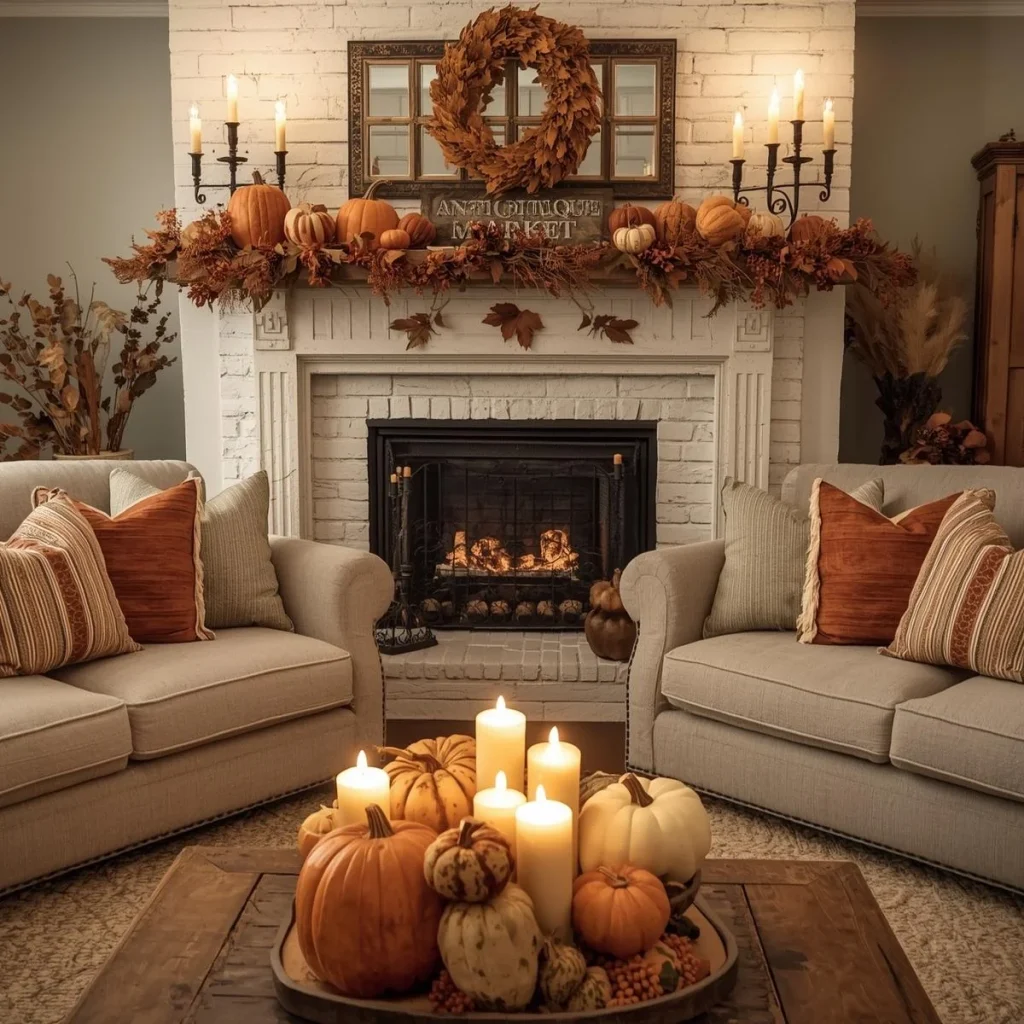
If your living room has a fireplace, the mantel can become one of the strongest focal points for autumn living room decor.
Start with one larger anchor element such as a mirror, artwork, oversized vase, or natural branch arrangement. Then layer smaller objects around it rather than placing several unrelated decorations in a straight row.
Warm wood, brass, ceramic, dried foliage, and neutral pottery can create a sophisticated autumn arrangement. If you like pumpkins, use a few carefully selected pieces in cream, muted orange, brown, or natural tones instead of covering the entire mantel.
Consider asymmetry as well. One taller arrangement on one side balanced by several smaller pieces on the other can create a more relaxed and collected appearance.
If your fireplace is already visually dramatic, keep the mantel simpler. Strong autumn living room decor should support the room’s existing focal point rather than competing with it.
5. Bring in Dried Branches and Autumn Foliage
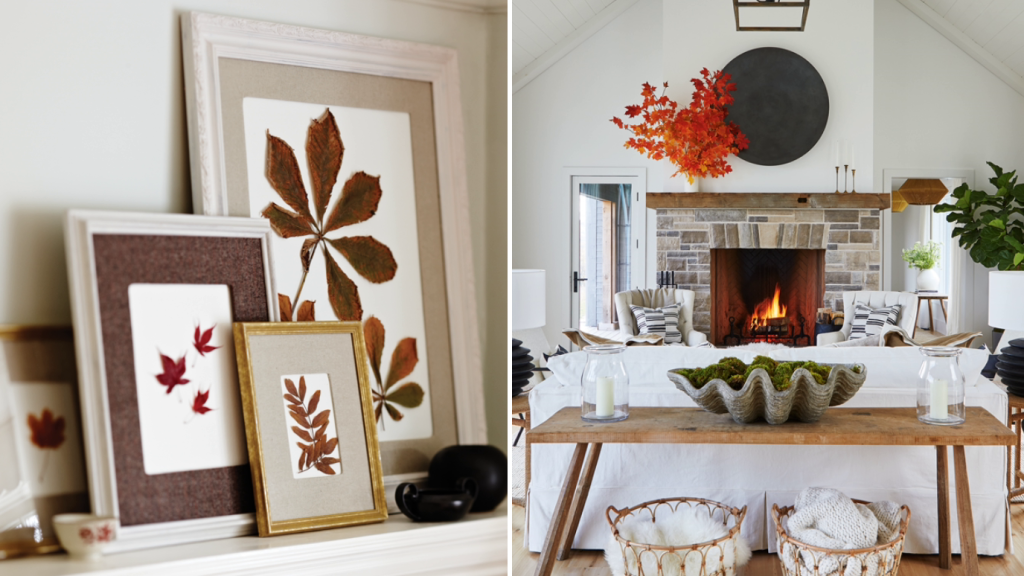
Natural elements are another excellent way to create autumn living room decor without making the room feel overly decorated.
Tall dried branches can add height to a living room corner, while smaller branches can be placed in a vase on a console or coffee table. Dried grasses, wheat, eucalyptus, leaves, and other preserved botanical materials can also introduce organic texture.
The advantage of natural-looking foliage is that it does not have to be bright orange to feel seasonal. Brown, beige, muted green, dusty red, and golden tones can create an autumn atmosphere while remaining compatible with neutral interiors.
Choose a container that matches the room. A ceramic vase can create a refined look, while a woven or natural vessel may work better in a farmhouse, rustic, or organic-modern room.
This approach is particularly useful for homeowners who want autumn living room decor that feels natural rather than obviously themed.
6. Use Warm Layered Lighting
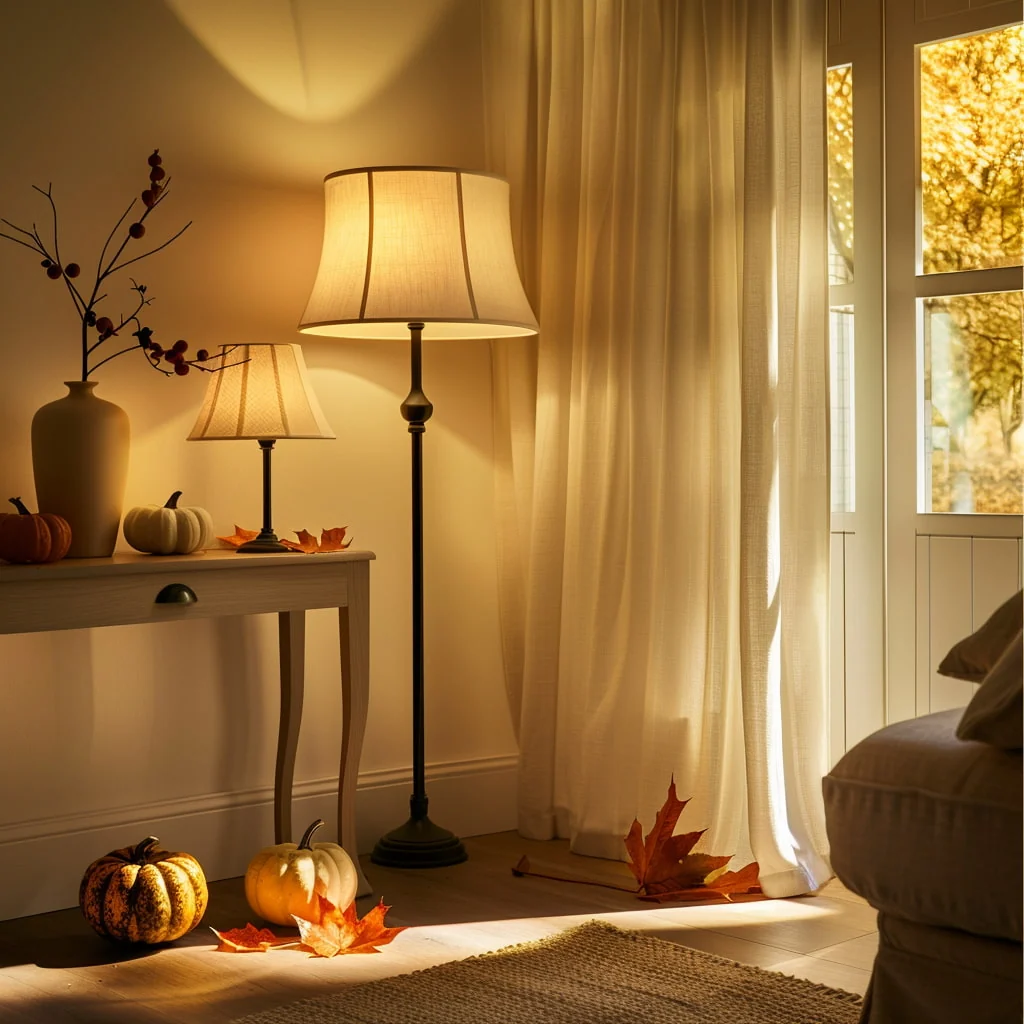
Lighting can completely change how autumn living room decor looks in the evening. Even a beautifully decorated room can feel cold if it depends entirely on a bright overhead fixture.
Use multiple light sources at different heights. A floor lamp can add height beside a sofa or chair, while a table lamp can create a softer pool of light on a console or side table.
Warm lighting also helps emphasize textures. Velvet, knit throws, wood, woven baskets, ceramic pieces, and textured rugs become more visually inviting when illuminated softly.
Candles can also create an autumn atmosphere, but they should be used carefully. The National Fire Protection Association recommends keeping burning candles at least 1 foot away from anything that can burn and extinguishing candles when leaving the room or going to bed.
Flameless candles can provide a similar atmospheric effect when you want the appearance of candlelight without an open flame.
For sophisticated autumn living room decor, think about lighting as part of the overall design rather than as something added after the furniture and accessories are finished.
7. Combine Olive Green With Warm Neutrals
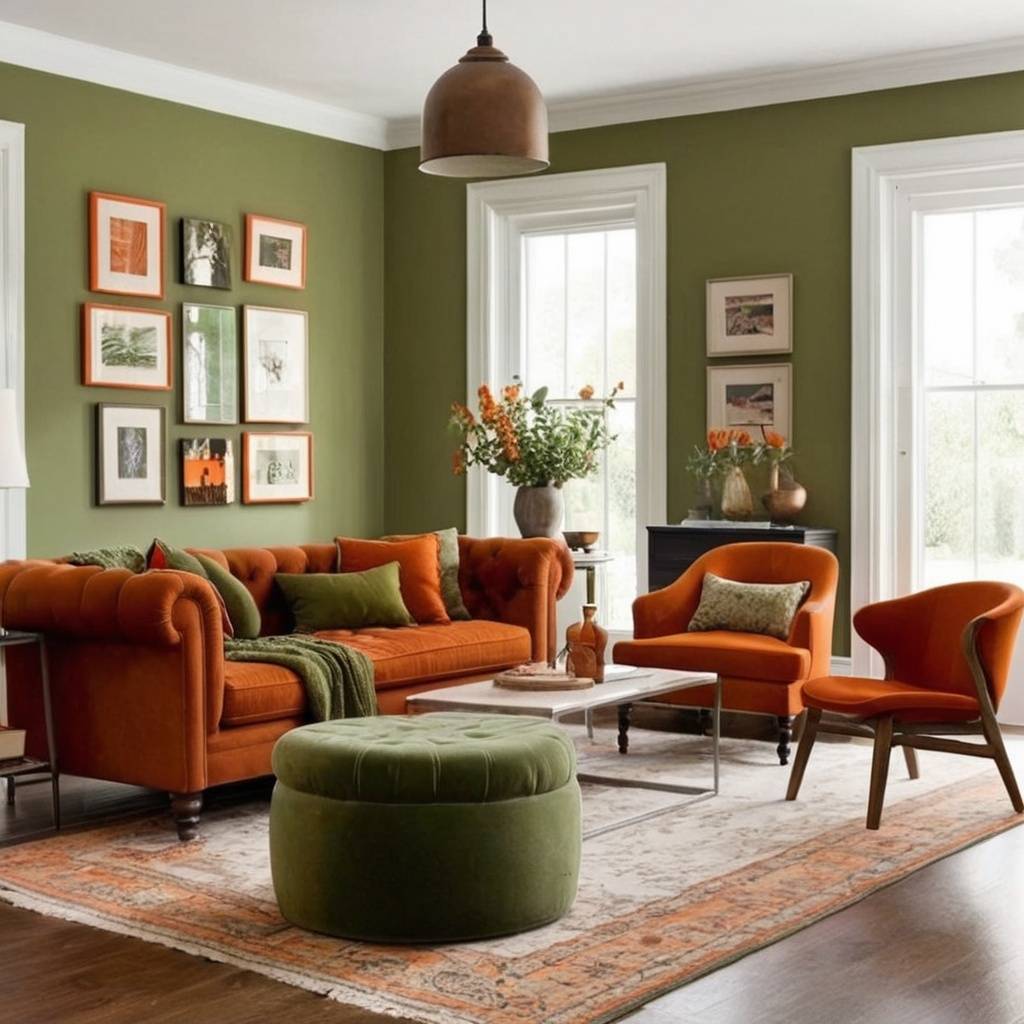
Autumn does not have to mean orange. Olive green is one of the most versatile colors for creating autumn living room decor because it connects the room to nature while remaining relatively subtle.
Try combining olive with warm white, cream, beige, camel, or natural wood. The result can feel seasonal without becoming visually heavy.
You can introduce olive through pillows, a throw, artwork, ceramics, foliage, or a small accent chair. If you want a stronger effect, an olive-colored wall or larger upholstered piece can become the main feature.
Olive also works well with brass and aged metal finishes. These materials can introduce warmth without requiring additional bright colors.
For a modern living room, combine olive with cream and black accents. For a farmhouse room, use olive with natural wood and beige. For an elegant room, pair olive with warm white, brass, and velvet.
This makes olive an excellent choice for autumn living room decor when you want something more sophisticated than traditional orange.
8. Create an Autumn Look Without Using Orange
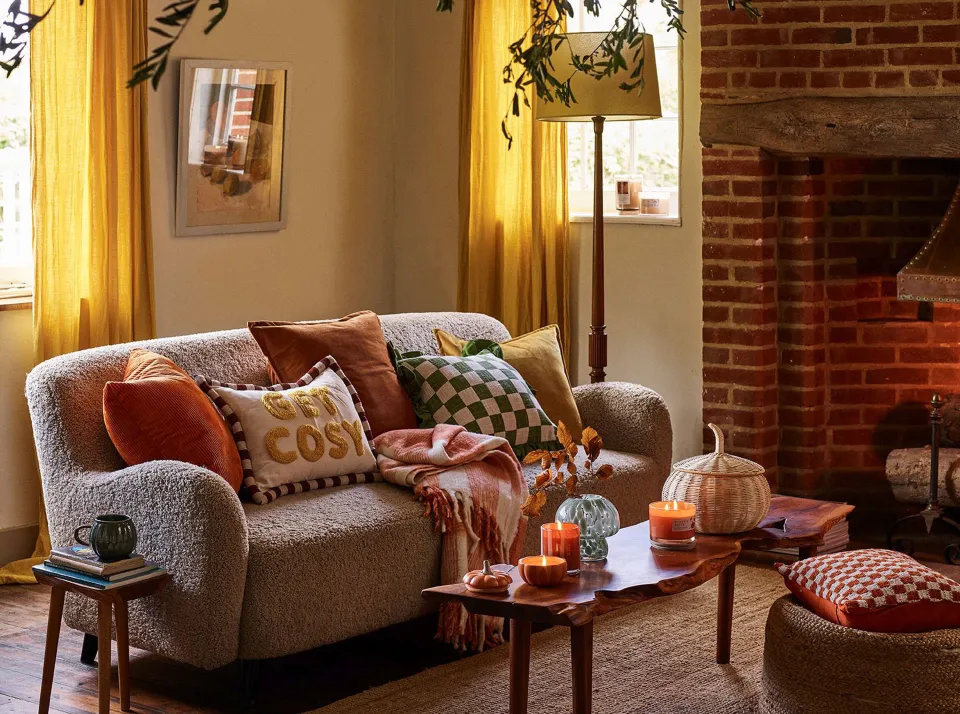
A major advantage of modern autumn living room decor is that you do not have to use bright orange at all.
If orange does not work with your existing furniture, build your autumn palette around burgundy, olive, chocolate brown, camel, taupe, cream, or warm white.
A beige sofa can look beautiful with burgundy pillows, olive foliage, brown wood, and warm brass. A gray sofa can be warmed up with camel, rust-brown, cream, and olive. A navy sofa can create a sophisticated contrast with rust, cognac, and warm wood.
The key is to capture the feeling of autumn rather than reproducing a specific color.
Texture can also do much of the seasonal work. A wool throw, velvet pillow, woven basket, wood accessories, dried branches, and warm lighting can make a room feel unmistakably autumnal even when the palette remains neutral.
This approach is especially effective for homeowners who want autumn living room decor that feels contemporary and sophisticated.
9. Style a Neutral Autumn Living Room
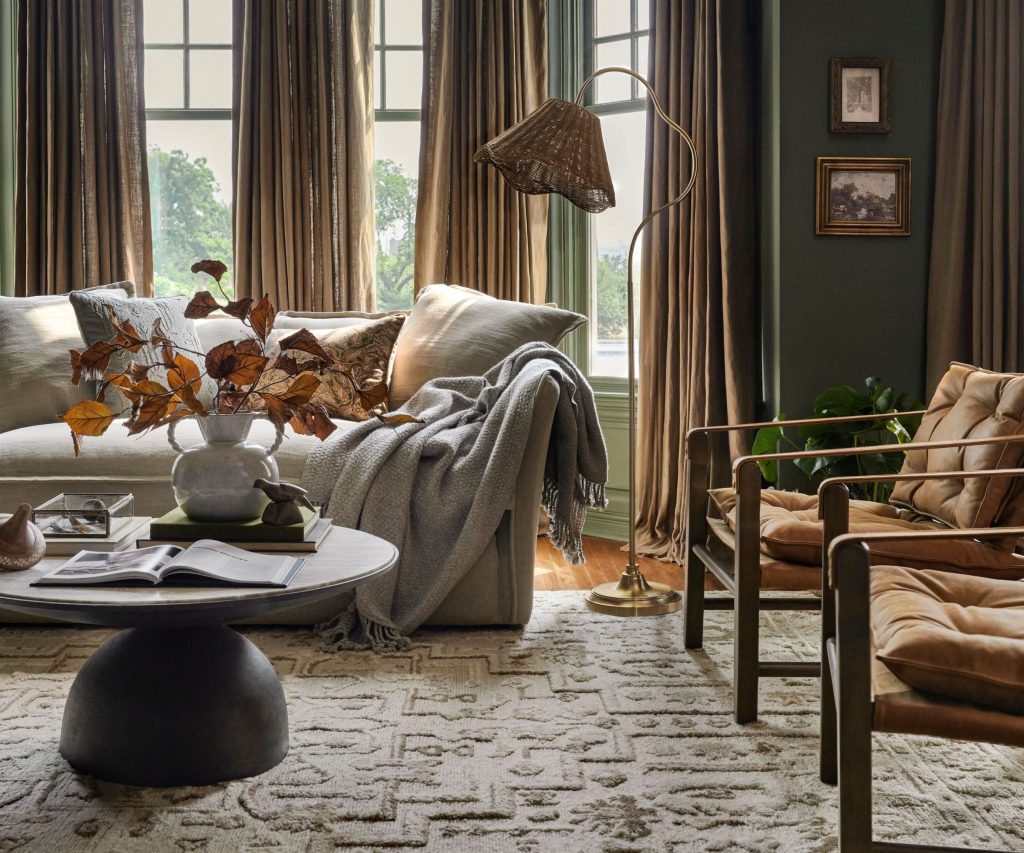
Neutral interiors are perfect for autumn living room decor because seasonal accents can be introduced without fighting existing colors.
Start with cream, beige, ivory, taupe, or warm gray as the foundation. Then introduce autumn through texture and small amounts of color.
A beige sofa can be styled with cream and camel pillows, a chunky oatmeal throw, a wood coffee table, a ceramic vase, dried branches, and warm lighting. A small amount of rust or burgundy can then be added as an accent.
The advantage of this approach is flexibility. When winter arrives, you can replace the autumn-colored accessories with deeper winter tones without redesigning the room.
Neutral autumn living room decor also works particularly well in open plan homes because it can coordinate naturally with kitchens, dining spaces, and adjacent rooms.
Autumn Living Room Decor for Different Interior Styles
Autumn decorating does not need to look the same in every home. The easiest way to create a seasonal room is to adapt fall colors and textures to the interior style you already have.
Modern Autumn Living Room
For a modern living room, keep seasonal decorations restrained. Use a simple palette of cream, rust, olive, brown, or charcoal and introduce warmth through textured pillows, a wool throw, wood accessories, and soft lighting.
Avoid filling the room with traditional fall signs or excessive pumpkins. One sculptural vase, a few dried branches, and carefully selected textiles can create a seasonal atmosphere while preserving clean lines.
Farmhouse Autumn Living Room
Farmhouse rooms work naturally with autumn materials such as wood, woven baskets, cotton, linen, ceramic, and dried foliage. Add plaid or subtle patterned textiles if they already fit the room’s existing style.
Warm beige, cream, brown, muted rust, and olive can create a cozy farmhouse palette without making the space feel overly themed.
Traditional Autumn Living Room
Traditional interiors can support richer autumn colors such as burgundy, forest green, camel, chocolate brown, and warm gold. Use these colors through upholstery, cushions, artwork, curtains, or small decorative objects.
Classic lamps, framed artwork, wood furniture, and elegant ceramics can reinforce the traditional character while seasonal foliage provides the fall connection.
Minimalist Autumn Living Room
A minimalist room does not need many seasonal decorations. Choose two or three changes with strong visual impact, such as a textured throw, a large vase with dried branches, and warmer lighting.
Keep surfaces relatively clear and allow the natural colors and textures to create the seasonal atmosphere.
Boho Autumn Living Room
Boho interiors can combine autumn colors with layered natural textures. Use woven baskets, macrame, textured cushions, wood, rattan, dried grasses, and earthy colors such as terracotta, rust, olive, and camel.
The key is to layer materials while maintaining a consistent palette so the room feels collected rather than cluttered.
10. Decorate a Small Living Room for Autumn
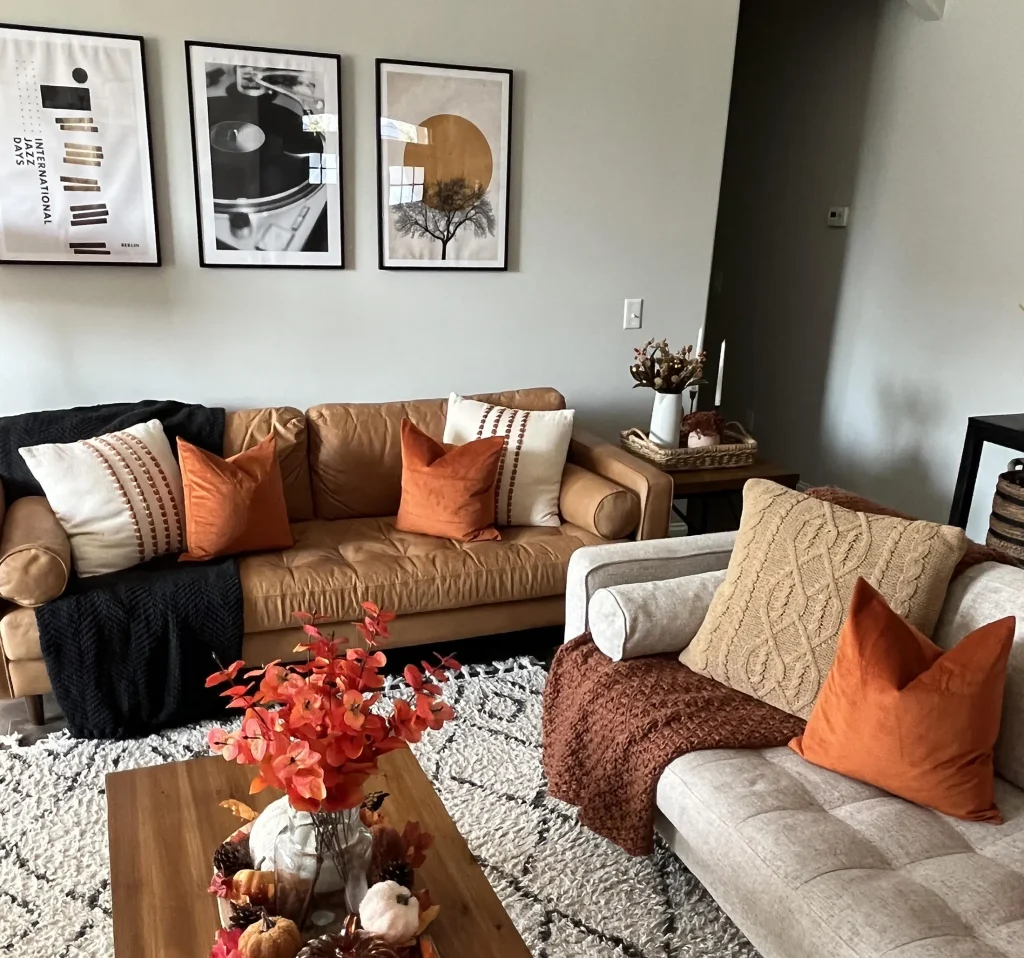
Small rooms need a different approach to autumn living room decor because adding too many seasonal accessories can make the space feel crowded.
Start with textiles because pillows and throws add seasonal character without taking much floor space. Then consider one vertical element such as a tall plant, narrow floor lamp, mirror, or slim artwork.
Avoid filling every corner simply because it is available. In a small room, breathing space is valuable.
A small coffee table can hold a simple vase and one or two decorative objects rather than a large collection. A narrow console can provide another place for seasonal styling without consuming too much space.
The best small-space autumn living room decor should make the room feel warmer while preserving circulation and visual openness.
For additional inspiration about using difficult or unused living-room areas, HomeStylingGuide’s guide to corner living-room styling can be used as a related resource.
11. Style Your Autumn Decor Around Your Sofa Color
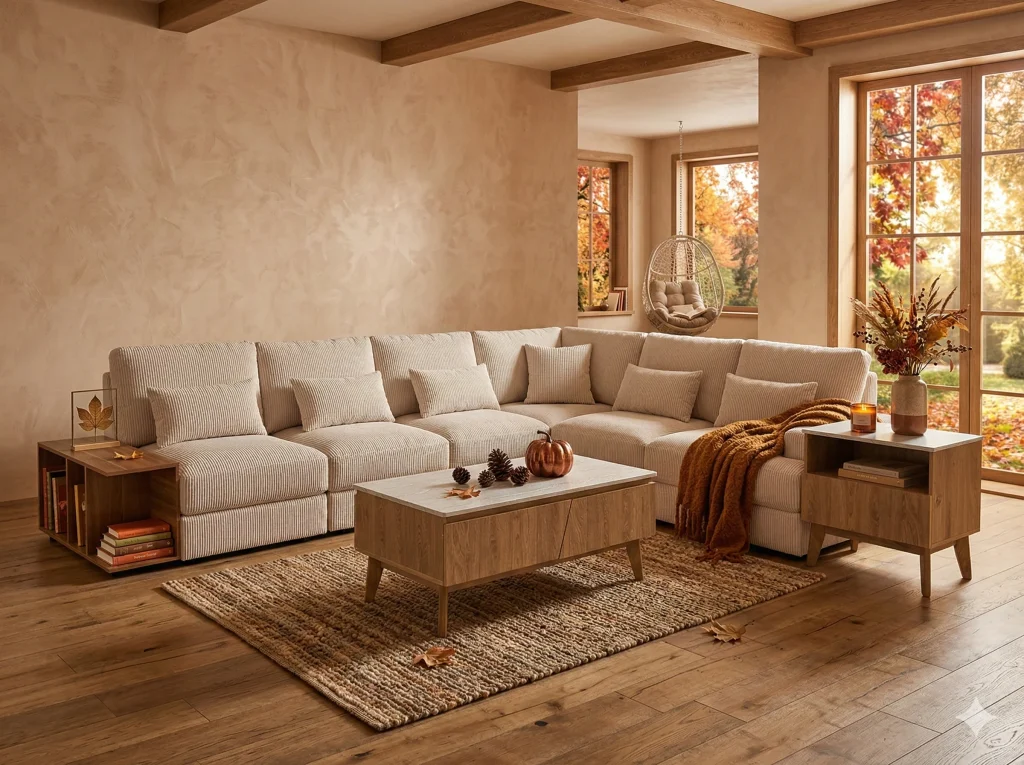
Your sofa is usually one of the largest pieces in the living room, so it should guide your autumn living room decor rather than being treated as an afterthought.
If you have a gray sofa, try rust, camel, burgundy, olive, cream, or warm brown. These colors can introduce warmth into a cooler neutral.
For a beige sofa, almost anything warm can work. Rust, terracotta, olive, chocolate brown, cream, and muted gold can create a comfortable layered palette.
A white sofa provides a clean foundation for stronger autumn colors. Burgundy, rust, forest green, brown, and camel can create contrast while maintaining an elegant appearance.
A brown sofa can be paired with cream, beige, olive, muted orange, burgundy, and warm white. Avoid using too much dark brown around it because the room may become visually heavy.
A blue sofa can create one of the most interesting autumn combinations. Rust, cognac, camel, cream, and warm wood provide contrast and make the blue feel richer.
This sofa-based approach makes autumn living room decor more personalized because the seasonal palette is designed around what you already own.
12. Mix Modern and Rustic Autumn Elements
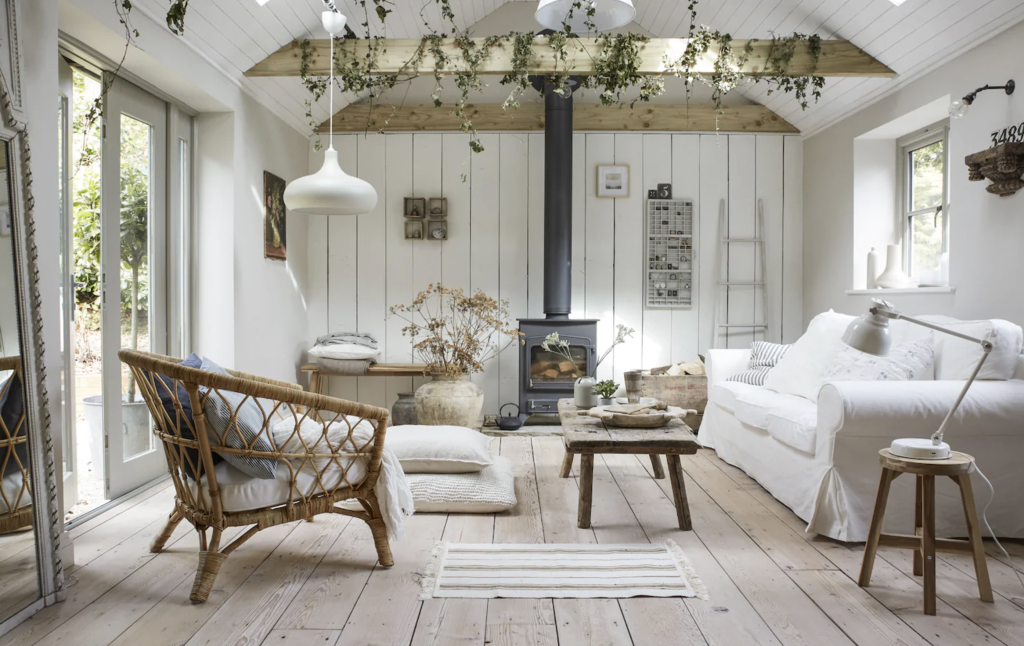
You do not have to choose between modern and rustic decorating. Combining the two can create some of the most sophisticated autumn living room decor.
Start with a modern foundation such as a clean-lined sofa, simple coffee table, contemporary artwork, or streamlined lighting. Then introduce rustic elements through wood, woven baskets, dried branches, pottery, wool, or natural stone.
The contrast keeps the room from looking overly themed. A modern room with only rustic decorations can feel disconnected, while a completely modern room with no texture may feel cold.
Balance is the key. Choose one or two rustic materials and repeat them rather than introducing every farmhouse accessory available.
For example, a modern cream sofa can be combined with a walnut coffee table, olive pillows, a woven basket, dried branches, and a simple brass lamp. The result feels seasonal without looking like a dedicated fall display.
This mixed approach can make autumn living room decor feel more current in 2026.
13. Create an Elegant Autumn Living Room With Layered Textures
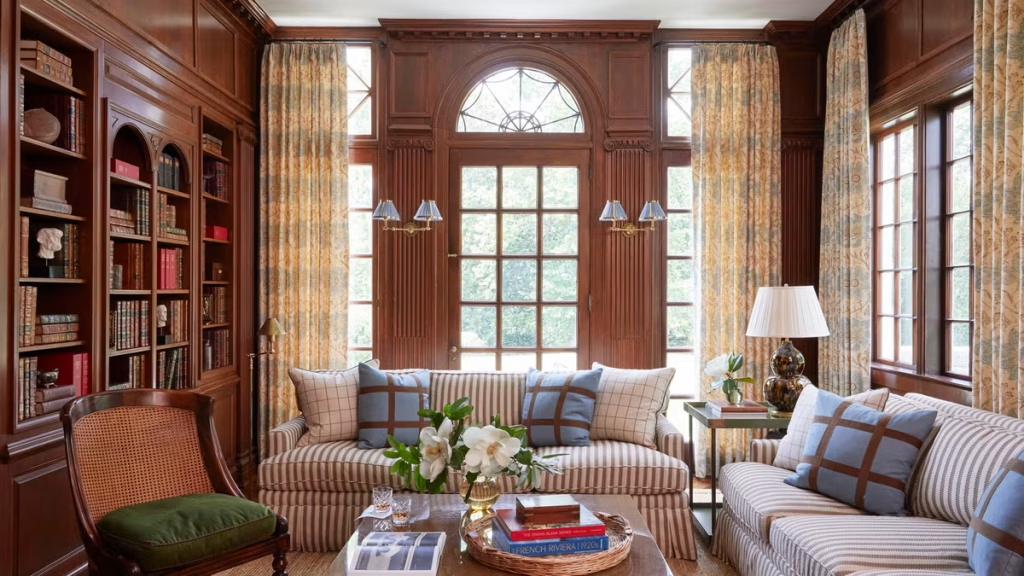
The final idea is to make texture the star of your autumn living room decor.
Instead of adding large amounts of seasonal decoration, create warmth through velvet, wool, linen, boucle, leather, wood, ceramic, woven materials, and soft rugs.
A cream or taupe sofa can become the foundation. Add a velvet accent pillow, a chunky wool throw, a textured rug, warm wood, a ceramic vase, and soft layered lighting.
This approach creates an autumn atmosphere without requiring pumpkins, seasonal signs, bright orange accessories, or large decorative collections.
It also gives you greater longevity. Once autumn ends, you can keep many of the same materials and simply change a few accent colors.
The result is autumn living room decor that feels warm, sophisticated, comfortable, and appropriate for everyday living rather than something that exists only for photographs.
How to Transition Your Living Room From Summer to Autumn
You do not need to completely redecorate your living room when the seasons change. A gradual transition is usually easier, less expensive, and more practical.
Start With Textiles
Begin by replacing lightweight summer textiles with warmer-looking materials. Swap thin throws for chunky knits, linen cushions for velvet or woven textures, and bright seasonal colors for earthy neutrals.
You do not need to replace everything. Keeping some lighter pieces can prevent the room from becoming too dark.
Introduce Autumn Colors Gradually
Start with warm neutrals such as cream, camel, beige, and warm brown. Then add one stronger autumn shade such as rust, olive, burgundy, or terracotta.
This approach allows the room to evolve naturally rather than changing from a summer palette to a heavily decorated fall room overnight.
Change Small Accessories
Replace a few vases, pillow covers, artwork pieces, or tabletop accessories. Move summer-specific decorations into storage and bring out pieces that work with your autumn palette.
Choose items that can transition into winter whenever possible. Neutral ceramics, wood accessories, cream textiles, and warm lighting can remain useful long after fall ends.
Adjust the Lighting
As daylight hours become shorter, lighting becomes increasingly important. Add or reposition floor lamps, table lamps, and accent lighting to make the room feel comfortable during darker evenings.
A seasonal transition should feel like an evolution of your existing room rather than a complete redesign.
Best Autumn Color Combinations for a Living Room
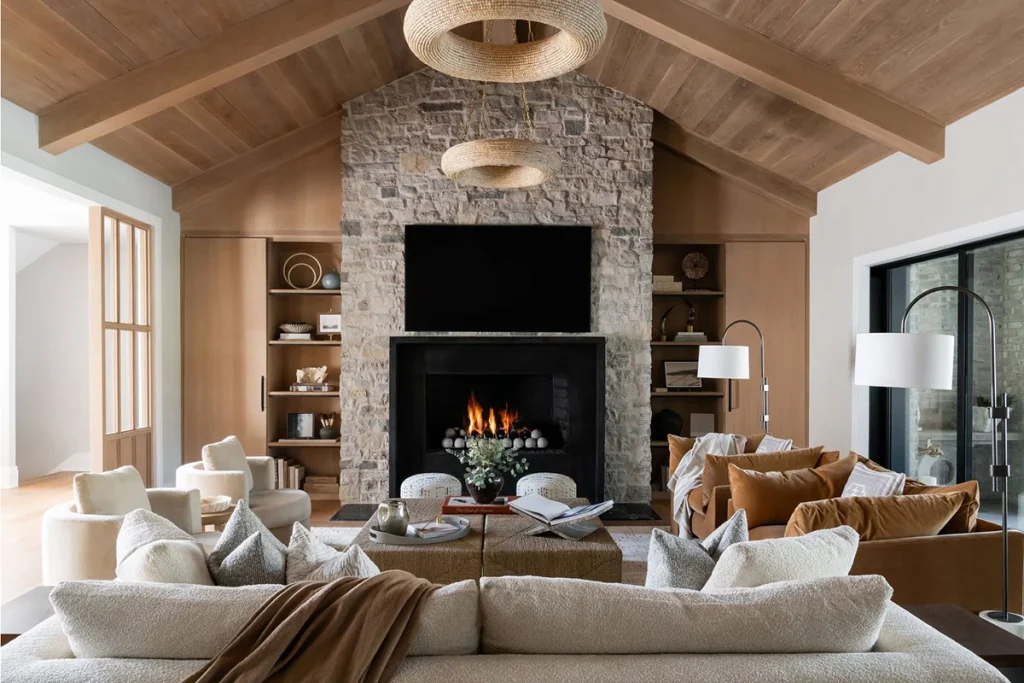
Choosing the right color combination can make your autumn living room decor look coordinated instead of random. The safest strategy is to begin with one dominant neutral and then introduce one strong seasonal shade with a supporting accent.
Rust, cream, and brown create a classic autumn combination. Rust provides seasonal warmth, cream keeps the room light, and brown connects the palette to natural wood and earthy materials.
Olive, warm white, and brass create a more sophisticated combination. This palette works particularly well in modern, transitional, and elegant rooms because the green feels natural while brass introduces warmth.
Burgundy, taupe, and cream create a richer, moodier look. This combination works beautifully during late fall and can transition naturally into winter.
Navy, rust, and camel provide stronger contrast. This palette is particularly effective when the room already contains blue upholstery or artwork.
Sage, warm white, and natural wood are useful for a light and airy autumn room. The result feels seasonal without becoming dark.
The most important rule is to repeat your chosen colors. If rust appears in your pillows, introduce a smaller amount of rust somewhere else, such as artwork, a vase, or a decorative object.
How to Make Autumn Living Room Decor Look Expensive
You do not need an expensive shopping list to create beautiful autumn living room decor. Proportion, texture, lighting, and restraint often have a greater effect than price.
Start by removing items that no longer contribute to the room. Seasonal decorating works best when it replaces some existing accessories rather than simply adding more.
Next, concentrate your seasonal investment on a few visible areas. The sofa, coffee table, fireplace, and lighting are often more important than decorating every shelf.
Choose materials that provide visual depth. Velvet, wool, linen, wood, ceramic, glass, woven fibers, and metal can make a simple room feel richer when they are combined carefully.
Your existing furniture can also become more sophisticated through styling. A neutral sofa may look completely different after adding well-chosen pillows, a textured throw, a properly sized rug, warm lighting, and one strong piece of artwork.
The goal of expensive-looking autumn living room decor is not to make the room look expensive. It is to make the room look intentional.
Autumn Living Room Decor on a Budget
A seasonal refresh can be surprisingly affordable when you shop your home before shopping online or in stores.
Move existing baskets, vases, books, lamps, artwork, and throws between rooms. You may already own many pieces that can support an autumn palette.
Then identify the few things that genuinely need changing. Pillow covers are often more practical than replacing entire pillows. A new throw can change the look of a sofa without replacing it. A small vase filled with dried branches can create a seasonal focal point without requiring a large arrangement.
Thrift stores and secondhand markets can also be useful for natural wood objects, baskets, ceramic vessels, frames, books, and vintage accessories.
If you are buying new items, choose pieces that can remain useful beyond autumn. A cream throw, neutral vase, warm wood tray, or textured basket can work throughout the year.
This makes budget-friendly autumn living room decor more sustainable and prevents seasonal decorating from becoming an expensive cycle of buying and storing temporary decorations.
How to Transition From Summer to Autumn Decor
A successful seasonal transition does not require removing everything from the room. Start by taking away items that strongly communicate summer, such as very bright tropical colors, lightweight seasonal accessories, or beach-specific decorations.
Then introduce warmer textures. Replace lightweight throws with knit or woven options and add a few richer pillow colors.
Next, adjust the lighting. As evenings become more important, floor lamps, table lamps, and warm accent lighting can make the room feel more comfortable.
Introduce natural autumn elements last. A few dried branches, seasonal foliage, ceramic pieces, or subtle pumpkins can complete the look.
This gradual method prevents autumn living room decor from feeling like a sudden theme change. Instead, the room naturally evolves from summer into fall.
Autumn Living Room Decor Mistakes to Avoid
One common mistake is using too much orange. Orange can be beautiful, but a room does not need to be orange from floor to ceiling to feel autumnal. Use it as an accent or choose other seasonal colors such as olive, burgundy, camel, or brown.
Another mistake is adding too many pumpkins. A few well-placed pumpkins can create seasonal character, but placing them on every table, shelf, and mantel can quickly make the room look cluttered.
Using too many unrelated colors can also weaken the design. Choose a controlled palette and repeat it.
Another problem is forgetting the permanent design of the room. Seasonal accessories should work with the sofa, rug, wall color, flooring, and furniture rather than fighting against them.
Finally, do not decorate every empty surface. Negative space is important. The best autumn living room decor feels layered and cozy while still allowing the room to breathe.
Autumn Living Room Decorating Do’s and Don’ts
Do Repeat Your Autumn Colors
If you introduce rust through pillows, repeat a smaller amount of that shade in artwork, a vase, flowers, or another accessory. Repetition makes the palette feel intentional.
Do Mix Textures
Combine materials such as wool, velvet, linen, wood, ceramic, leather, and woven fibers. Texture can make a neutral autumn room feel warm without requiring many colors.
Do Keep Everyday Function in Mind
Leave enough space around the coffee table, sofa, doors, and main walkways. Seasonal decorations should never make the room difficult to use.
Don’t Decorate Every Surface
You do not need pumpkins, leaves, candles, and autumn signs on every table and shelf. Concentrating seasonal details in a few areas usually creates a cleaner result.
Don’t Use Every Autumn Color
Rust, orange, mustard, burgundy, olive, brown, and terracotta can all look beautiful individually, but using all of them together can make the palette feel chaotic. Choose a small group of related shades.
Don’t Forget Your Existing Furniture
The sofa, rug, curtains, walls, and flooring should guide your autumn palette. Seasonal decorations should complement those permanent elements rather than compete with them.
Frequently Asked Questions About Autumn Living Room Decor
What are the best colors for autumn living room decor?
The best colors depend on your existing furniture, but popular autumn combinations include rust and cream, olive and warm white, burgundy and taupe, camel and brown, navy and rust, and sage with natural wood.
You do not need to use orange. Autumn can be communicated through earthy colors, warm neutrals, natural materials, texture, and lighting.
How do I make my living room cozy for fall?
Start with soft textiles such as pillows, throws, and rugs. Then add warm lighting, natural elements, wood, ceramics, and a few seasonal colors.
The goal is to create layers rather than add as many decorations as possible. A small number of coordinated textures can make a room feel much cozier.
How do I decorate my living room for fall without using orange?
Try olive and cream, burgundy and taupe, camel and beige, chocolate brown and ivory, or navy and rust.
You can also focus on texture instead of color. Wool, velvet, linen, wood, woven materials, dried branches, and warm lighting can create an autumn feeling without obvious orange decorations.
How do I decorate a small living room for autumn?
Use pillows, throws, lighting, vertical artwork, plants, and small tabletop arrangements because they add seasonal character without taking much floor space.
Avoid filling every corner with furniture. Choose a few pieces that provide height or function while preserving clear walking paths.
When should I start decorating my living room for fall?
Many homeowners begin transitioning into fall decor during late August or September, depending on personal preference and climate.
A gradual transition usually looks more natural. Begin with warm neutrals and textures, then introduce stronger autumn colors and seasonal accessories as fall progresses.
Can autumn living room decor look modern?
Absolutely. Modern autumn decorating can use clean-lined furniture, restrained colors, sculptural accessories, natural materials, simple artwork, and layered lighting.
Olive, rust, cream, brown, charcoal, and burgundy can all work in a contemporary room when used selectively.
How can I decorate for autumn on a budget?
Start by shopping your home and rearranging existing accessories. Then focus your spending on a few high-impact changes such as pillow covers, a throw, lighting, dried branches, or a small seasonal arrangement.
Choose versatile pieces that can be used throughout the year rather than buying decorations that only work for one season.
Final Thoughts on Autumn Living Room Decor
The most successful autumn living room decor does not come from adding the largest number of seasonal decorations. It comes from understanding how color, texture, lighting, natural materials, and existing furniture work together.
Start with your room as it already exists. Identify the colors and materials that are permanent, then introduce autumn through a few carefully chosen changes.
A rust pillow, chunky throw, dried branch arrangement, warm lamp, olive accent, textured rug, or carefully styled coffee table can completely change the atmosphere without requiring a full makeover.
If you prefer a traditional look, pumpkins, plaid, warm orange, and rustic wood can create a classic fall atmosphere. If your style is modern, use restrained colors, sculptural accessories, natural textures, and sophisticated lighting. If you love neutral interiors, let cream, beige, taupe, brown, olive, and texture carry the seasonal mood.
For a more formal space, focus on elegant materials, proportion, and restraint. HomeStylingGuide’s existing guide to formal living room styling can provide additional inspiration for creating a polished room while keeping seasonal accessories controlled.
You can also use your living room walls to reinforce the seasonal atmosphere. A carefully selected mirror, artwork, or gallery arrangement can add depth without taking up valuable floor space, making HomeStylingGuide’s living-room mirror decor guide another useful resource when planning the overall room.
Ultimately, the best autumn living room decor is decor that makes your home feel warmer without making it feel temporary. Choose colors you genuinely enjoy, textures that make the room comfortable, and seasonal accents that work with your existing style.
With thoughtful layering and a little editing, your living room can feel cozy, welcoming, sophisticated, and unmistakably ready for fall 2026.