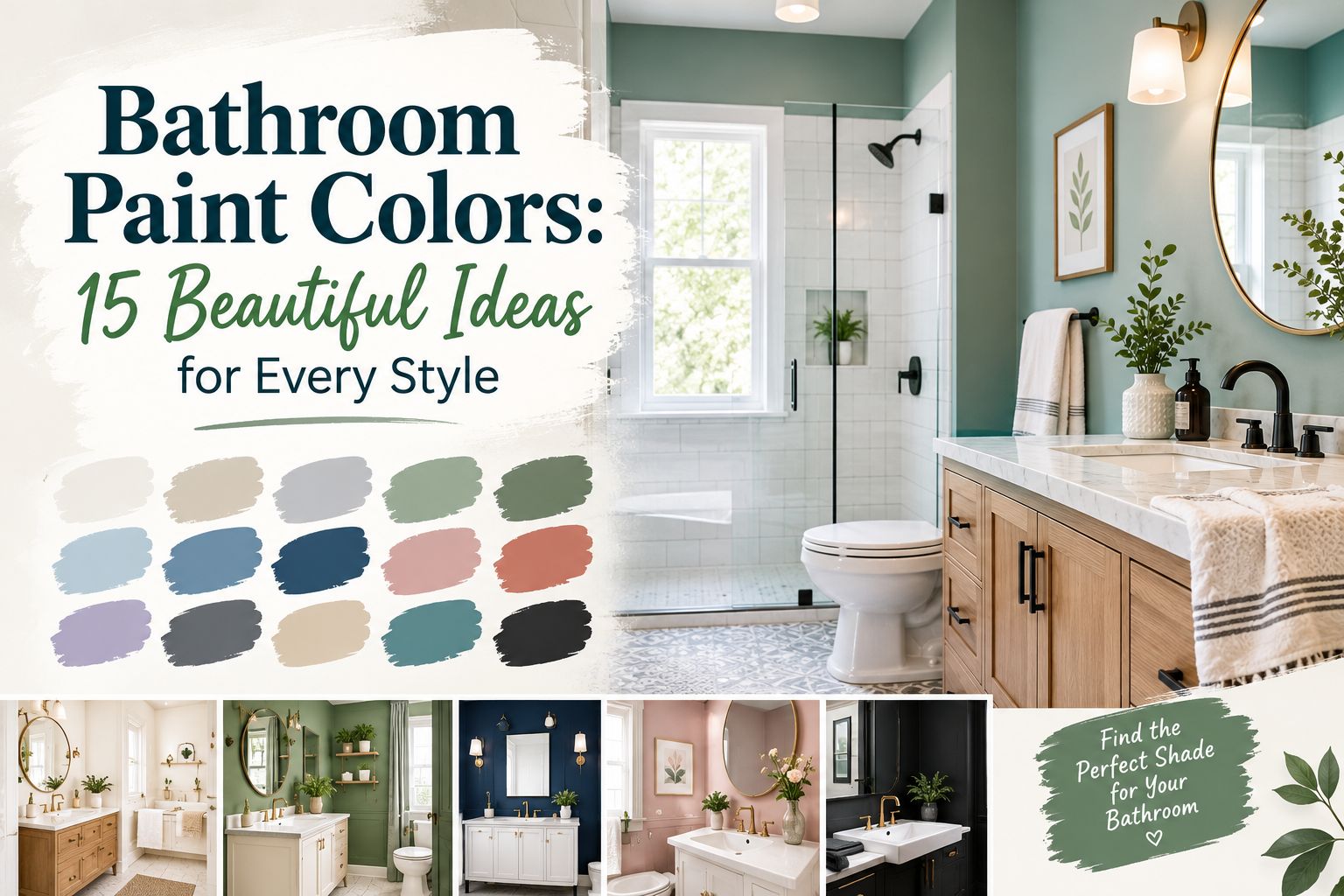
Discover 15 beautiful bathroom paint colors, from warm whites and sage greens to navy and earthy neutrals. Find color combinations, expert tips, and the perfect shade for your bathroom.
Bathroom Paint Colors
Choosing the right bathroom paint colors can completely change the appearance and atmosphere of your bathroom without requiring a costly renovation. Whether you want a bright, refreshing space, a relaxing spa-inspired retreat, or a dramatic modern bathroom, the right paint color can help you create the look you love. From timeless white and soft beige to calming sage green and sophisticated navy blue, there are countless bathroom paint colors to consider.
The best bathroom paint colors do more than make walls look attractive. They complement your vanity, countertops, tile, flooring, mirrors, and lighting while helping the entire room feel balanced. A carefully chosen shade can make a small bathroom feel more open, give a large bathroom a cozier atmosphere, or bring personality to an otherwise simple design.
Before selecting a paint color, consider the amount of natural light your bathroom receives, the undertones of your existing finishes, and the overall style you want to achieve. Bathrooms also experience frequent humidity and temperature changes, so choosing an appropriate paint finish is just as important as choosing the color itself.
In this guide, you will discover 15 beautiful bathroom paint colors for different styles, practical color combinations, advice for small bathrooms, and helpful painting tips. Whether you are refreshing a powder room, updating a guest bathroom, or redesigning your primary bathroom, these ideas will help you make a confident choice.
15 Beautiful Ideas for Every Style
1. Warm White Bathroom Paint Colors for a Timeless Look
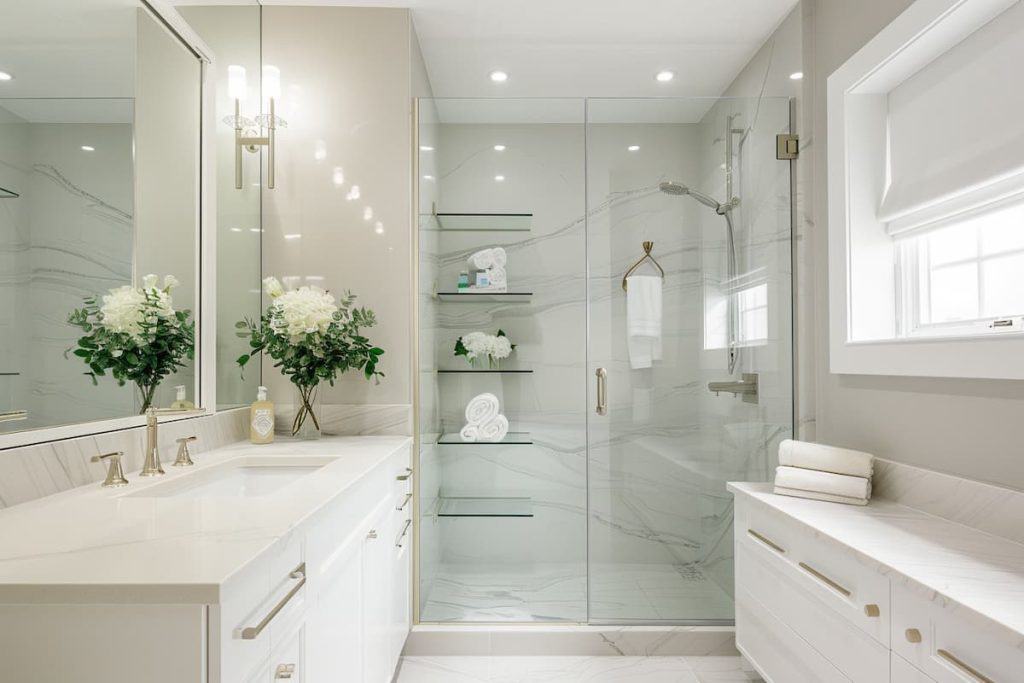
Warm white is one of the most versatile bathroom paint colors because it creates a clean, bright appearance without feeling overly cold. Unlike some stark whites, warm white shades contain subtle yellow, cream, or beige undertones that make a bathroom feel welcoming. They work beautifully with white sinks, marble countertops, brushed brass fixtures, and natural wood vanities.
Warm white is particularly useful when you want a bathroom that looks fresh but still feels comfortable. In a bathroom with limited natural light, a warm white can help reflect available light and create an open atmosphere. However, the final appearance depends on your bulbs, surrounding tile, and the specific undertones of the paint.
How to Style Warm White Walls
Pair warm white walls with cream-colored towels, light oak cabinets, and soft beige accessories for a relaxed, sophisticated look. If you prefer a more traditional bathroom, combine warm white paint with polished nickel fixtures and marble-inspired surfaces. For a modern interior, use simple hardware, frameless mirrors, and clean-lined cabinetry.
Warm white also works well as a background for decorative accents. You can introduce texture through woven baskets, wooden shelves, textured towels, or subtle artwork. If you are planning a broader bathroom refresh, explore these bathroom decoration ideas for additional ways to coordinate wall colors with accessories and finishes.
2. Soft Beige Bathroom Paint Colors for Warmth
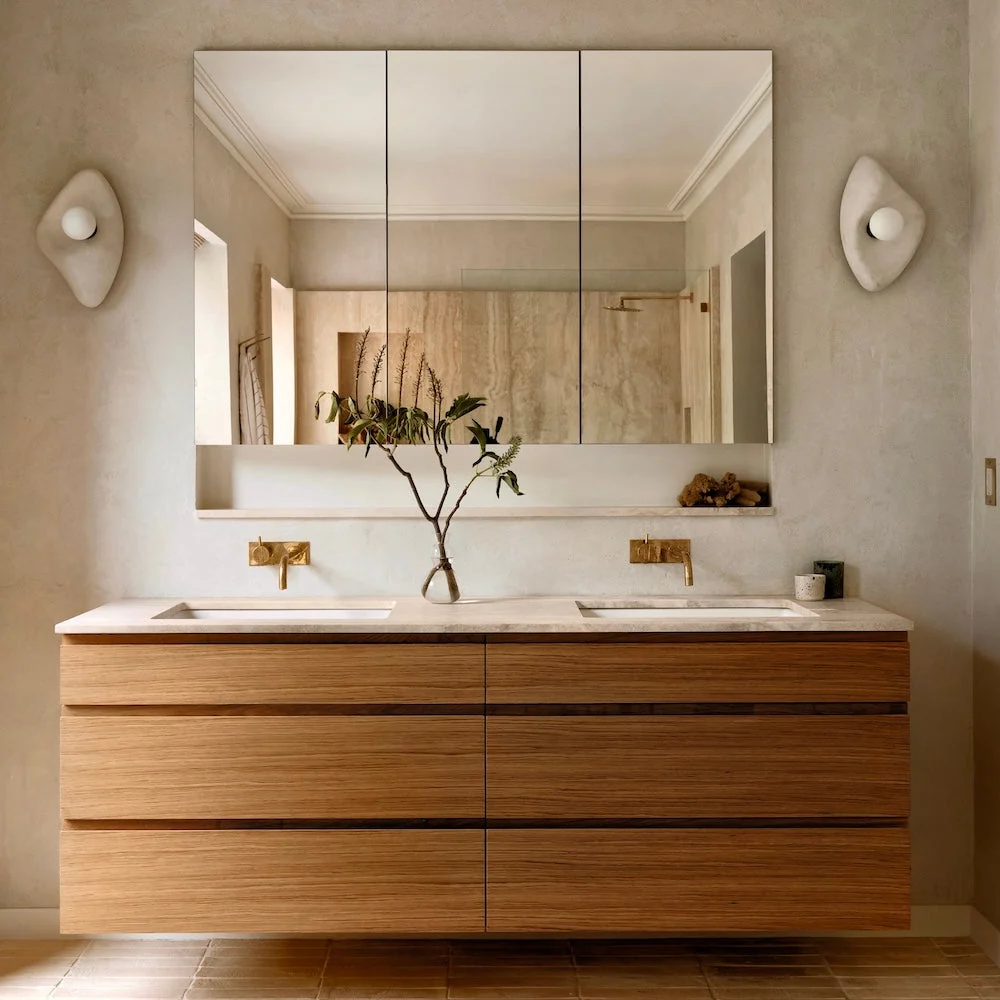
Soft beige is an excellent option for homeowners who want neutral bathroom paint colors with more warmth than traditional white. Depending on its undertones, beige can look creamy, sandy, or slightly gray. This flexibility makes it suitable for traditional bathrooms, transitional interiors, contemporary spaces, and natural, spa-inspired designs.
Beige walls can also help connect different materials in the same room. If your bathroom includes tan floor tiles, cream countertops, or wood cabinetry, a coordinated beige paint color can create a seamless appearance. The key is to choose a shade that complements your existing finishes rather than competing with them.
Creating a Balanced Beige Bathroom
For a modern look, combine soft beige walls with white countertops, matte black hardware, and a simple framed mirror. If you prefer a softer atmosphere, choose brushed brass fixtures, ivory towels, and natural wood accessories. These details add contrast without making the bathroom feel visually crowded.
In smaller bathrooms, choose a lighter beige to maintain a bright appearance. Medium beige can look beautiful in a bathroom with good lighting, but darker versions may feel heavy in a room without windows. Test a sample on several walls before making your final decision, because beige can look noticeably different under warm and cool lighting.
3. Sage Green Bathroom Paint Colors for a Spa Inspired Space
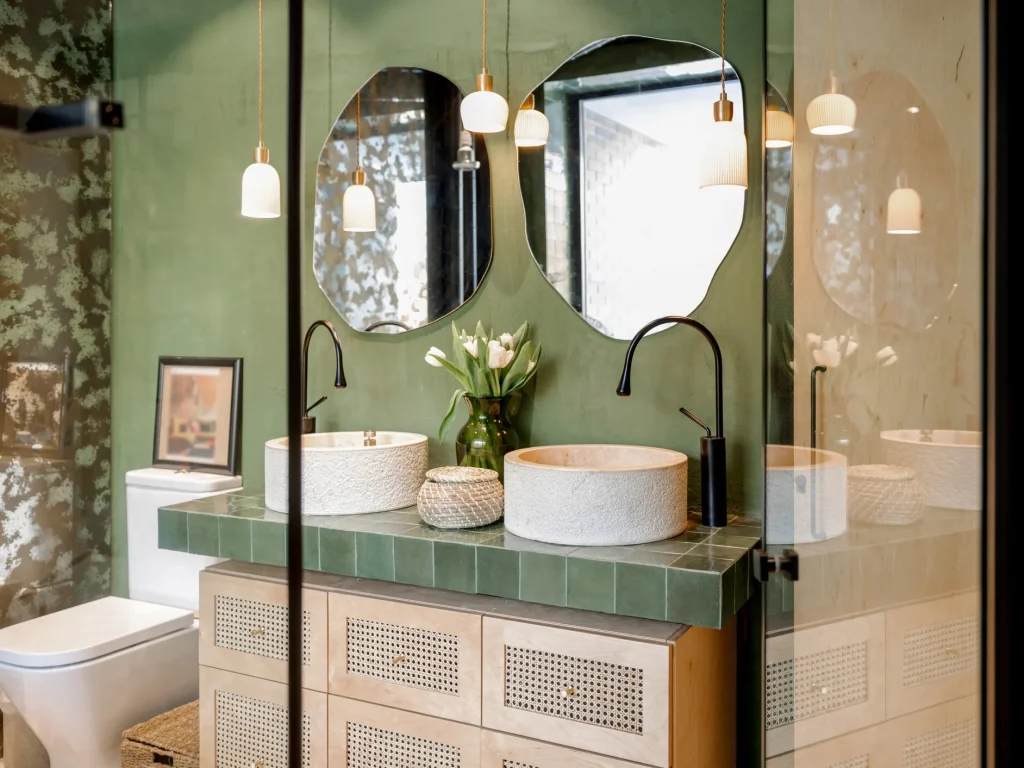
Sage green is among the most appealing bathroom paint colors for creating a peaceful, nature-inspired environment. This muted green usually contains gray undertones, which keep it from looking too bright or overpowering. Its soft appearance makes it suitable for modern farmhouse bathrooms, contemporary spaces, cottage interiors, and relaxing primary bathrooms.
Unlike highly saturated green, sage can introduce color without overwhelming the room. It pairs especially well with natural wood, white tile, stone countertops, and brushed brass fixtures. If you want a bathroom that feels connected to nature, sage green provides a subtle alternative to conventional neutral walls.
Colors and Materials That Complement Sage Green
Combine sage green walls with warm white trim, oak cabinetry, and cream-colored towels for a calm, balanced appearance. Brass mirrors or light fixtures can add warmth, while matte black hardware introduces a more contemporary contrast. Natural textures, such as linen shower curtains and woven storage baskets, reinforce the relaxed atmosphere.
Sage green can work in small bathrooms when the shade is sufficiently light and the lighting is appropriate. If your bathroom receives little natural light, test the color carefully because gray undertones may make some shades appear darker. You can also use sage on the walls while keeping the ceiling and trim white to maintain visual openness.
For more ideas about creating a coordinated bathroom interior, visit your guide to modern bathroom decor.
4. Light Gray Bathroom Paint Colors for a Modern Interior
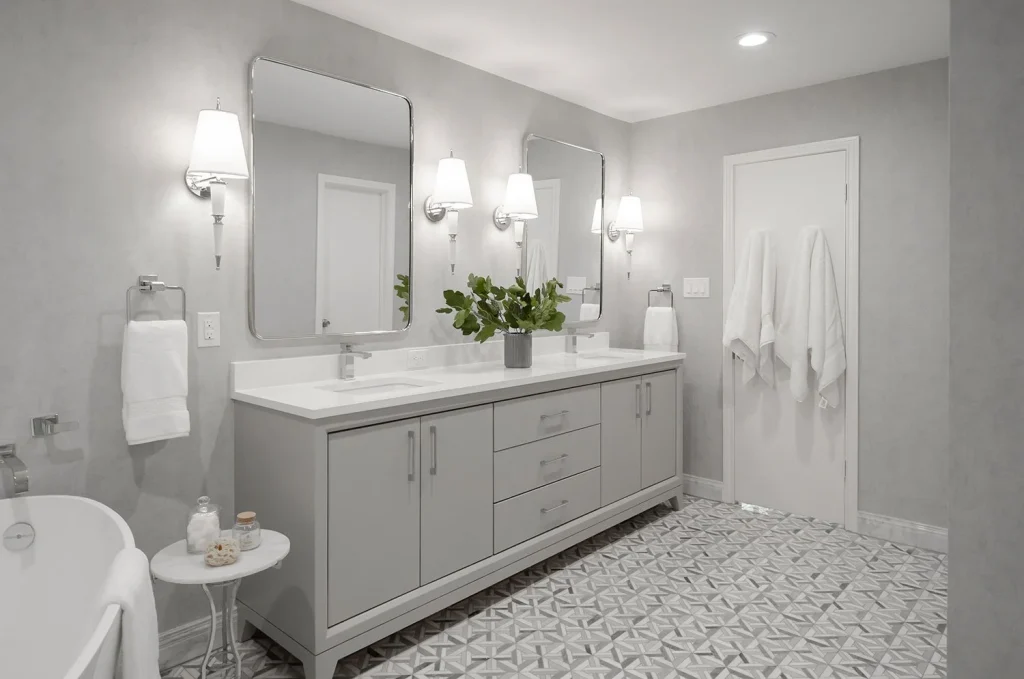
Light gray is a practical choice for homeowners who want modern bathroom paint colors without committing to a strong color. It can look cool and contemporary or soft and warm, depending on its undertones. Gray works well with white fixtures, chrome faucets, glass shower enclosures, and streamlined cabinetry.
A light gray bathroom can also provide a neutral backdrop for decorative elements. The color allows patterned floor tiles, statement mirrors, and textured towels to stand out without making the entire room feel busy. However, not every gray is equally versatile. Some grays have blue or violet undertones, while others contain beige or brown undertones.
Choosing the Right Gray Undertone
Cool gray can complement chrome hardware, crisp white surfaces, and bathrooms with abundant natural light. Warmer gray shades often work better with cream tile, beige stone, and wood finishes. Before purchasing paint, compare the sample with your flooring, countertop, and vanity to see whether the undertones work together.
For a polished look, combine light gray walls with white trim and simple accessories. You can introduce contrast with charcoal towels, black cabinet hardware, or a dark-framed mirror. If your bathroom already contains several cool finishes, a warm gray may help prevent the room from feeling too sterile.
5. Navy Blue Bathroom Paint Colors for a Bold Statement
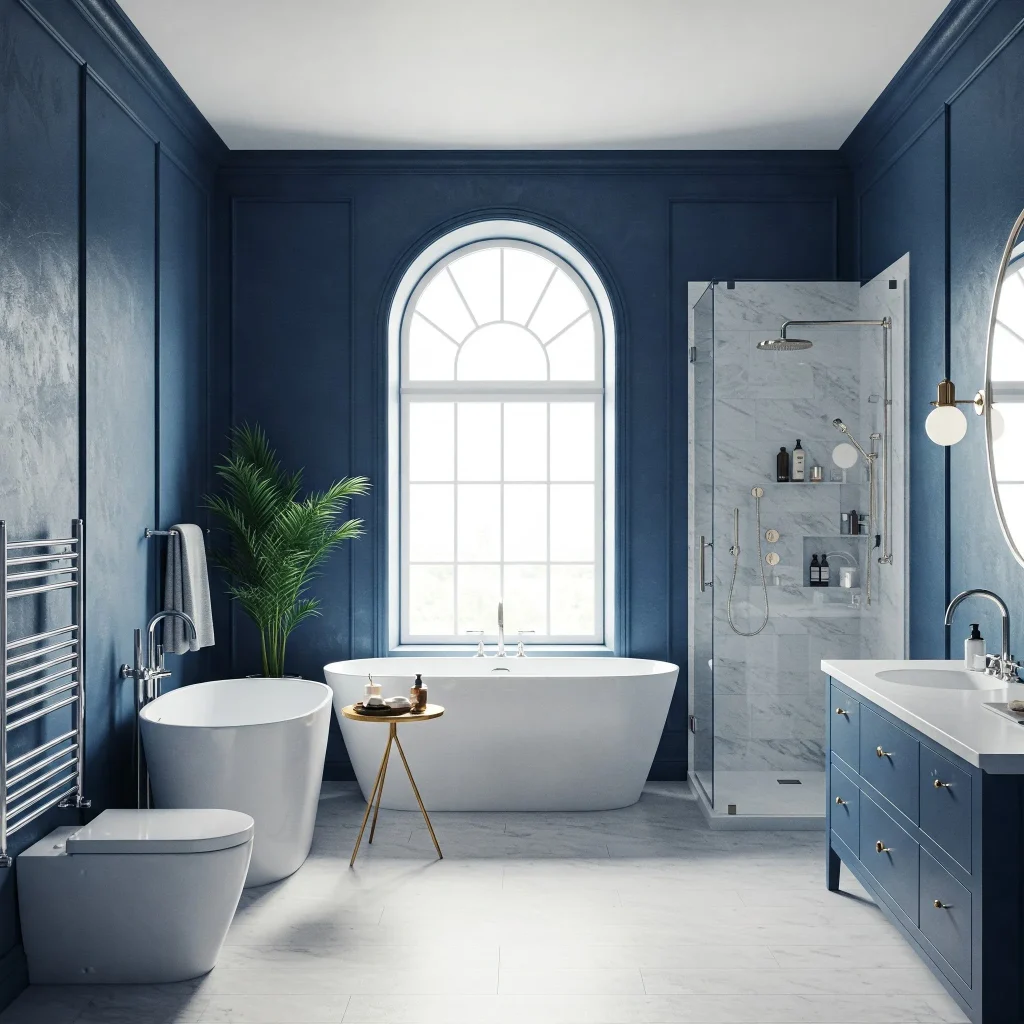
Navy blue is one of the most sophisticated bathroom paint colors for creating a dramatic, elegant atmosphere. Its deep blue tone works beautifully in contemporary, traditional, nautical-inspired, and transitional bathrooms. Navy can make a bathroom feel carefully designed, especially when paired with bright white fixtures and contrasting metallic details.
Although navy is darker than many conventional bathroom colors, it does not have to make a room feel gloomy. In a well-lit bathroom, navy can create depth and highlight architectural details. It is particularly effective on a vanity wall, behind a freestanding bathtub, or in a powder room where a more dramatic design can make a memorable impression.
How to Decorate with Navy Blue Walls
Pair navy walls with white sinks, white trim, and polished chrome or brushed brass fixtures. Marble-inspired countertops can soften the dark color, while warm lighting helps create a comfortable atmosphere. For a contemporary look, consider a navy accent wall with simple black or brass accessories.
If your bathroom is small, consider using navy on one wall instead of painting every surface. Keeping the ceiling, trim, and other walls light can preserve a sense of openness. Before committing to a dark shade, check the room at different times of day to ensure the color works with your available lighting.
6. Pale Blue Bathroom Paint Colors for a Fresh Feeling
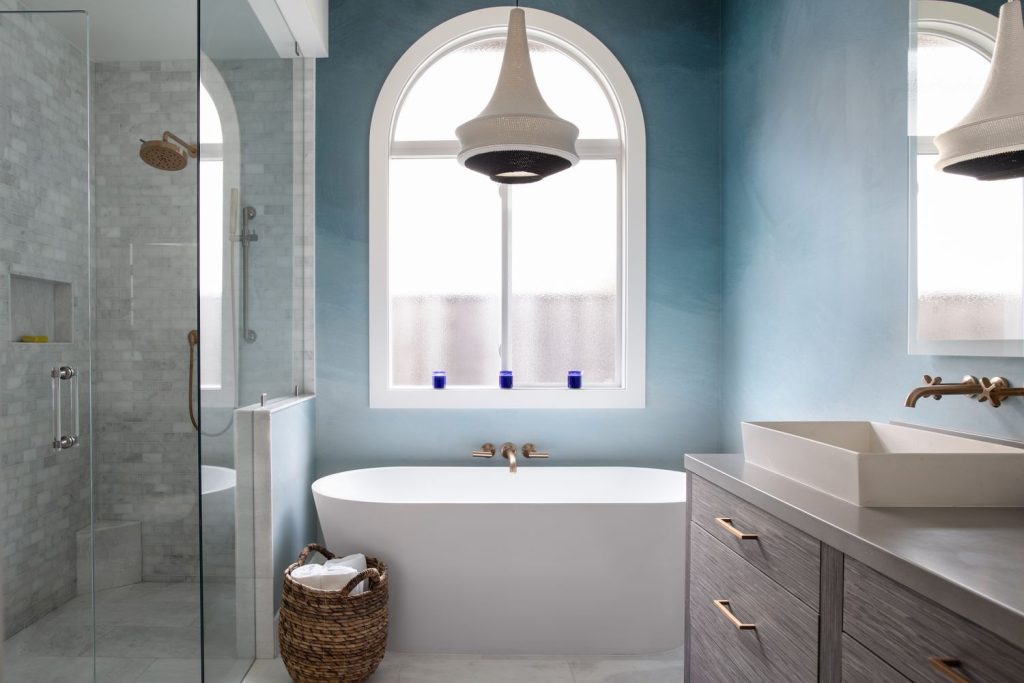
Pale blue is a classic option for bathroom paint colors because it creates a fresh, airy appearance. Light blue shades can suggest the calmness of water and sky, making them particularly suitable for bathrooms designed around relaxation. They work well in coastal interiors, traditional homes, guest bathrooms, and spaces with white cabinetry.
The best pale blue shades are usually soft rather than overly saturated. Blue with subtle gray undertones can look refined and contemporary, while a clearer blue can create a brighter, more playful atmosphere. Your choice should depend on the surrounding materials and whether you want the room to feel warm, cool, traditional, or modern.
Styling Pale Blue Bathroom Walls
Combine pale blue walls with white trim, chrome fixtures, and light-colored countertops for a crisp, timeless appearance. If you prefer a coastal look, introduce natural wood, woven baskets, and cream-colored textiles. Avoid adding too many competing colors; a limited palette will make the bathroom feel more intentional.
Pale blue is especially useful in bathrooms with white tile and simple fixtures because it introduces personality without dominating the design. However, some blue paints can look noticeably cooler under daylight bulbs. Test the paint under the lighting you intend to use in the finished room before choosing a final shade.
7. Greige Bathroom Paint Colors for Modern Elegance
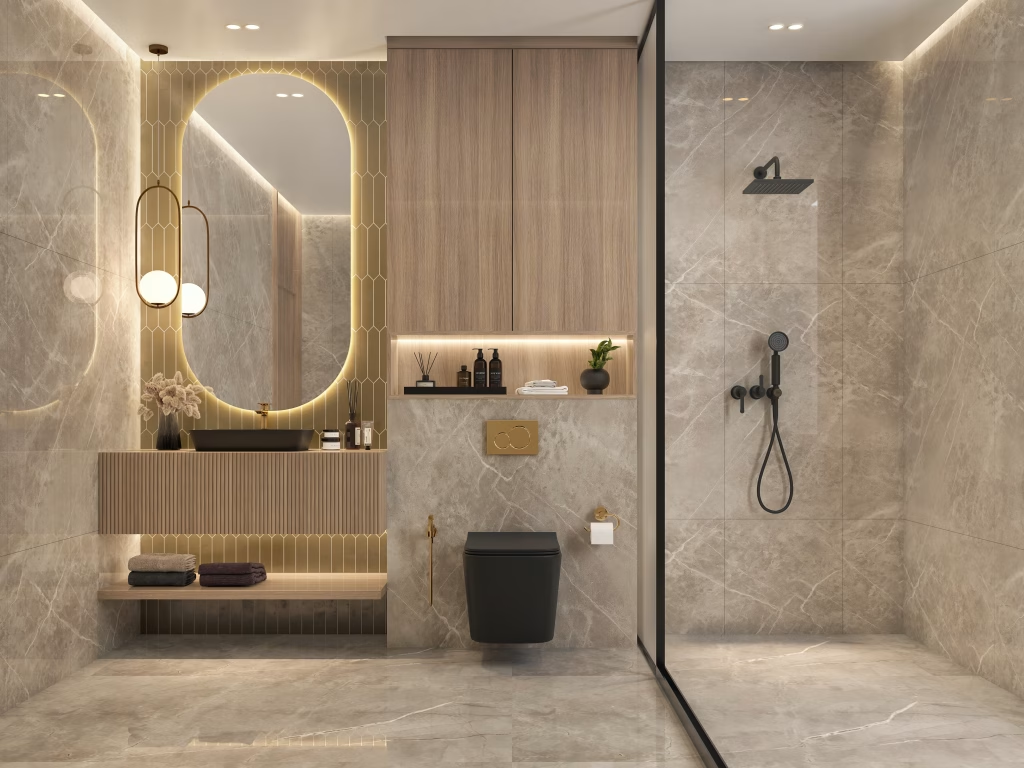
Greige combines gray and beige, making it a versatile choice for homeowners who want neutral bathroom paint colors with a balanced appearance. Depending on the formula, greige can lean warmer and creamier or cooler and more gray. This adaptability makes it useful in contemporary, transitional, and minimalist bathrooms.
Greige is particularly effective when a bathroom includes a mixture of warm and cool finishes. For example, a room might have white countertops, gray floor tiles, and wood cabinetry. A carefully selected greige can connect these elements without making the space look overly coordinated or bland.
Creating a Sophisticated Greige Palette
Pair greige walls with white trim, light oak cabinets, and brushed nickel or brass fixtures. For more contrast, use black-framed mirrors or dark cabinet hardware. If your bathroom includes natural stone, compare the paint sample with the stone’s veining to make sure the undertones complement each other.
Greige can also help create a cohesive appearance between a bedroom and an adjoining primary bathroom. Choose related shades rather than necessarily using the exact same paint throughout both spaces. Differences in lighting and tile can cause identical paint to appear different, so evaluate the color in each room separately.
8. Charcoal Gray Bathroom Paint Colors for Dramatic Style
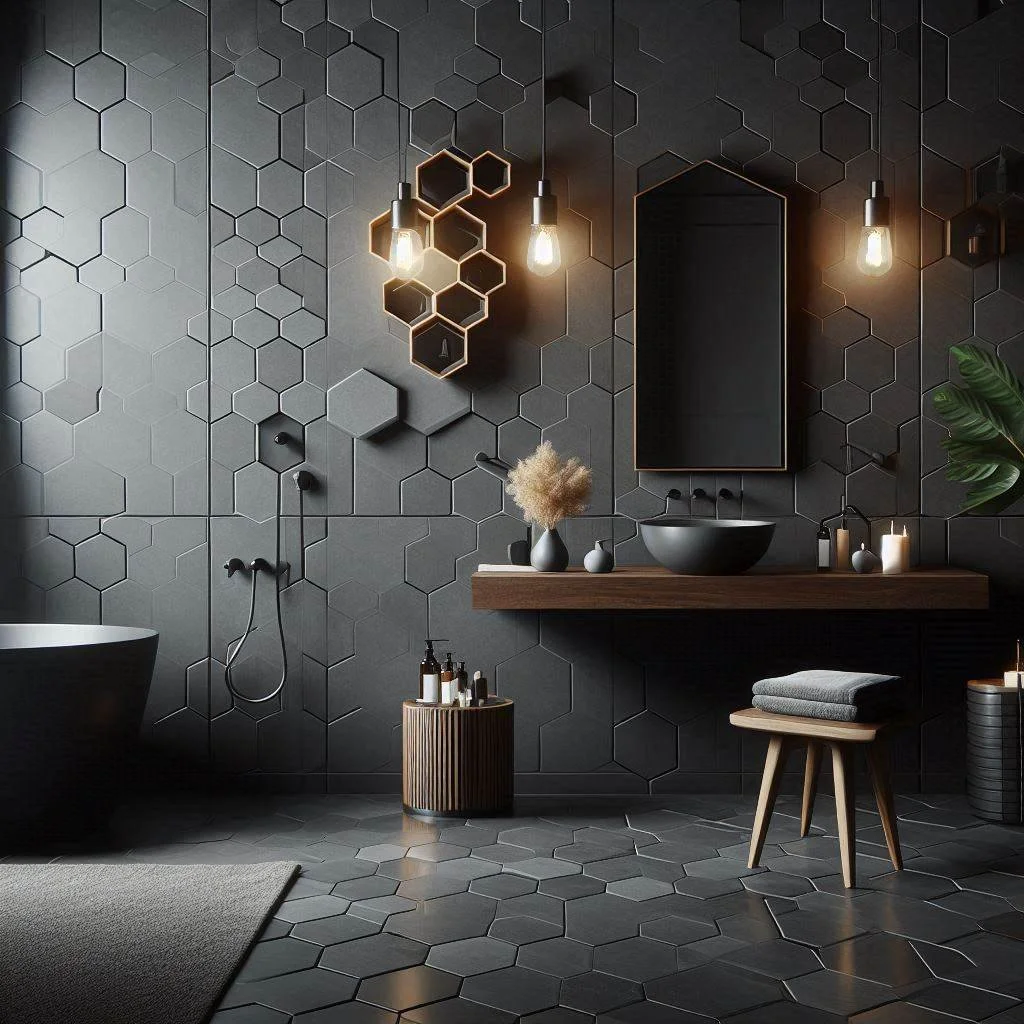
Charcoal gray creates a bold, contemporary appearance that works especially well in bathrooms with modern fixtures and carefully controlled lighting. It is darker than standard gray, allowing it to create depth and contrast. When used thoughtfully, charcoal can make white porcelain fixtures, metallic hardware, and pale countertops stand out beautifully.
This color is often best suited to bathrooms with adequate lighting, although it can also work in a small powder room where a dramatic effect is intentional. The important consideration is balance. Painting every surface a deep gray without sufficient lighting or contrasting materials can make a bathroom feel smaller and less inviting.
Balancing Dark Gray Walls
Combine charcoal gray with white trim, a white vanity countertop, and well-placed lighting. Brushed brass fixtures can add warmth, while chrome and stainless-steel details create a cooler, more contemporary effect. Light-colored towels and a large mirror can also help balance the darker walls.
If you are uncertain about using charcoal throughout the bathroom, start with one accent wall or a single architectural feature. This allows you to introduce drama without committing to a fully dark interior. Make sure the paint finish is appropriate for the bathroom’s humidity and can be cleaned according to the manufacturer’s instructions.
9. Cream Bathroom Paint Colors for a Cozy Atmosphere
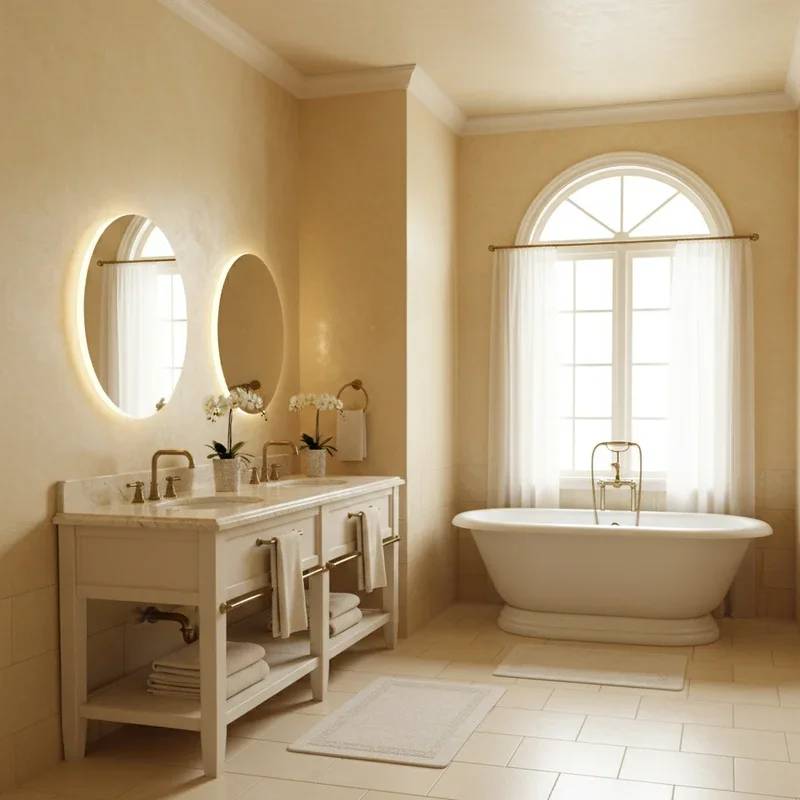
Cream is a softer alternative to bright white and is particularly attractive in bathrooms where warmth is a priority. Its subtle yellow or beige undertones create a welcoming appearance that complements traditional cabinetry, warm stone, brass fixtures, and natural wood. Cream bathroom paint colors are especially useful when a pure white would look too stark against existing finishes.
A cream bathroom can feel elegant without requiring expensive materials or elaborate decoration. The color provides a gentle background for mirrors, artwork, decorative lighting, and textured accessories. It is also a practical choice for creating a timeless interior that will remain appealing as accessories and trends change.
How to Make Cream Walls Look Modern
Pair cream walls with a white countertop, warm metal fixtures, and simple cabinetry for a refined appearance. If you want a more contemporary look, introduce black hardware or a dark mirror frame to create contrast. Natural wood and linen textures can make the room feel even more inviting.
Be careful when selecting cream paint for a bathroom that already contains yellow-toned tile. Some combinations can look too yellow or muddy, particularly under warm artificial lighting. Compare several samples against your existing surfaces before making a decision.
10. Dusty Rose Bathroom Paint Colors for Subtle Personality
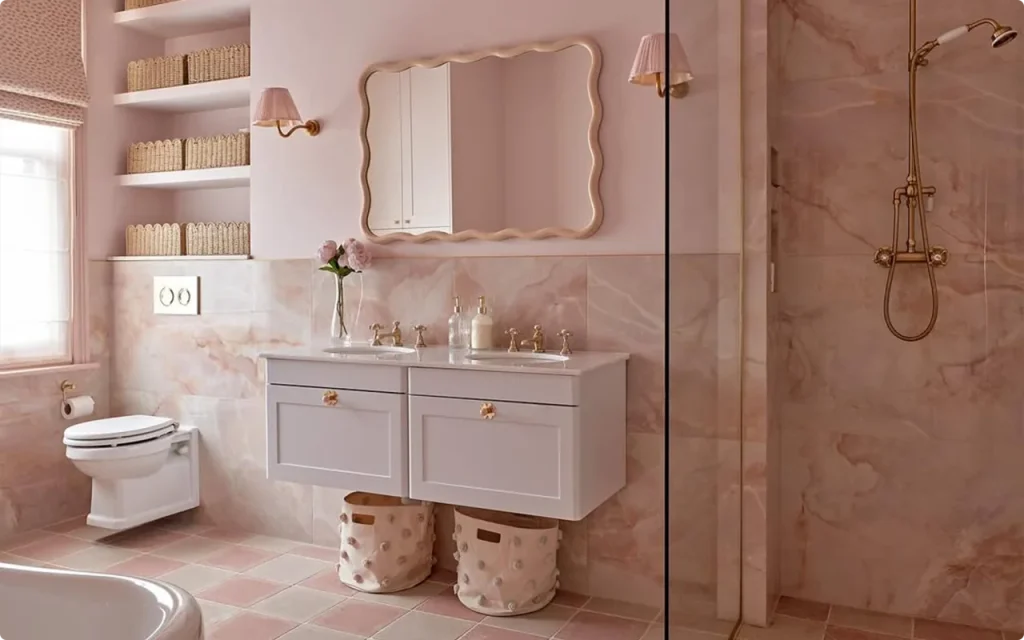
Dusty rose is a muted pink shade that brings softness and personality to a bathroom without looking overly bright. Unlike vivid pink, dusty rose often contains gray or brown undertones, creating a more sophisticated appearance. It works well in vintage-inspired bathrooms, eclectic interiors, and modern spaces that need a gentle touch of color.
This shade can be particularly attractive in a powder room, where a distinctive wall color can create a memorable design. It can also work in a primary bathroom when combined with neutral finishes and simple accessories. The key is to keep the rest of the palette balanced so that the pink does not compete with too many other colors.
Pairing Dusty Rose with Other Finishes
Dusty rose pairs beautifully with warm white, cream, soft gray, and natural wood. Brushed brass fixtures can emphasize its warm undertones, while black accents create a more modern contrast. White countertops and simple mirrors help keep the space looking fresh rather than overly decorative.
If you want to experiment with this color but prefer a restrained look, consider painting the upper walls while keeping the trim and ceiling light. You can also use dusty rose in a powder room with neutral flooring and understated lighting. Always test the shade in your actual bathroom because muted pink can look warmer or cooler depending on the surrounding finishes.
11. Terracotta Bathroom Paint Colors for an Earthy Look
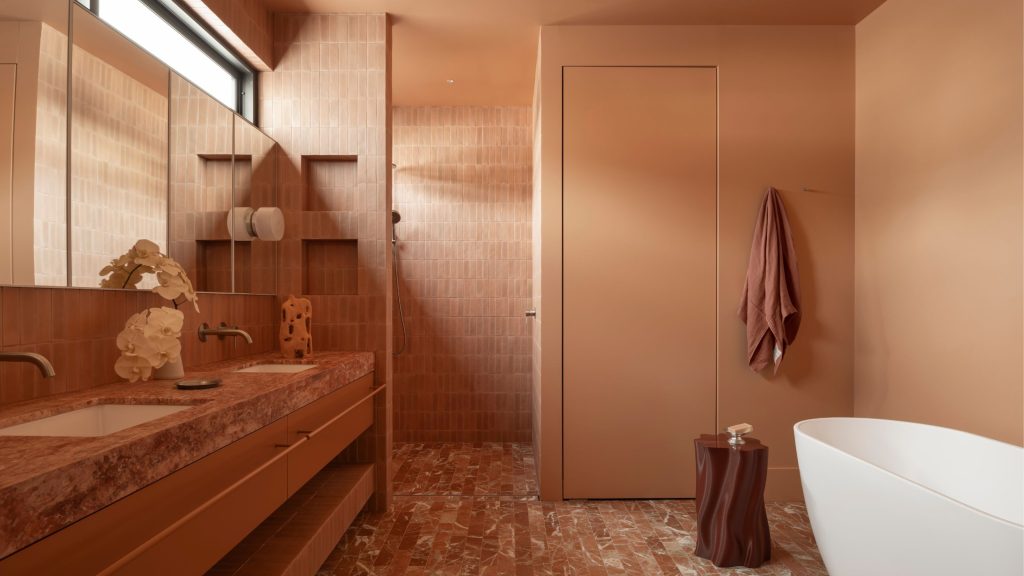
Terracotta brings warmth and a natural, earthy character to bathroom interiors. Inspired by clay and sunbaked earth, this color can range from muted peachy brown to deep reddish orange. It works particularly well with Mediterranean-inspired spaces, Southwestern interiors, rustic bathrooms, and designs that incorporate natural materials.
Terracotta bathroom paint colors can make a room feel distinctive without relying on highly saturated colors. They complement wood, stone, cream tile, and textured accessories. Because terracotta is warmer and more visually prominent than a standard neutral, it is worth considering how it will interact with your flooring and vanity.
How to Use Terracotta Without Overwhelming the Room
For a balanced design, combine terracotta walls with warm white trim, natural wood, and cream-colored towels. Simple fixtures and uncluttered surfaces help the color remain the main feature. If you prefer a more subtle effect, choose a muted terracotta shade with brown undertones rather than a bright orange-red.
In a small bathroom, consider using terracotta on one wall or choosing a lighter, less saturated variation. Good lighting is important because some terracotta shades can look darker and more intense in enclosed spaces. Test your sample in both daylight and artificial light before deciding how much of the room to paint.
12. Olive Green Bathroom Paint Colors for Natural Sophistication
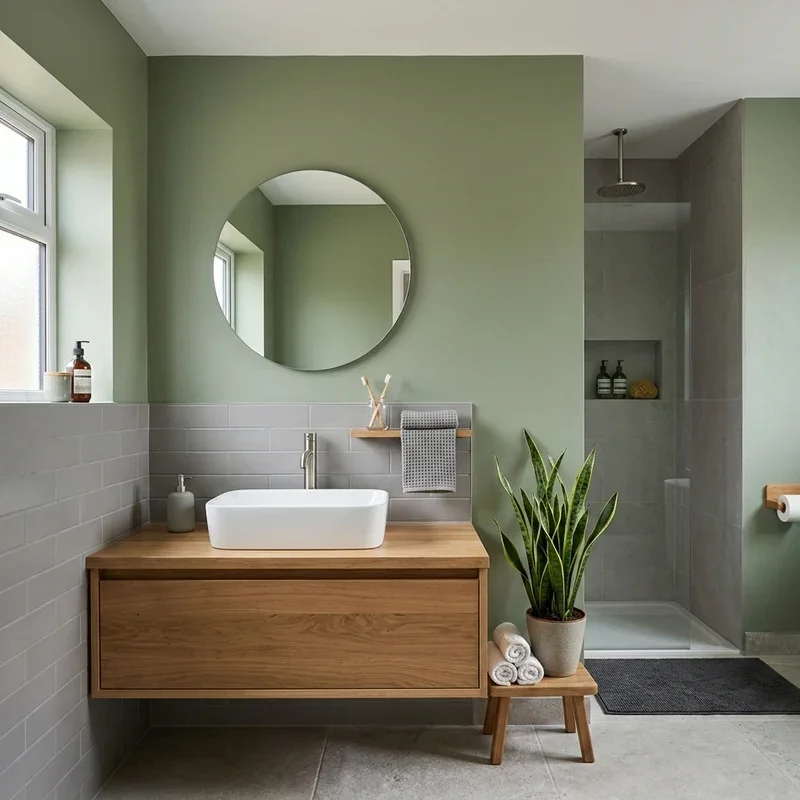
Olive green is a deeper, earthier alternative to sage. Its muted yellow and brown undertones can make a bathroom feel grounded and sophisticated. This color works especially well with natural wood, stone surfaces, warm metals, and traditional or organic-modern design elements.
Olive green can create a distinctive look without the sharp intensity of brighter greens. It is a good option for homeowners who want something more expressive than beige or gray but still prefer a color inspired by nature. Depending on the shade, olive can feel rustic, traditional, contemporary, or luxurious.
Decorating Around Olive Green Walls
Pair olive green with cream countertops, oak cabinetry, and brushed brass hardware for a warm, natural appearance. For a more contemporary interior, combine it with black fixtures and simple white surfaces. Soft beige towels and natural textures can help soften deeper olive shades.
Because olive green can appear darker under low light, evaluate the shade carefully before painting an entire bathroom. If your bathroom has a small window or no window, a lighter olive may be more suitable than a deep, saturated version. A large mirror and layered lighting can also help maintain visual balance.
13. Lavender Bathroom Paint Colors for a Soft, Relaxing Space
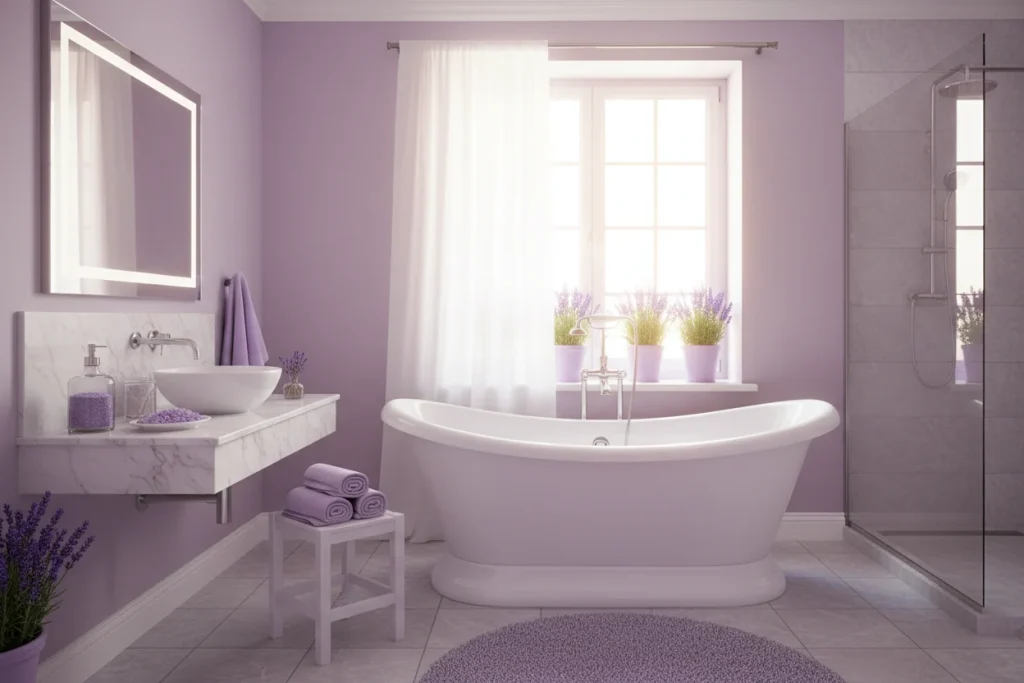
Lavender offers a subtle alternative to blue, green, and neutral bathroom paint colors. Soft lavender can create a gentle, relaxing atmosphere, particularly in bathrooms with white fixtures and understated accessories. Depending on its undertones, lavender may appear more gray, pink, or violet, giving you several options for different interior styles.
A muted lavender can work well in a guest bathroom or powder room where you want to introduce a little personality. It can also complement vintage-inspired details, decorative mirrors, and soft textiles. To keep the result sophisticated, choose a restrained shade rather than an intensely saturated purple.
Choosing Accessories for Lavender Walls
Pair lavender with white trim, pale gray countertops, and simple chrome fixtures for a fresh appearance. Warm white towels and light wood can make the room feel more inviting, while brushed nickel creates a clean, understated finish. If you want a more contemporary look, use minimal accessories and simple geometric shapes.
Lighting can influence lavender more than you might expect. Some shades may appear noticeably pink or purple depending on the bulb color and surrounding surfaces. Test the paint on several walls and view it at different times of day to ensure that it creates the atmosphere you want.
14. Black Bathroom Paint Colors for a Luxurious, Modern Look
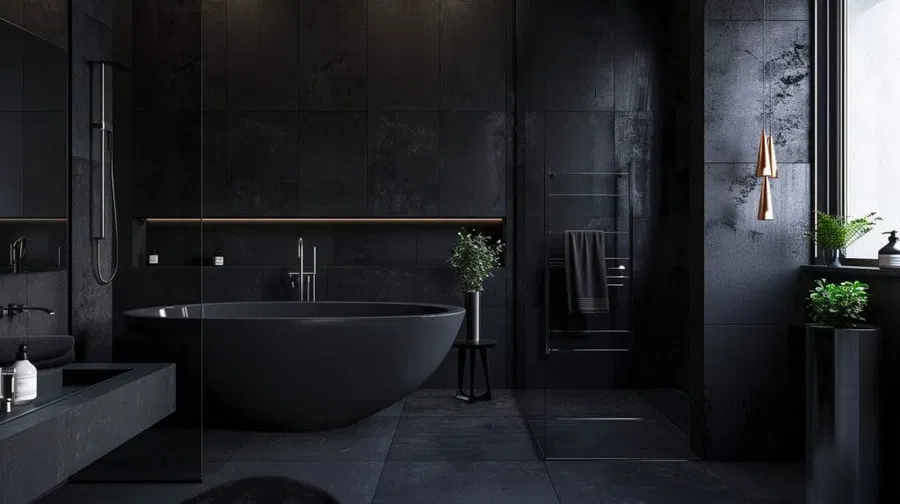
Black is one of the boldest bathroom paint colors available, making it suitable for dramatic powder rooms and contemporary interiors. A deep black or near-black shade can create a striking background for white fixtures, metallic hardware, and sculptural lighting. It is particularly effective when the bathroom design emphasizes contrast and simple forms.
Although black walls can look luxurious, they require careful planning. Dark surfaces absorb more light visually and can make an enclosed bathroom feel smaller. This is not necessarily a problem if you want an intimate, dramatic atmosphere, but it is important to consider lighting, ventilation, and the size of the room before committing to the color.
Making Black Walls Work in a Bathroom
Combine black walls with a white sink, a light countertop, and a large mirror. Brass fixtures can add warmth, while chrome or stainless-steel hardware creates a sharper, more contemporary contrast. Keep accessories relatively simple so that the room does not become visually crowded.
If you are unsure about painting every wall black, start with a powder room or a single accent wall. A lighter ceiling and carefully positioned lighting can help balance the dark finish. Choose a paint designed for the conditions in your bathroom and follow the manufacturer’s preparation and application instructions.
15. Muted teal bathroom paint colors for a rich, refreshing finish
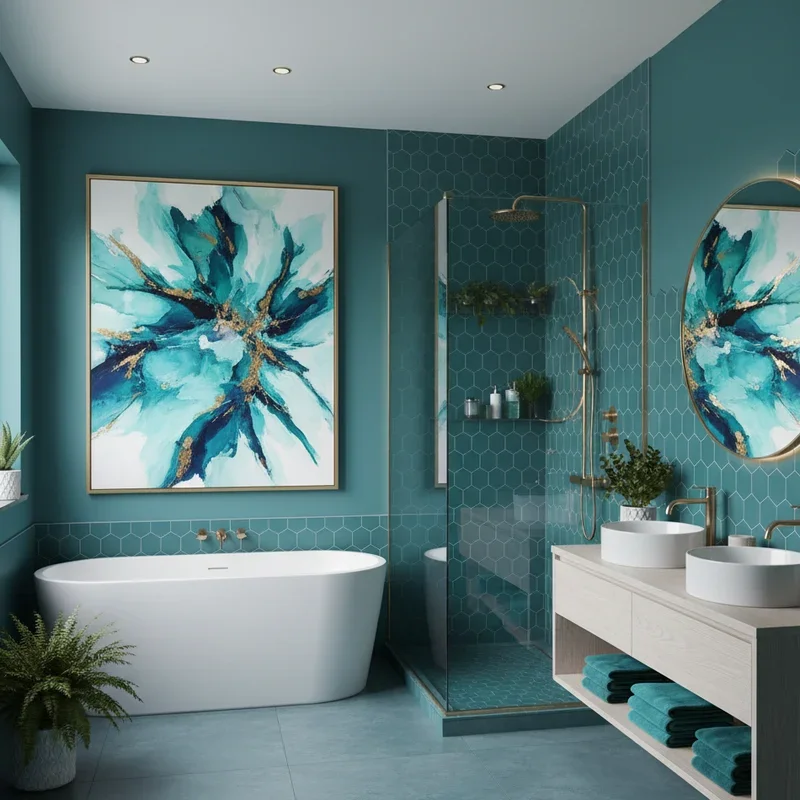
Muted teal combines blue and green, creating a color that can feel both refreshing and sophisticated. It offers more depth than pale blue and more color than a typical gray-green neutral. Teal is a versatile option for contemporary, coastal, eclectic, and transitional bathrooms, particularly when you want a distinctive wall color that still feels connected to nature.
The exact appearance of teal depends on its balance of blue and green. A blue-leaning teal can create a cooler, more coastal atmosphere, while a green-leaning version often feels warmer and more organic. Selecting the right undertone is essential when coordinating the paint with tile, countertops, and metal finishes.
Styling a Muted Teal Bathroom
Pair muted teal walls with warm white trim, natural wood, and brushed brass fixtures for a balanced look. White countertops and simple cabinetry help the color stand out without making the bathroom feel busy. If you prefer a more contemporary style, add black hardware and understated lighting.
In a small bathroom, consider a lighter teal or use a deeper shade on a single wall. Teal can become visually intense when combined with other saturated colors, so keep the rest of the palette relatively restrained. Test the paint under your bathroom’s actual lighting before choosing a final shade.
How to Choose the Best Bathroom Paint Colors for Your Space
Selecting attractive bathroom paint colors is easier when you consider the room as a complete design rather than choosing a wall color in isolation. The flooring, shower tile, countertop, vanity, fixtures, and lighting all affect how the paint will look. A color that appears beautiful on a sample card may look completely different once it is surrounded by these materials.
Begin by identifying the finishes you are keeping. If you have white tile, you have considerable flexibility. If your bathroom includes beige, cream, gray, or strongly patterned tile, choose a paint color that complements its undertones. This simple step can prevent the room from looking mismatched after the painting is complete.
Consider Your Bathroom’s Natural Light
Natural light affects the way bathroom paint colors appear throughout the day. A bathroom with a large window may support cooler or darker colors more easily than a room with no windows. In a dim bathroom, lighter shades such as warm white, cream, pale blue, and light greige can help create a brighter impression.
However, light paint does not automatically make every bathroom look larger. The reflectivity of the paint, the color of the ceiling, the size of the mirror, and the amount of artificial lighting all matter. A well-lit bathroom with a medium-depth wall color can feel more inviting than a poorly lit room painted entirely white.
Understand Paint Undertones
Undertones are the subtle colors that influence the overall appearance of a paint shade. White can have yellow, pink, blue, or gray undertones. Beige may lean peachy or golden, while gray may look blue, green, or brown. These differences become especially noticeable when the paint is placed next to tile, stone, or cabinetry.
To compare colors accurately, place samples beside the surfaces they need to complement. Observe the samples in daylight and under the bathroom’s usual light bulbs. Choosing colors with compatible undertones helps create a more cohesive appearance, even when the room includes several different materials.
Test Paint Samples Before Committing
Paint samples are an important part of selecting bathroom paint colors. Rather than choosing a shade from a tiny color card, apply a sample to a large test area or use a sample board. Place it on different walls so you can see how the shade changes as the lighting and surrounding finishes change.
Give the sample time to dry completely before evaluating it. Wet paint may look different from its final appearance, and the sheen can affect how light reflects off the surface. Comparing several samples at once also makes it easier to identify which color looks most natural with your bathroom’s existing materials.
Best Bathroom Paint Colors for Small Bathrooms
Small bathrooms benefit from colors that create a balanced, comfortable appearance without overwhelming the room. Warm white, pale blue, light beige, soft sage, and light greige are useful options because they can help reflect available light and provide a visually calm background. These shades work particularly well when combined with simple fixtures and uncluttered surfaces.
However, you do not have to avoid every dark color in a small bathroom. Navy, charcoal, olive, and black can look striking in powder rooms or compact bathrooms when used intentionally. The important consideration is whether you want the space to feel bright and open or intimate and dramatic.
Use Light Colors to Create an Airy Appearance
Light bathroom paint colors work well when you want a small room to feel open and fresh. Pair pale walls with a light ceiling, a large mirror, and adequate lighting. If your bathroom has a shower curtain, choosing a simple design in a related light color can help the room feel more cohesive.
Avoid introducing too many unrelated colors in a compact space. A restrained palette makes it easier for the eye to move around the room without distraction. You can still add personality through towels, artwork, cabinet hardware, or a small decorative accessory.
For more space-saving inspiration, explore decor ideas for small bathrooms. You can apply the same principles of visual balance and thoughtful color selection when planning your bathroom update.
Use Dark Colors Strategically
Dark bathroom paint colors can add depth and character to a small room when balanced with lighting and contrasting surfaces. A navy or charcoal accent wall can create a strong focal point, while a lighter ceiling and white fixtures prevent the design from feeling too enclosed.
If you choose a dark color for every wall, pay particular attention to lighting. Wall sconces, vanity lighting, and a well-positioned mirror can help improve the overall appearance. A dark bathroom should feel intentional and comfortable rather than simply underlit.
Bathroom Paint Color Combinations That Look Beautiful Together
Choosing a single paint color is only part of the design process. Successful bathroom paint colors often work best when combined with complementary shades and materials. A coordinated palette can connect the walls with the vanity, flooring, countertops, towels, and metal fixtures.
Start with one primary wall color, then choose one or two supporting colors. This does not mean every surface needs to match. Instead, select shades that share compatible undertones or create a deliberate contrast. A simple color scheme usually looks more polished than a room filled with unrelated colors.
Warm White and Natural Wood
Warm white walls paired with natural wood create a timeless, inviting bathroom. The white keeps the room feeling bright, while wood adds texture and warmth. This combination works well with oak vanities, wooden shelves, woven storage baskets, and cream-colored towels.
For a more modern look, introduce matte black or brushed nickel hardware. If you prefer a softer, traditional style, brass fixtures and marble-inspired surfaces can complement the warmth of the palette. The result is a versatile bathroom that can adapt to different decorative styles.
Sage Green and Cream
Sage green and cream create a calm, nature-inspired palette. Sage introduces subtle color, while cream softens the overall appearance and prevents the room from feeling too cool. The combination works particularly well with natural stone, light wood, and understated fixtures.
Use sage on the walls and cream in towels, curtains, or decorative accessories. You can also reverse the arrangement by choosing cream walls and adding sage through the vanity or smaller details. Keeping the colors muted helps the bathroom feel relaxing and cohesive.
Navy Blue and White
Navy blue and white provide a classic high-contrast combination that suits traditional and contemporary bathrooms. White fixtures and trim brighten the space, while navy creates depth and a sophisticated focal point. This pairing works especially well with marble-inspired countertops and simple chrome or brass hardware.
If you want a dramatic bathroom, use navy across a larger wall area. For a more restrained design, reserve it for an accent wall or vanity area. Balance the dark color with adequate lighting and a few light-colored accessories.
Greige and Matte Black
Greige walls and matte black hardware create a contemporary bathroom palette with a balance of warmth and contrast. Greige is softer than many cool grays, while black introduces definition through mirrors, faucets, cabinet handles, and lighting fixtures.
This combination works well with white countertops, neutral tiles, and wood accents. It is also relatively easy to update because the wall color remains neutral while smaller accessories can change with your preferences.
What Is the Best Paint Finish for a Bathroom?
The finish of your bathroom paint influences its appearance, cleanability, and suitability for a humid environment. Even the most attractive bathroom paint colors can disappoint if the finish is inappropriate for the room. Bathrooms experience moisture from showers and baths, so paint must be selected with the room’s ventilation and everyday use in mind.
There is no single finish that is perfect for every bathroom. The right choice depends on the manufacturer’s product specifications, the condition of the walls, the amount of moisture the room experiences, and your cleaning needs. Always check the paint label to confirm that the product is recommended for bathroom or other high-humidity interior spaces.
Satin Finish for Everyday Bathrooms
Satin is a popular option for bathroom walls because it offers a soft sheen and is generally easier to clean than a flat finish. It can be suitable for busy family bathrooms where walls may need occasional wiping. Its slight reflectivity can also help the paint look smooth and polished.
However, satin can highlight imperfections in uneven walls more than a flatter finish. Proper preparation is important, especially if the bathroom has old repairs or rough surfaces. Follow the manufacturer’s instructions for surface preparation, primer, and cleaning.
Semi-Gloss for Trim and Moisture-Prone Areas
Semi-gloss paint is often used on trim, doors, and other surfaces that benefit from a more washable finish. Its higher sheen reflects more light and can provide a crisp contrast against lower-sheen walls. It is particularly useful when you want white trim to stand out against sage, navy, gray, or another wall color.
A high-sheen finish can emphasize dents, uneven surfaces, and application marks, so careful preparation is essential. Also, do not assume that semi-gloss paint alone makes a surface waterproof. Follow product guidance and use appropriate materials for surfaces exposed to direct water.
Matte and Eggshell Finishes
Matte finishes offer a low-reflective appearance that can make bathroom walls look smooth and understated. Some modern paint products are specifically formulated for bathrooms and may offer improved washability despite having a lower sheen. However, a standard matte paint may not be the best choice for a bathroom with frequent moisture and heavy cleaning.
Eggshell provides a subtle sheen between flat and satin. Depending on the product, it can be an option for bathrooms with good ventilation and moderate moisture exposure. Always check the manufacturer’s specifications rather than choosing a finish based on appearance alone.
How to Choose Bathroom Paint That Handles Moisture
Bathrooms regularly experience changes in humidity, especially when showers and baths are used. Choosing a paint designed for interior bathroom conditions can help the finish withstand routine moisture and cleaning. Look for products whose labels specifically describe their suitability for bathrooms or humid interiors.
Preparation is just as important as the paint itself. Walls should be clean, dry, and free of loose paint, dust, and surface contamination. If the existing surface has stains, peeling paint, or other damage, address the underlying problem before applying a new coat. Use a compatible primer when the product instructions or wall condition require one.
Improve Bathroom Ventilation
Good ventilation helps remove moisture from the bathroom and supports the long-term performance of painted surfaces. Use an appropriately sized exhaust fan during showers and baths, and continue running it according to its instructions after bathing. If your bathroom has a window, opening it when conditions allow can also help reduce lingering humidity.
Paint is not a substitute for fixing leaks, improving ventilation, or addressing persistent condensation. If you notice recurring peeling, damp patches, or mold, identify and resolve the underlying moisture problem before repainting. Painting over a continuing problem is unlikely to provide a durable result.
Prepare Walls Before Painting
Before applying paint, remove dust and grime using a suitable cleaning method and allow the surface to dry completely. Repair holes and damaged areas, sand where appropriate, and remove loose or peeling paint. Use a primer suited to the surface and selected paint system when necessary.
Follow the manufacturer’s recommendations for application temperature, drying time, recoat intervals, and ventilation. Proper preparation helps paint adhere more evenly and can improve the final appearance. It also reduces the likelihood that you will need to repaint prematurely.
For additional guidance on selecting interior paint products and finishes, consult the official resources from Sherwin-Williams and Benjamin Moore. Their product information can help you compare finishes and check whether a particular paint is appropriate for your project.
Common Mistakes to Avoid When Choosing Bathroom Paint Colors
One common mistake is selecting a color based only on how it looks in an online photograph. Pictures can be affected by lighting, camera settings, editing, and the materials surrounding the painted surface. A shade that appears creamy in one bathroom might look yellow or gray in another.
Another mistake is ignoring the undertones of permanent finishes. If your tile has a strong beige or pink undertone, a cool gray paint may create an unwanted contrast. Likewise, a warm white wall can look yellow beside a very cool white countertop. Comparing paint samples with existing materials can help you avoid these problems.
Choosing a Color Without Testing It
Paint samples help you understand how a color will behave in your actual bathroom. Testing is particularly important for shades such as greige, lavender, sage, and dusty rose because their subtle undertones can change significantly under different lighting conditions.
Apply samples to more than one wall if possible. Observe them in daylight, with the vanity lights on, and in the evening. This approach provides a much more reliable impression than making a decision from a color card alone.
Ignoring the Ceiling and Trim
The ceiling and trim influence how bathroom paint colors appear. A bright white ceiling can create contrast against a warm wall color, while a coordinated off-white may produce a softer transition. The best choice depends on the overall palette and the effect you want to achieve.
Trim also deserves attention. A clean white trim can make navy, sage, charcoal, and teal look more defined. Cream or warm white trim may be more suitable for beige, terracotta, and other earthy shades. Select the trim color alongside the wall paint rather than treating it as an afterthought.
Using Paint to Hide Moisture Problems
Paint can refresh the appearance of a bathroom, but it cannot solve leaks, persistent condensation, or inadequate ventilation. If the walls show recurring peeling, discoloration, or dampness, investigate the cause before applying new paint.
Make sure the wall is suitable for painting and fully dry before beginning the project. Addressing moisture issues first will help protect your investment and create a more durable finish.
Bathroom Paint Color Trends for 2026
Bathroom design in 2026 continues to accommodate a broad range of styles, from clean contemporary neutrals to more expressive, nature-inspired shades. Warm whites, beige, greige, and soft gray remain versatile options for homeowners who want a timeless foundation. These colors work particularly well when paired with natural materials, simple fixtures, and layered lighting.
Muted greens, earthy terracotta, rich navy, and sophisticated teal offer alternatives for people who want more personality. Rather than following a trend simply because it is popular, choose a shade that complements your home’s architecture, existing finishes, and personal preferences. A well-coordinated bathroom can remain attractive long after a particular trend has passed.
Natural Colors and Organic Materials
Nature-inspired colors such as sage, olive, and warm beige work well with wood, stone, and woven textures. These combinations can create a relaxing atmosphere without requiring extensive renovation. They are especially suitable for bathrooms where the goal is to create a calm, comfortable retreat.
To use this approach, select a muted wall color and coordinate it with a small number of natural materials. A wooden vanity, stone-inspired countertop, and cream towels may be enough to establish the look. Avoid introducing too many competing finishes if you want the room to feel serene.
Rich Colors and Contrasting Finishes
Deep navy, charcoal, and black can make a bathroom feel bold and contemporary. These colors work best when the lighting and surrounding finishes are planned carefully. White fixtures, reflective mirrors, and contrasting metallic hardware can keep the overall design balanced.
You do not need to use a dramatic color throughout the room to create impact. A single wall, a powder room, or a carefully selected section can provide enough contrast to make the design memorable. Choose a shade that you enjoy living with rather than relying only on what is currently fashionable.
How to Coordinate Bathroom Paint Colors with Tiles and Fixtures
Bathroom tile and fixtures often remain in place for many years, so they should influence your paint choice. Begin with the largest permanent surfaces, such as the floor, shower tile, and countertop. Identify whether their undertones are warm, cool, or relatively neutral before comparing paint samples.
If the tile is strongly patterned, a simpler wall color can help the room feel balanced. If the tile is plain white, you have more freedom to introduce sage, blue, navy, terracotta, or another distinctive shade. The goal is to create a relationship between the materials rather than making every surface the same color.
Coordinate Paint with White Fixtures
White sinks, tubs, and toilets work with a wide range of bathroom paint colors. Warm white and cream create a softer appearance, while pale blue and light gray provide a cooler contrast. Sage, navy, and muted teal can introduce stronger color while allowing the white fixtures to remain prominent.
Pay attention to whether your fixtures look bright white or slightly warm. A wall color with very different undertones can make the fixtures appear more yellow or blue by comparison. Testing samples near the fixtures will help you choose a more harmonious combination.
Coordinate Paint with Wood Vanities
Wood vanities introduce natural warmth and variation into the bathroom. Light oak often works well with sage, warm white, greige, and muted blue. Darker wood can pair beautifully with cream, pale gray, olive, and other colors that provide enough contrast to keep the room from feeling heavy.
The exact wood tone matters. Some finishes are golden or orange, while others are cooler or more neutral. Compare your paint samples against the vanity in the bathroom’s actual lighting to see whether the colors complement one another.
Coordinate Paint with Metal Fixtures
Metal fixtures can influence the overall feeling of the room. Brushed brass and gold-toned finishes often complement warm white, cream, sage, terracotta, and olive. Chrome and polished nickel can work especially well with pale blue, light gray, navy, and other cooler palettes.
Matte black hardware creates a more defined, contemporary contrast and can work with both warm and cool wall colors. You do not need every metal finish to match exactly, but choosing one dominant finish and using any additional finishes deliberately can help the design feel cohesive.
Frequently Asked Questions About Bathroom Paint Colors
What Are the Best Bathroom Paint Colors?
The best bathroom paint colors depend on the room’s lighting, existing finishes, and desired style. Warm white, soft beige, light gray, sage green, and greige are versatile options that work in many interiors. Navy, charcoal, terracotta, olive, and muted teal are attractive choices when you want a stronger statement.
Before selecting a shade, consider how it will look beside your tile, vanity, countertop, and fixtures. Test paint samples under your bathroom’s normal lighting to make sure the final color looks the way you expect.
What Color Makes a Small Bathroom Look Bigger?
Light colors such as warm white, pale blue, light beige, and soft greige can help a small bathroom feel brighter and more open. They work particularly well when paired with a light ceiling, a large mirror, and adequate lighting.
However, dark colors can also look beautiful in small bathrooms when used intentionally. Navy or charcoal may create a dramatic effect in a powder room, especially when balanced with light fixtures and good lighting.
Should Bathroom Walls Be Painted a Light or Dark Color?
Light bathroom paint colors are useful when you want a bright, airy appearance, while dark colors can create depth and drama. Neither option is automatically better. The right choice depends on the size of the room, its lighting, and the atmosphere you want to create.
If you are uncertain, consider using a light neutral throughout most of the bathroom and introducing a deeper color on one wall. This approach lets you experiment with contrast without making the entire room feel dark.
Is Sage Green a Good Bathroom Paint Color?
Yes, sage green is a versatile bathroom paint color because its muted appearance creates a calm, nature-inspired atmosphere. It pairs well with warm white, cream, natural wood, stone, and brushed brass fixtures.
Choose a lighter sage if your bathroom receives limited natural light. Test the color against your tile and vanity because some sage shades have stronger gray or yellow undertones than others.
What Is the Best Paint Finish for Bathroom Walls?
Satin is a common choice for bathroom walls because it offers a modest sheen and is generally easier to clean than a standard flat finish. Some bathroom-specific matte and eggshell products may also be suitable, depending on their formulation and the conditions in the room.
Always check the paint manufacturer’s instructions for the intended surface, humidity conditions, cleanability, and recommended preparation. A suitable product and proper ventilation are important for long-term performance.
Can I Use Regular Interior Paint in a Bathroom?
Some interior paints are designed for use in bathrooms, while others may not be appropriate for high-humidity conditions. Check the product label to confirm that the paint is recommended for bathrooms or humid interior spaces.
Prepare the walls properly, use a compatible primer when required, and maintain adequate ventilation. Paint alone will not resolve leaks, persistent dampness, or mold problems.
Should the Bathroom Ceiling Be the Same Color as the Walls?
The ceiling does not have to match the walls. A white or warm white ceiling can make a room feel brighter and create a clear transition above a colored wall. Painting the ceiling a coordinated shade can produce a softer, more continuous appearance in some designs.
Consider the ceiling height, lighting, and wall color before deciding. In a small bathroom, a light ceiling is often a practical option, although a carefully planned color-drenched design can also work.
How Can I Choose Bathroom Paint Colors That Match My Tiles?
Start by identifying the undertones in your tile. Beige or cream tile often works well with warm white, beige, greige, and earthy shades. Cool gray or white tile may complement pale blue, cool gray, navy, or other cooler colors.
Bring paint samples into the bathroom and compare them directly with the tile. Observe the samples under both daylight and artificial lighting before making a final choice.
Final Thoughts on Choosing Bathroom Paint Colors
The right bathroom paint colors can transform an ordinary bathroom into a space that feels fresh, welcoming, and carefully designed. Warm white and cream offer timeless simplicity, beige and greige provide versatile neutral backgrounds, and sage green or pale blue create a calming atmosphere. If you prefer a more dramatic design, navy, charcoal, black, terracotta, olive, and muted teal can introduce depth and personality.
The most successful choice is not necessarily the trendiest color or the most expensive paint. It is the shade that works with your existing tile, vanity, countertop, fixtures, and lighting while creating the atmosphere you want. Taking time to test samples and compare undertones can make a significant difference in the final result.
Before painting, choose a product and finish suitable for bathroom conditions, prepare the walls carefully, and make sure the room has adequate ventilation. These practical steps will help your chosen color look attractive and perform well over time.
Whether you prefer a bright white bathroom, a soothing sage-green retreat, or a bold navy interior, these bathroom paint colors provide a starting point for creating a space that reflects your style. Begin with the colors and materials you already love, test a few promising shades, and build a balanced palette that makes your bathroom feel like home.