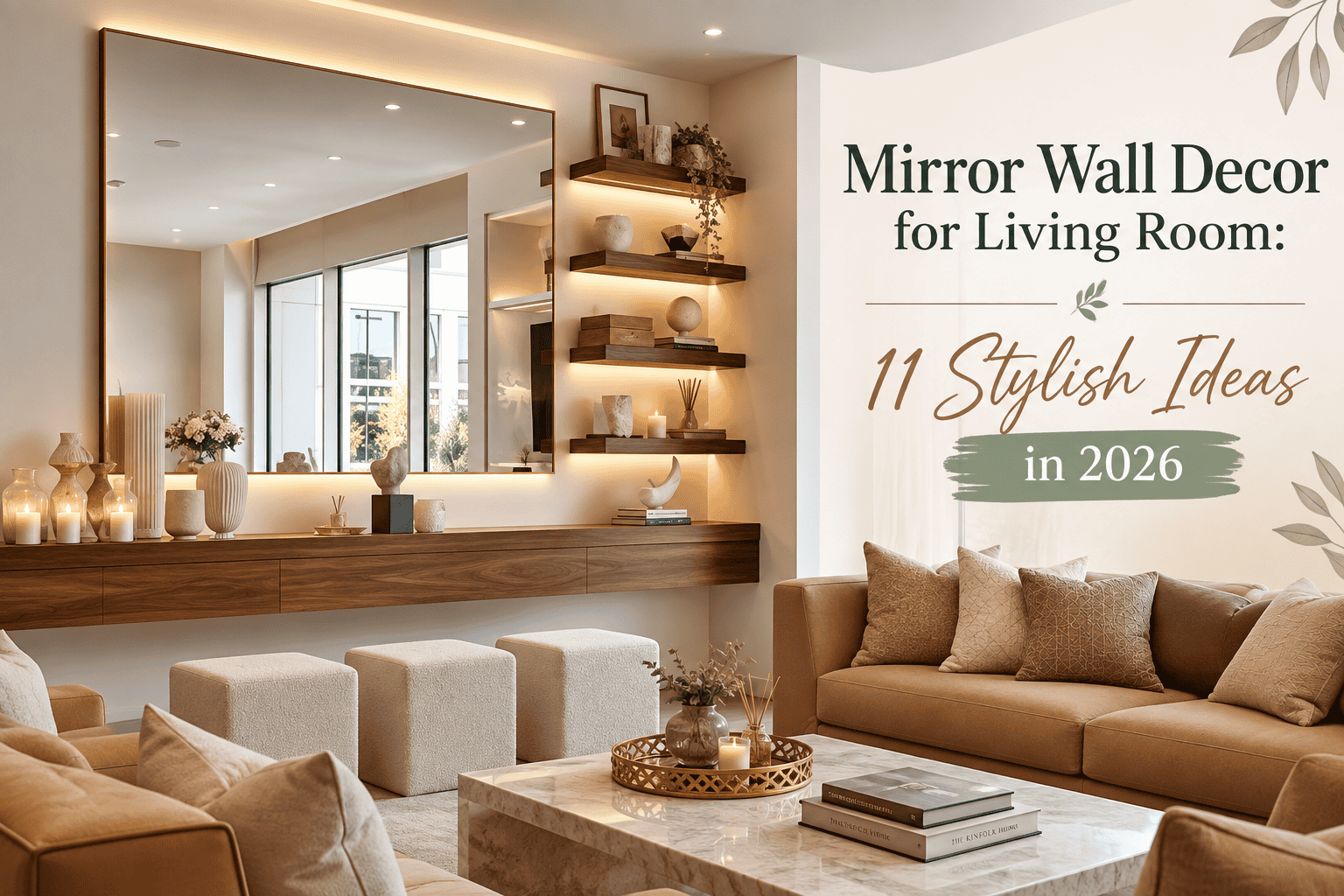
Discover 11 stylish mirror wall decor for living room ideas, plus practical tips for choosing the right size, shape, placement, and style for your space.
A well placed mirror can do much more than help you check your reflection. The right mirror can make a living room feel brighter, create the impression of additional depth, emphasize a focal point, and bring personality to an otherwise empty wall. That is why mirror wall decor for living room spaces has become such a useful decorating strategy for both large American homes and compact apartments.
The key, however, is choosing a mirror that works with the room rather than simply putting the largest mirror you can find on the wall. Size, shape, frame, furniture placement, natural light, and even what the mirror reflects can completely change the final result.
In this guide, you will discover 11 stylish mirror wall decor for living room ideas, along with practical advice for choosing mirror shapes, deciding where to hang them, creating a mirror gallery wall, decorating above a sofa or fireplace, and avoiding common styling mistakes.
Whether your living room is modern, traditional, farmhouse, boho, glamorous, minimalist, or eclectic, these mirror wall decor for living room ideas can help you turn a blank wall into a polished design feature.
Why Mirror Wall Decor Works So Well in a Living Room
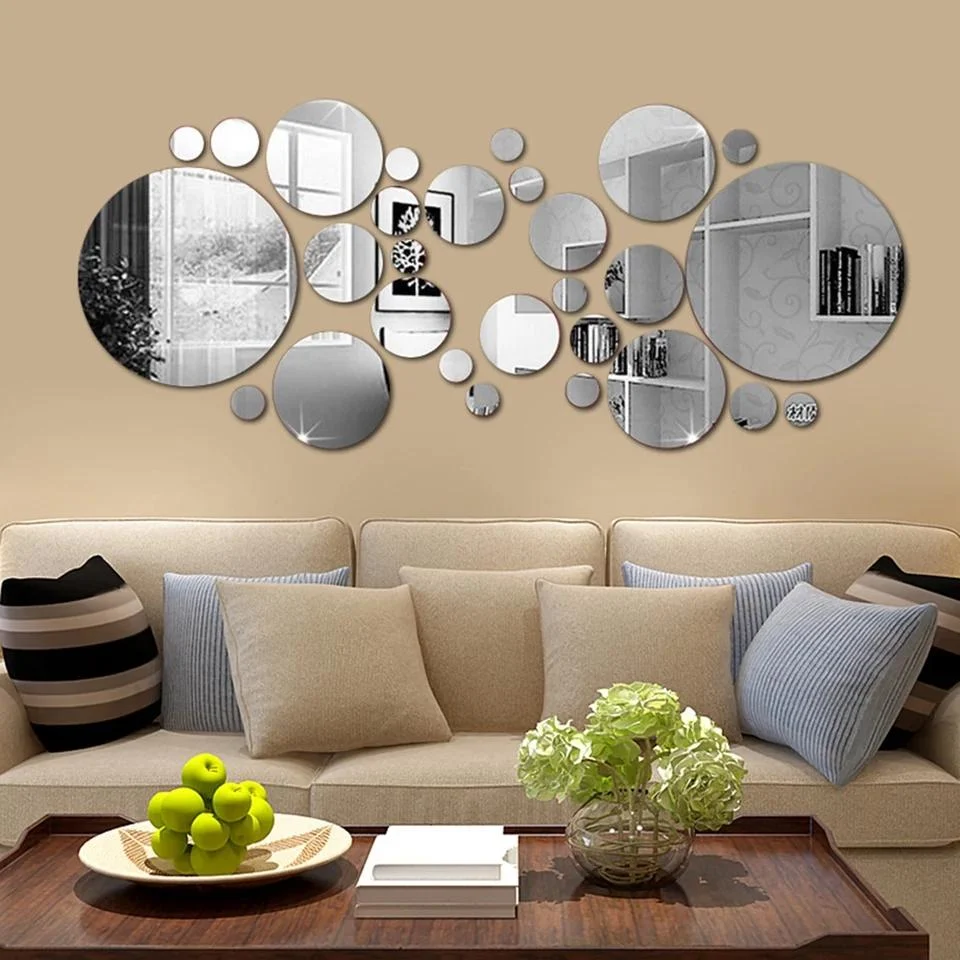
Before choosing a specific mirror wall decor for living room idea, it helps to understand why mirrors are so effective in interior design.
A mirror interacts with light and surrounding objects in a way that ordinary wall art cannot. When positioned thoughtfully, it can reflect daylight from a window or brighten a darker part of the room. IKEA similarly explains that wall mirrors can make a space feel brighter, larger, and more dynamic because they reflect light and create a visual sense of depth.
Mirrors can also create a focal point. A large framed mirror above a sofa, an ornate mirror above a fireplace, or a collection of small mirrors on an accent wall can give the eye a clear place to land.
Another advantage is versatility. A mirror can work with many decorating styles because the frame and shape can change its personality. A thin black frame can look contemporary, while an antique gold frame can create a traditional or glamorous effect.
For homeowners who are updating a living room without replacing all their furniture, mirror wall decor for living room spaces can therefore be a relatively simple way to introduce a noticeable decorative change.
If you are also planning a broader living-room makeover, our guide to how to design a luxury living room explains how furniture scale, lighting, materials, and decorative details work together to create a polished space.
11 Mirror Wall Decor for Living Room Ideas
The best mirror wall decor for living room approach depends on the size of your wall, the furniture beneath it, your decorating style, and the amount of light available. The following ideas cover different layouts so you can choose the concept that best fits your home.
1. Oversized Mirror Above the Sofa
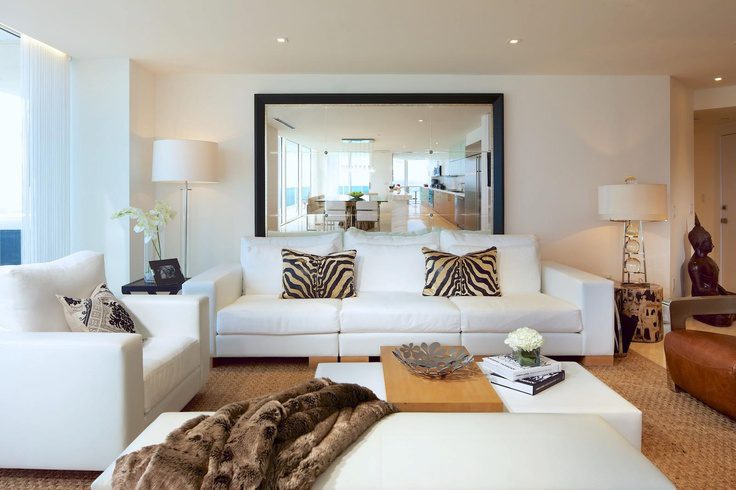
An oversized mirror can become the main statement piece on a living-room wall.
This is one of the most effective mirror wall decor for living room ideas when you have a wide sofa and a relatively empty wall behind it. Instead of filling the wall with several small decorative objects, one large mirror creates a strong visual anchor.
Choose a mirror with a frame that relates to other finishes in the room. A black frame can complement black lighting or hardware, while warm wood can coordinate with a wooden coffee table or flooring. Brass and gold finishes can introduce a more luxurious appearance.
The important consideration is proportion. A very small mirror above a large sofa can look disconnected from the furniture. Conversely, an extremely large mirror can dominate the entire wall.
Think about the sofa and mirror as one composition rather than two separate objects. The mirror should feel intentionally connected to the seating area.
Large horizontal wall mirrors are also commonly used above sofas because their orientation complements the horizontal shape of the furniture. IKEA’s current US wall-mirror guidance specifically notes that large wall mirrors can be hung horizontally over couches to create visual impact and enhance the sense of depth and width.
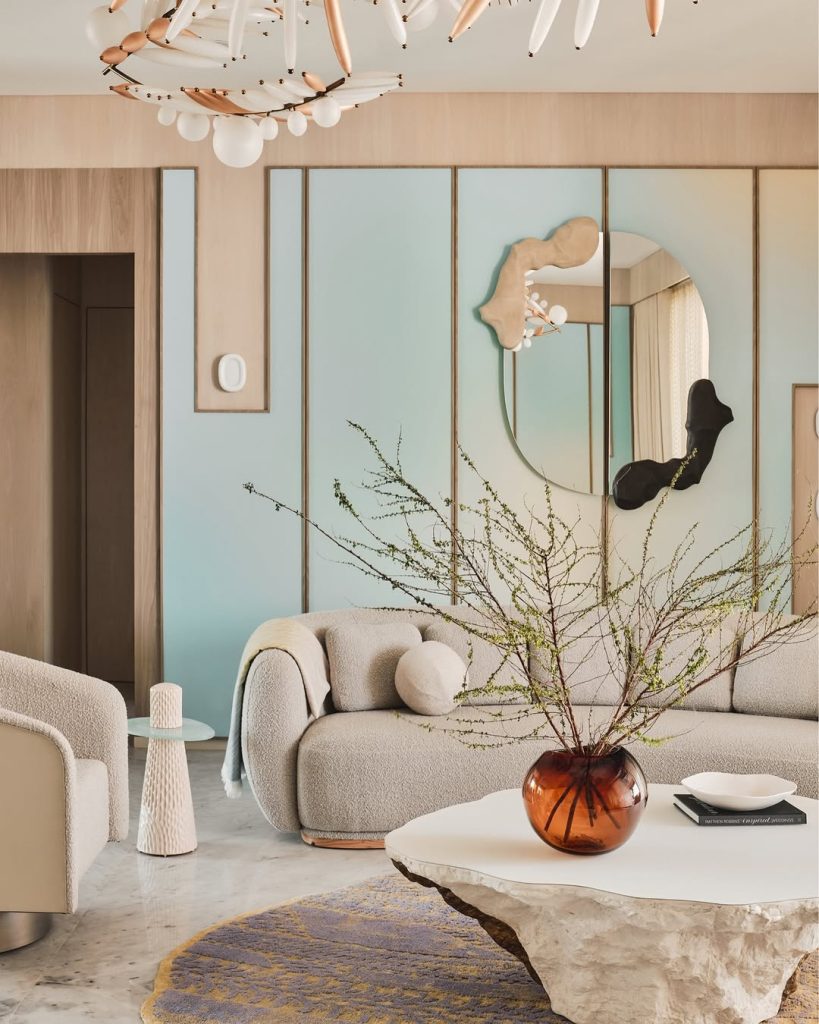
2. Arched Mirror for a Softer Look
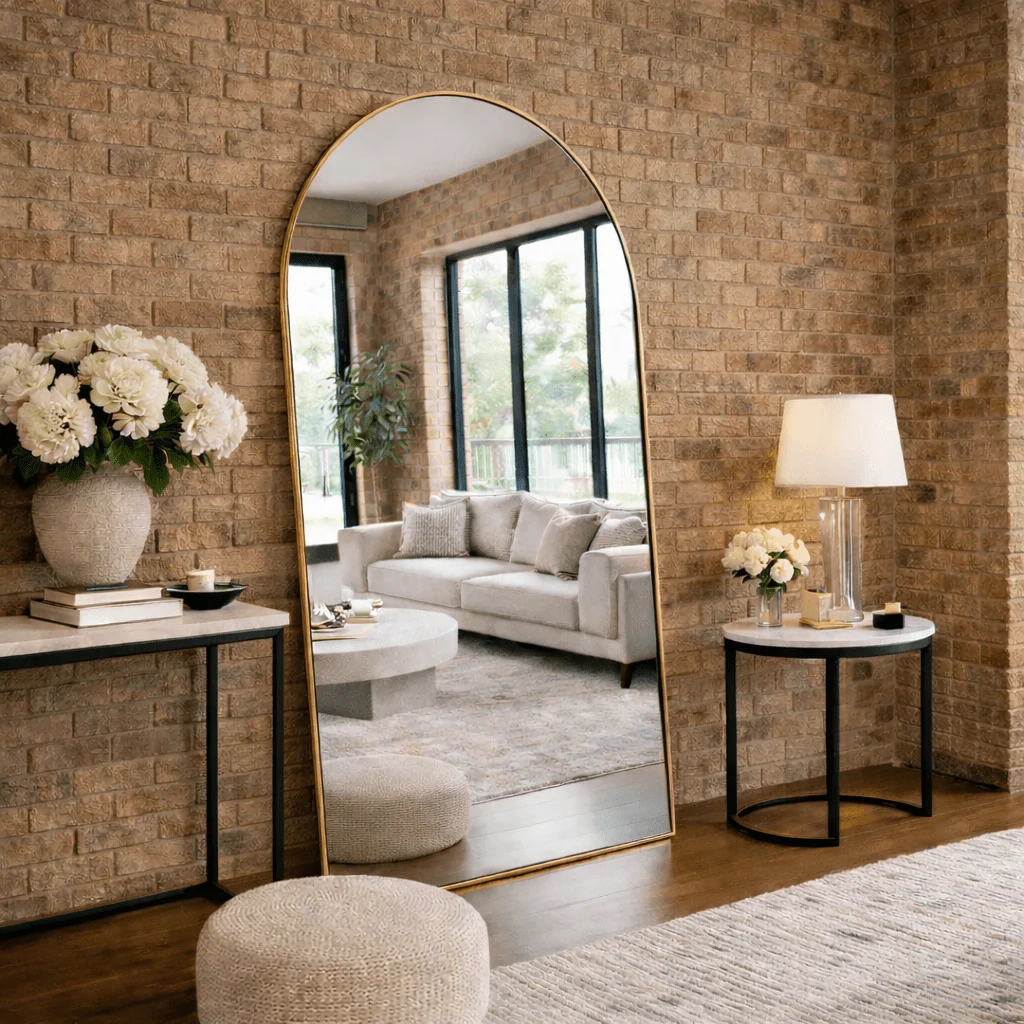
If your living room contains many straight lines, an arched mirror can introduce a softer architectural element.
Rectangular sofas, square coffee tables, shelving units, windows, and media consoles can create a lot of horizontal and vertical geometry. An arched mirror interrupts those lines and gives the room a more relaxed appearance.
An arched mirror works especially well in modern, contemporary, transitional, and organic-modern interiors. Choose a simple frame if your furniture already has several decorative details.
For a warmer look, consider an arched mirror with a wood frame. For a more sophisticated living room, a thin black, bronze, or brass frame can create a clean contrast against a light wall.
This type of mirror wall decor for living room is particularly effective when you want the mirror to function as artwork as well as a reflective surface.
3. Round Mirror as a Living Room Focal Point
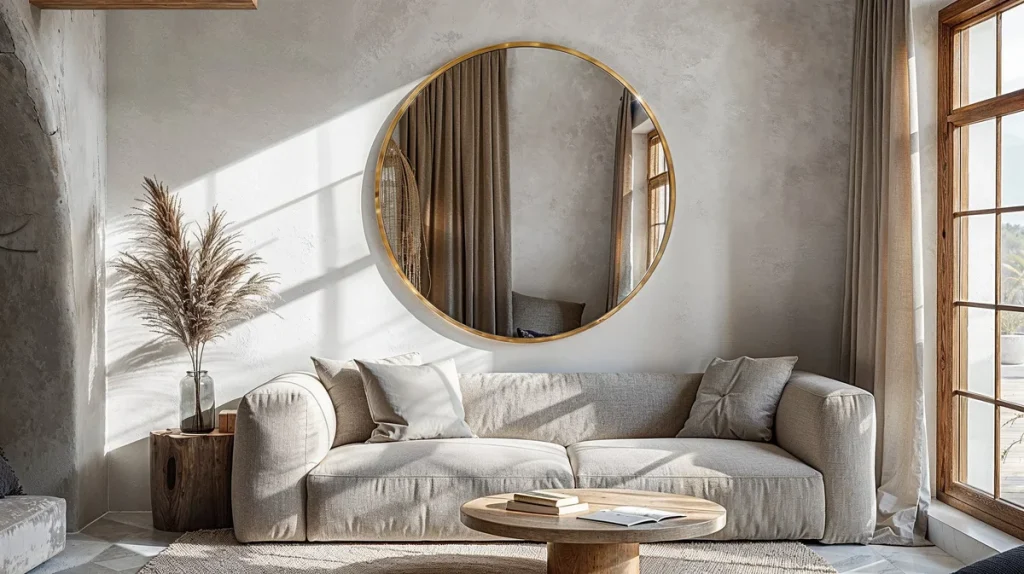
Round mirrors are another excellent way to soften a room dominated by straight furniture lines.
A circular mirror can work above a console table, behind a small seating arrangement, or on a wall beside a larger furniture grouping. Its shape naturally draws attention without appearing overly heavy.
A round mirror is especially useful when you want a decorative feature but do not want a highly ornate piece.
For a modern living room, choose a simple black or metallic frame. For a farmhouse or organic style, look for wood or woven materials. A gold frame can work beautifully when the room already includes warm metallic accents.
The surrounding area also matters. Do not place the round mirror directly against a crowded wall of shelves, photographs, and accessories unless you intentionally want an eclectic arrangement.
A cleaner background gives the circular shape more visual impact.
4. Create a Mirror Gallery Wall
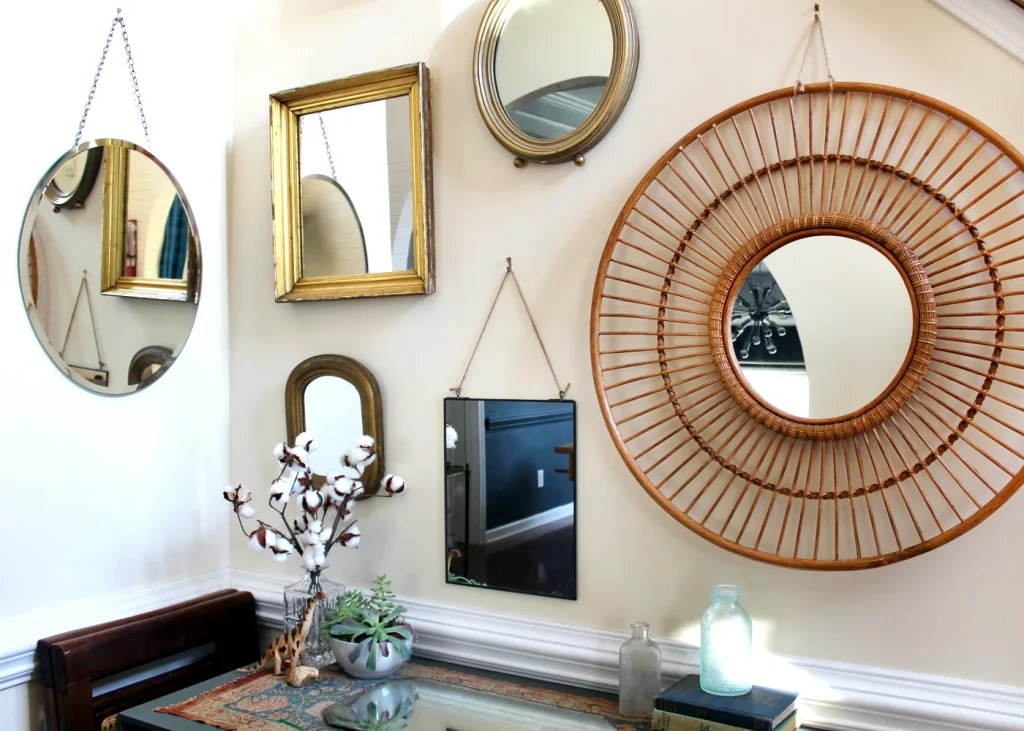
A mirror gallery wall takes the traditional gallerywall concept and replaces or combines artwork with decorative mirrors.
This is one of the most creative mirror wall decor for living room ideas because you can combine different sizes, shapes, and frame finishes.
For example, you might arrange three round mirrors in different sizes, or combine round, oval, and geometric mirrors in a balanced composition.
The trick is to create visual consistency. The mirrors do not need to match perfectly, but they should have at least one connecting element.
That connection could be:The same frame color.Similar shapes.A shared metallic finish.A coordinated color palette.A consistent spacing pattern.
IKEA also shows that smaller mirrors can be grouped together or combined with other wall decorations to create visual depth and interest.
Before drilling holes, place paper templates on the wall to test your arrangement. This allows you to adjust spacing and composition without creating unnecessary holes.
A mirror gallery wall is particularly useful for an eclectic, bohemian, vintage, or collected interior where perfectly matching pieces are not necessary.
5. Decorate Above a Fireplace With a Statement Mirror
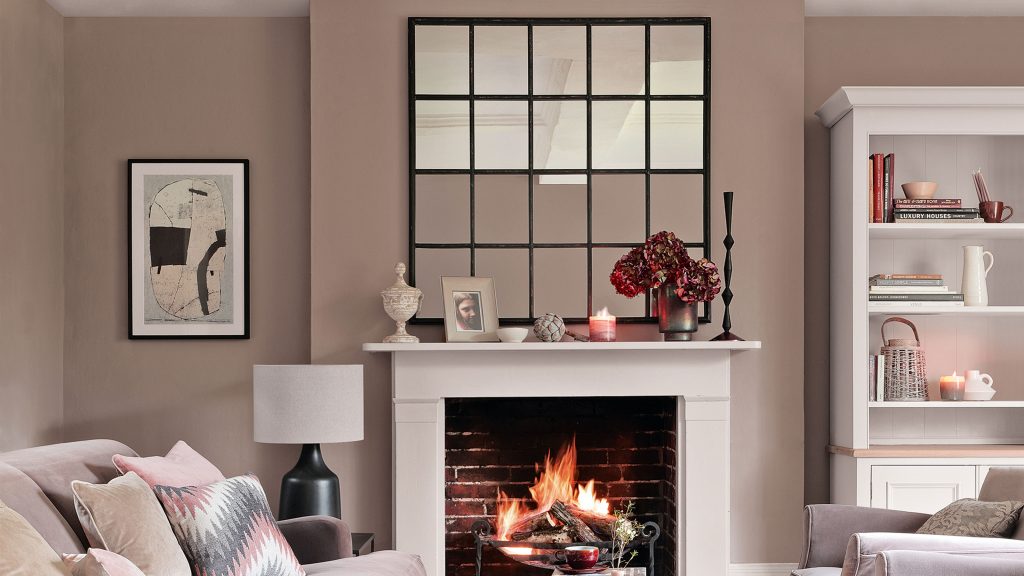
A fireplace naturally creates a focal point, which makes the wall above it an obvious location for mirror wall decor for living room styling.
A statement mirror can make the fireplace feel more finished and can reinforce the architectural importance of the area.
Choose the shape according to the fireplace and mantel. A rectangular fireplace can work with a rectangular or arched mirror, while a round mirror can soften a more traditional mantel.
Be careful with scale. The mirror should relate to the width and visual weight of the fireplace instead of appearing like an unrelated object placed above it.
You should also consider reflection. If the mirror reflects a ceiling fan, television, cluttered shelf, or unattractive corner, the result may not be as appealing as expected.
Instead, try to position it so that the reflection contributes something attractive to the room.
6. Use a Mirror Above a Console Table
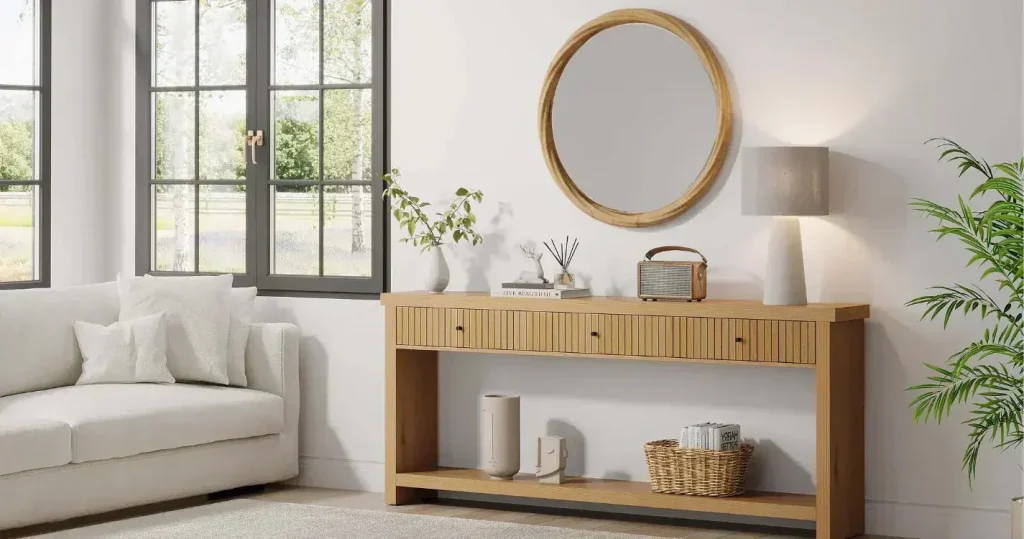
A console table paired with a mirror is a classic living-room combination.
It works particularly well on a transitional wall, behind a sofa, along an entry-like section of a living room, or on a wall that needs a decorative focal point without a television.
For this type of mirror wall decor for living room, the console and mirror should visually belong together.
A round mirror above a rectangular console creates an attractive contrast between shapes. A rectangular mirror can create a more structured and symmetrical appearance.
You can style the console with a lamp, vase, books, greenery, or a few carefully selected decorative objects.
However, avoid turning the console into a crowded display. Because the mirror reflects everything in front of it, excessive accessories can visually double the clutter.
A useful rule is to step back after styling the console and look at the mirror’s reflection rather than only looking directly at the table.
7. Choose a Vintage or Ornate Mirror for Character
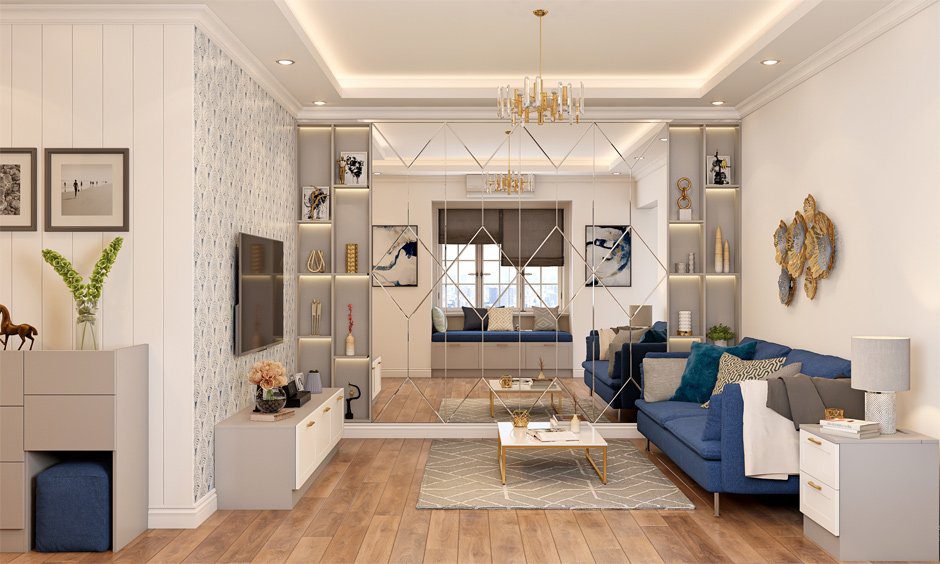
If your living room feels too modern, plain, or visually predictable, a vintage-inspired mirror can add character.
Ornate frames in antique gold, aged bronze, distressed wood, or carved finishes can introduce a sense of history.This approach works particularly well in traditional, European-inspired, vintage, transitional, and eclectic rooms.
You do not necessarily need an authentic antique. A well-designed reproduction can create a similar visual effect while fitting more easily into your budget.The key is balance.
If the mirror has a highly decorative frame, keep some surrounding elements simpler. Otherwise, the wall can quickly become visually overwhelming.xVintage mirrors also work surprisingly well in contemporary interiors because the contrast can make the room feel more collected and personal.
For more decorating inspiration that combines character, natural materials, and classic elements, explore our guide to vintage Western home decor.
8. Try a Black Framed Mirror for Modern Contrast
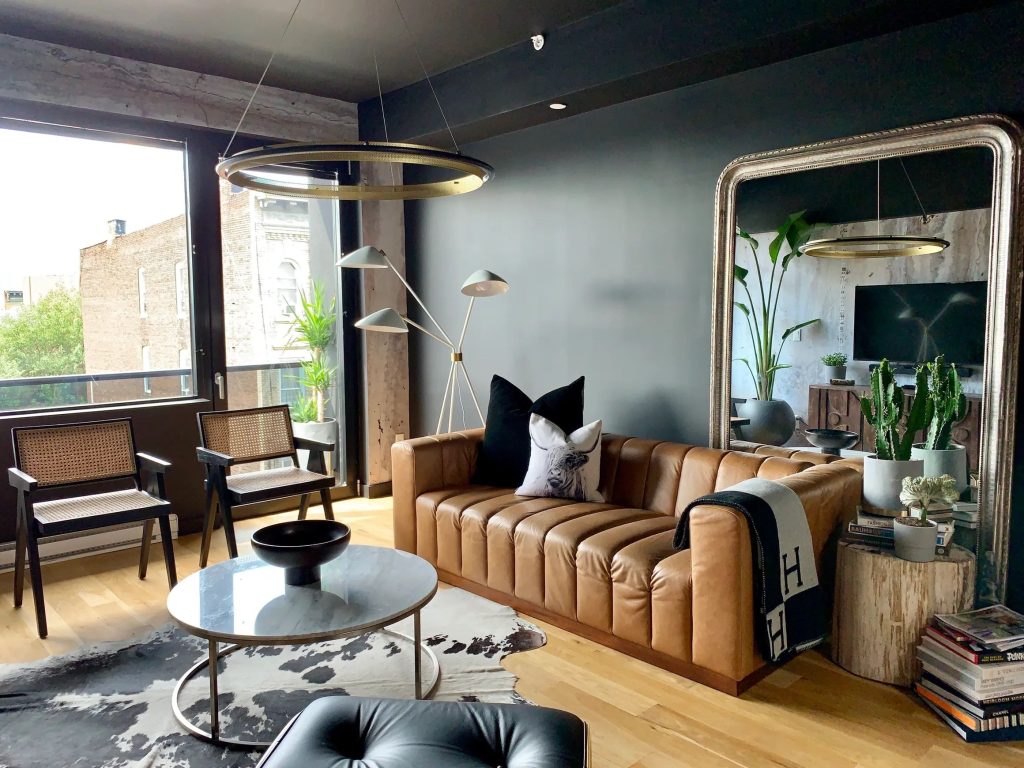
A black framed mirror can give a living room a clean, architectural appearance.
This is particularly effective in modern, contemporary, industrial, and transitional interiors where black accents already appear in lighting, furniture, window frames, or decorative objects.
The frame does not need to be thick. A slim black frame can create a subtle outline around the reflective surface, while a wider frame makes the mirror feel more substantial.
A rectangular black-framed mirror above a light-colored sofa can create strong contrast without requiring an additional accent wall.
If your room already contains many dark elements, however, consider a thinner frame or a softer finish such as charcoal or bronze.The goal is not simply to introduce black. The goal is to create visual balance.
9. Mix Mirrors With Artwork
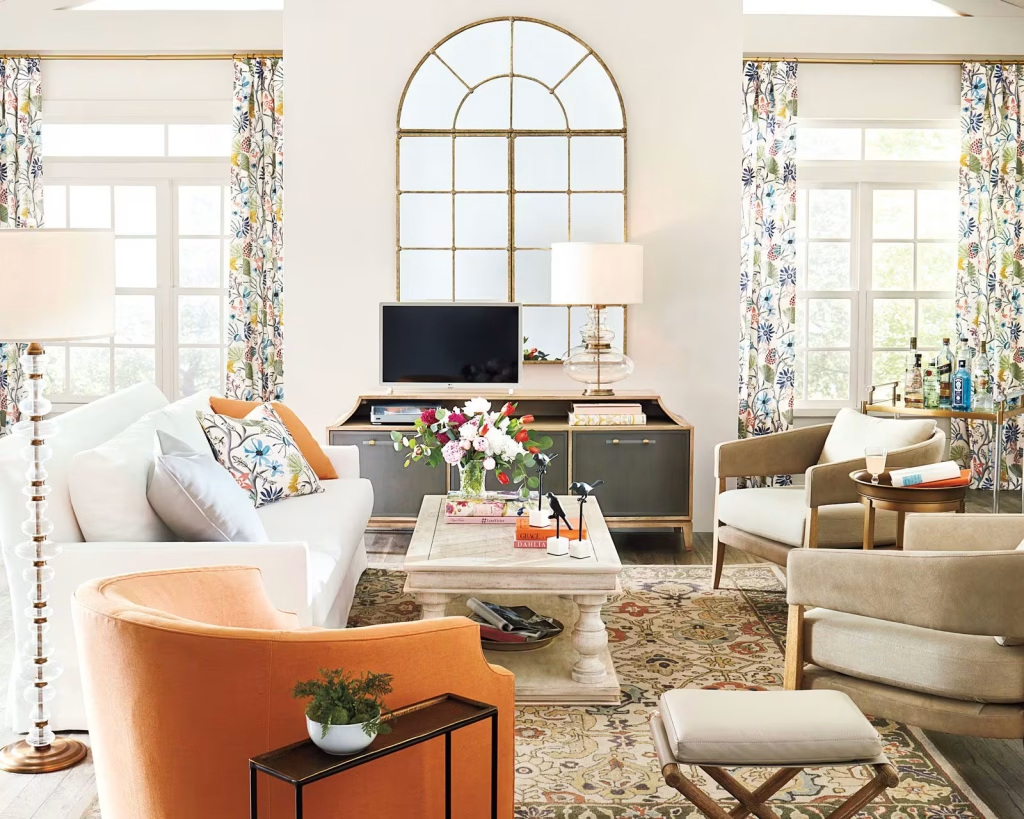
A mirror does not have to stand alone.Combining a mirror with artwork can create a layered wall arrangement that feels more personalized. IKEA specifically recommends mixing mirrors with posters or paintings as a way to make a wall more interesting and personal.
This is an especially useful mirror wall decor for living room idea when a single mirror feels too plain but a complete mirror gallery wall feels excessive.
Start with one larger mirror as the anchor. Then add smaller framed artwork around it.
The artwork should complement the mirror instead of competing with it. You can create consistency through frame color, subject matter, or a shared color palette.
For example, a black-framed round mirror can be surrounded by black-framed botanical prints. A brass-framed mirror can work with warm-toned artwork and neutral textures.
Leave enough breathing room between pieces so the wall feels intentional rather than crowded.
10. Use Mirrors to Reflect Natural Light
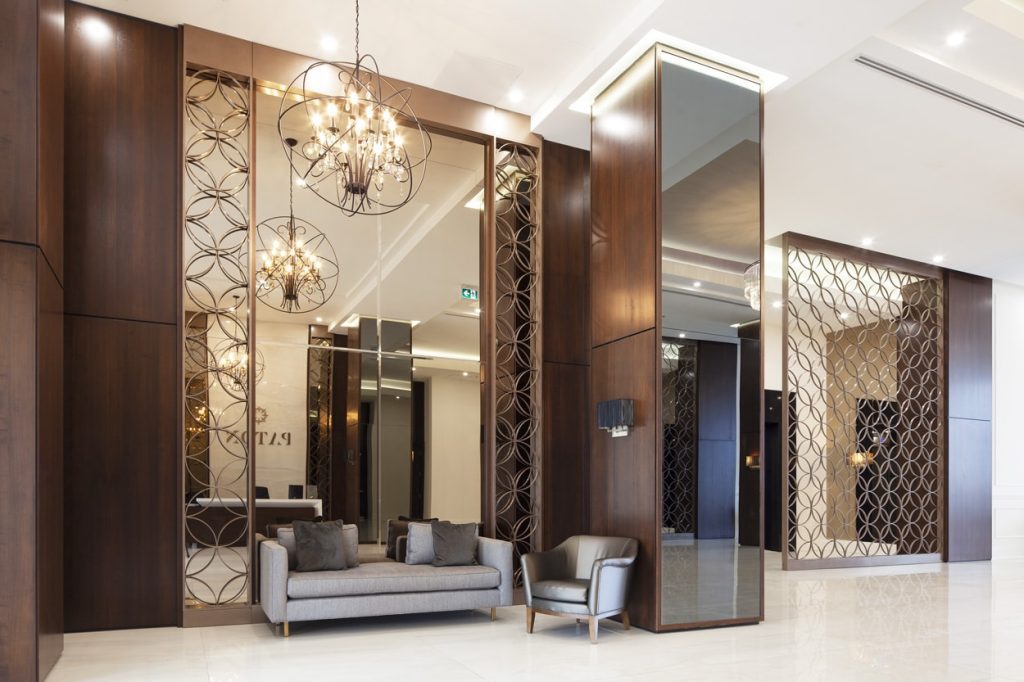
One of the most practical reasons to use mirror wall decor for living room spaces is to improve the way light moves visually through the room.
A mirror placed where it can capture daylight from a window may reflect that brightness back into the living area.
However, the goal should not simply be to place every mirror directly opposite a window.
Think about the angle.
A mirror may work better slightly beside a window if that position catches light without producing an uncomfortable glare.
The reflected view also matters. If the mirror faces a beautiful plant, artwork, architectural feature, or bright outdoor view, the reflection can enhance the room.
If it faces a messy storage area, television cables, or clutter, the same mirror can emphasize what you were trying to hide.
This is why mirror wall decor for living room planning should always include a reflection check.
11. Create a Mirror Accent Wall
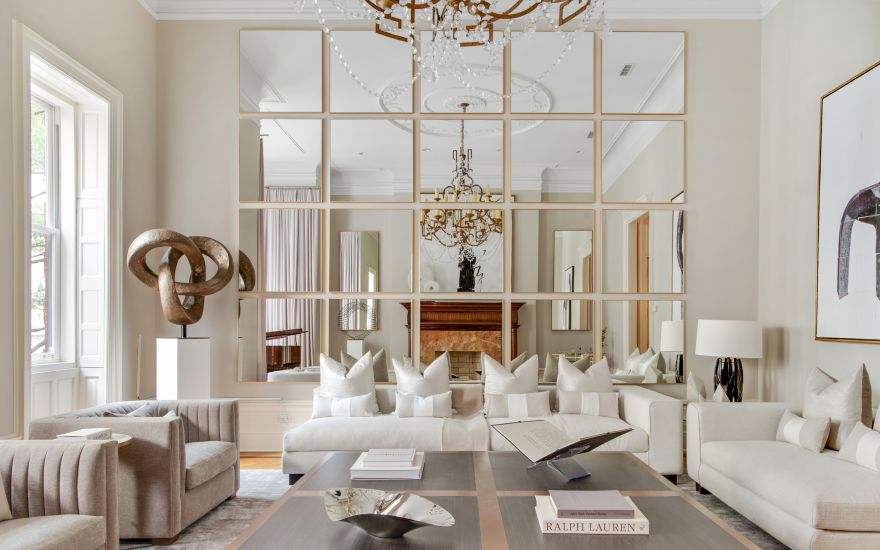
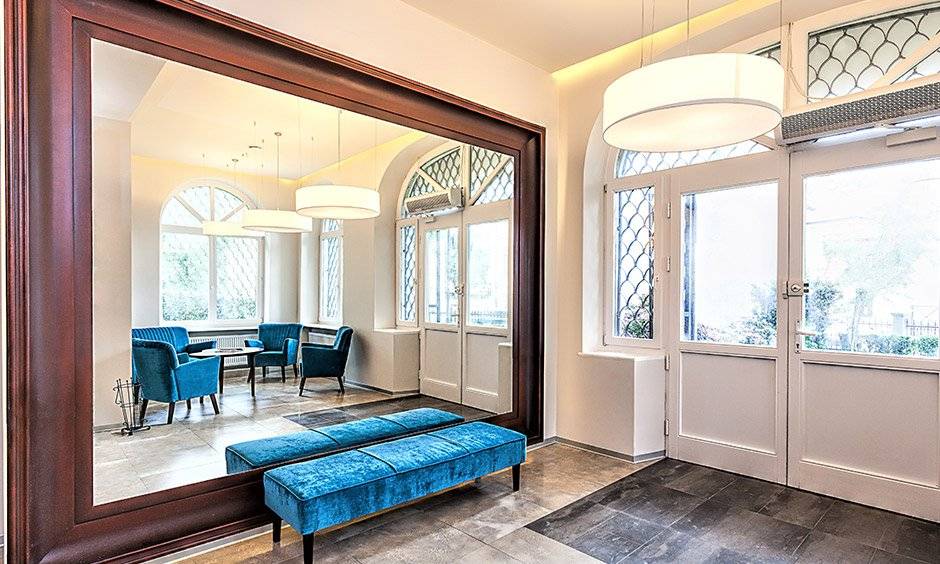
For a dramatic interior, consider using multiple mirrors across a larger section of wall.
A mirror accent wall can be created with repeated mirror panels, a collection of decorative mirrors, or a carefully arranged composition of individual pieces.
This is a stronger design statement than simply hanging one decorative mirror, so it works best when the rest of the room is relatively controlled.
If every wall contains a statement feature, the mirror wall may lose its impact.
A mirror accent wall can work particularly well in a formal entertaining space, glam living room, modern apartment, or luxury-inspired interior.
The materials and framing should coordinate with the room. Repeating the same frame finish can create cohesion, while varied shapes can make the wall more artistic.
The goal is to create a wall that feels designed rather than randomly covered.
How to Choose the Right Mirror for Your Living Room
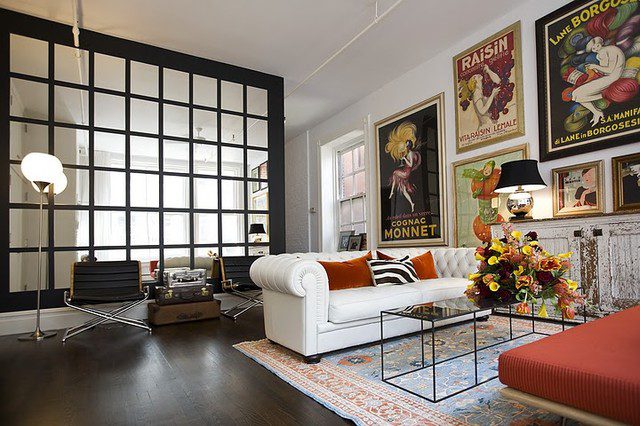
Choosing the right mirror wall decor for living room is easier when you evaluate the room before shopping.Start by measuring the wall and identifying the furniture that will sit beneath or near the mirror.Then consider the room’s style.
A modern room may benefit from clean lines and simple frames. A traditional room may suit ornate or carved frames. A bohemian space can accommodate natural textures and irregular shapes. A glamorous room can use metallic finishes.
The mirror should support the room’s existing design language instead of introducing a completely unrelated style.
Consider the Wall Size
A large blank wall can usually handle a more substantial mirror or a larger composition.A narrow wall may be better suited to a vertical mirror or a small cluster.The mirror should have enough visual presence to relate to the surrounding furniture without overwhelming the architecture.
Consider the Furniture Below It
When a mirror hangs above a sofa, console, or fireplace, think about the relationship between the two.The mirror should feel connected to the furniture rather than floating independently.
IKEA’s US guidance similarly emphasizes considering available space, desired visual impact, and whether the mirror is primarily decorative or functional when selecting a wall mirror.
Choose the Right Shape
Shape can dramatically affect the mood.Round mirrors feel softer.Arched mirrors feel architectural and elegant.Rectangular mirrors feel structured.
Irregular mirrors feel artistic and contemporary.Sunburst mirrors feel decorative and glamorous.Choose the shape according to both your furniture and your overall design style.
How High Should You Hang a Living Room Mirror?
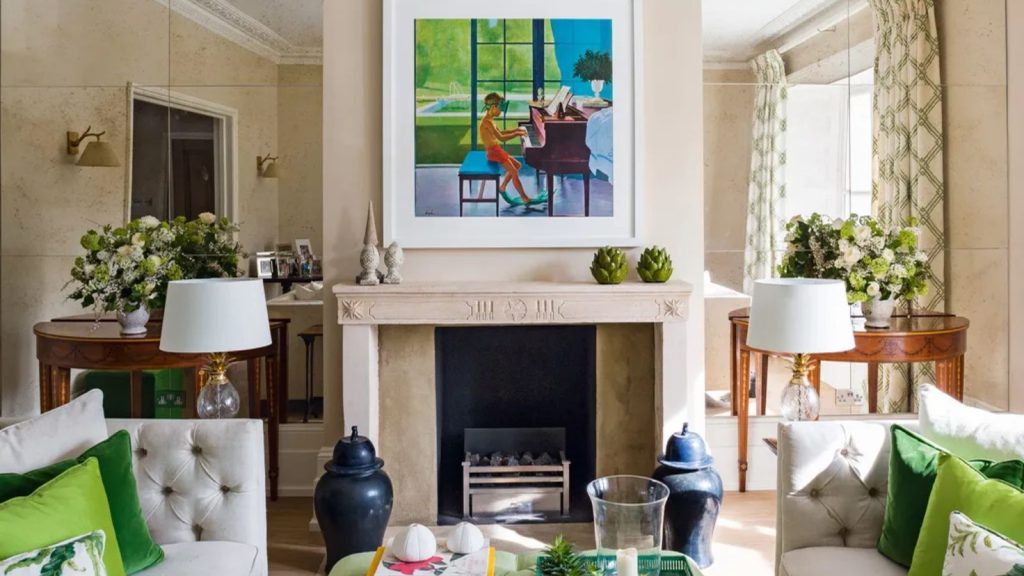
There is no single height that works for every mirror wall decor for living room arrangement.The correct position depends on the mirror size, the furniture beneath it, the ceiling height, and what you want the mirror to reflect.
For a mirror above a sofa, start by considering the relationship between the top of the sofa and the bottom of the mirror. You generally want enough visual breathing room for the two pieces to read as a single arrangement rather than touching or appearing disconnected.
For a mirror above a console, center the composition over the furniture and evaluate the overall proportions.
For a fireplace, the mantel and fireplace architecture become the main reference points.
The best approach is to mock up the mirror with paper or cardboard before installation. Step back from several positions in the room and check how the composition looks from normal seating areas.
How Big Should a Living Room Wall Mirror Be?
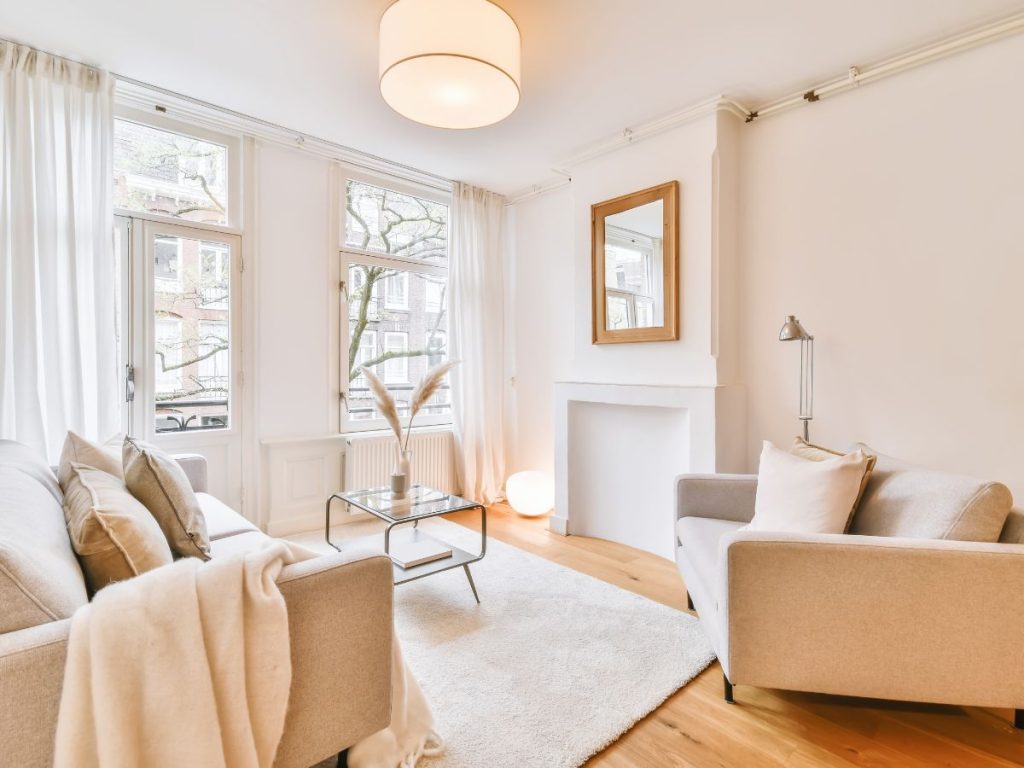
Mirror size should be based on the wall and furniture around it rather than an arbitrary number.A large sofa usually benefits from a mirror with enough width or visual weight to relate to the sofa.
A small console may look better with a medium-sized round or oval mirror.A narrow wall can benefit from a tall mirror.
A large empty wall can support an oversized mirror or multiple mirrors.The most important idea is proportion.
A beautiful mirror can still look wrong if it is dramatically undersized for the wall.Likewise, a huge mirror can overwhelm a small room.
When planning mirror wall decor for living room spaces, use painter’s tape to mark the approximate outer dimensions of the mirror. This simple step can reveal whether your planned size actually works before you purchase it.
One Large Mirror vs. a Mirror Gallery Wall
Both options can look beautiful, but they create different effects.
| One Large Mirror | Mirror Gallery Wall |
|---|---|
| Creates one strong focal point | Creates a more collected appearance |
| Works well with minimalist rooms | Works well with eclectic interiors |
| Easier to style | Allows more creativity |
| Fewer installation points | Requires more planning |
| Can visually simplify a wall | Can create stronger visual texture |
Choose one large mirror when you want the room to feel calm, clean, and sophisticated.
Choose a gallery arrangement when you want personality, movement, and a more curated appearance.
How to Style Mirror Wall Decor for Different Living Room Styles
Your mirror wall decor for living room should support the overall decorating style.
Modern Living Room
Choose clean lined mirrors with black, bronze, silver, or minimal metallic frames.Avoid excessive ornamentation if the room relies on simple geometry.A large rectangular or softly rounded mirror can work especially well.
Farmhouse Living Room
Consider wood-framed, distressed, or simple rustic mirrors.Warm wood can complement neutral upholstery, woven textures, and natural materials.
For additional decorating inspiration, our Balady Home & Decor guide explores warm neutral palettes, wood, rattan, layered textures, greenery, and cozy lighting.
Boho Living Room
Look for organic shapes, woven frames, natural materials, and combinations of smaller mirrors.A mirror gallery can work particularly well because the style naturally accommodates collected objects and varied textures.
Traditional Living Room
Ornate frames, antique finishes, and symmetrical placement can create a classic appearance.A statement mirror above a fireplace can be particularly effective.
Glamorous Living Room
Gold, brass, mirrored finishes, sculptural frames, and dramatic shapes can create a glamorous atmosphere.However, use metallic elements selectively. Too many shiny surfaces can make the room feel busy.
Organic Modern Living Room
Choose soft curves, natural wood, muted finishes, and irregular or arched shapes.Pair the mirror with natural textiles, plants, stone, and warm lighting.
Mirror Wall Decor for Living Room Small Spaces
Small rooms can benefit significantly from carefully chosen mirror wall decor for living room designs.
A mirror can create the visual impression of additional depth and help distribute reflected light around the room. IKEA notes that mirrors can make rooms feel larger and airier through reflected light and visual perception.
For a small living room, avoid automatically filling the wall with multiple mirrors.Instead, consider one strategically placed mirror.A medium to large mirror can become a focal point while keeping the surrounding wall relatively simple.
A vertical mirror can emphasize height, while a horizontally oriented mirror can visually reinforce width.If your small living room has a window, experiment with positioning the mirror so it reflects daylight.
However, always inspect the reflection from your normal seating position.The purpose is to make the room feel more open, not to create another visually busy surface.
Where Should You Place a Mirror in a Living Room?
The best location for mirror wall decor for living room spaces depends on what you want the mirror to accomplish.
Above a sofa creates a strong focal point.Above a console creates a classic decorative arrangement.Above a fireplace reinforces an existing architectural focal point.Beside a window can help visually distribute light.
Across from a visually attractive feature can duplicate that feature through reflection.On a blank accent wall, a large mirror can become the primary decorative element.Before choosing a location, stand in different areas of the room and imagine the reflection.Ask yourself what someone sitting on the sofa will see.
This simple exercise can prevent one of the most common mirror-decorating mistakes: choosing a location based only on the empty wall instead of considering the entire visual composition.
What Should a Living Room Mirror Reflect?
This is one of the most important considerations when planning mirror wall decor for living room spaces.A mirror is essentially another visual surface in the room.
If it reflects a beautiful window, greenery, artwork, architectural detail, or attractive lighting, it can make the room feel more layered.If it reflects clutter, an unattractive corner, exposed cables, or a chaotic shelf, it can make those elements more noticeable.
Before installing your mirror, stand where people usually sit and look at the reflection.Then walk around the room and check it from different angles.This simple “reflection test” can dramatically improve the final result.
Common Mirror Wall Decor Mistakes to Avoid
One common mistake is choosing a mirror that is too small for the wall. Even an attractive mirror can look lost when surrounded by excessive empty space.
Another mistake is hanging the mirror without considering what it reflects. A beautiful mirror cannot improve a reflection that is visually distracting.
Using too many mirrors is another problem. Mirrors are powerful decorative elements, and a room can quickly feel visually repetitive if every wall contains one.
Ignoring proportion can also create an awkward result. The mirror should relate to the furniture, wall, ceiling, and surrounding accessories.
Another mistake is mixing too many unrelated frame styles. Eclectic decorating can certainly use different frames, but there should still be a visual connection between the pieces.
Poor installation is another important consideration, especially for large or heavy mirrors. Wall materials vary, and the appropriate fastener depends on the construction of the wall and the weight of the mirror. IKEA’s product guidance, for example, notes that different wall materials require different types of fasteners and recommends using hardware appropriate for the wall.
Finally, do not choose a mirror solely because it is trendy. A mirror should work with the architecture, furniture, and overall style of your home.
How to Make Mirror Wall Decor Feel More Expensive
You do not need an expensive mirror to make mirror wall decor for living room spaces look sophisticated.Start with proportion.
A correctly scaled mirror can look more luxurious than an expensive mirror that is too small or poorly positioned.Next, focus on the frame.
A simple high-quality-looking frame in black, bronze, brass, or natural wood can create a polished appearance.Then coordinate the mirror with other finishes in the room.
For example, a brass mirror can relate to brass lighting, cabinet hardware, or decorative accessories.Lighting also makes a major difference. A mirror near a table lamp, floor lamp, or wall sconce can interact with the light and add visual depth.
Finally, keep the surrounding area intentional.Luxury is often created through restraint. Give important decorative pieces enough space to be appreciated.
If you are working on a high-end living room, our guide on How to Design a Luxury Living Room covers furniture scale, lighting, materials, colors, and decorative details that can work alongside your mirror choice.
Mirror and Lighting Combinations
Combining mirror wall decor for living room designs with thoughtful lighting can make a wall much more interesting.A pair of wall sconces beside a large mirror creates symmetry and a strong focal point.
A table lamp placed beneath or beside a mirror can add a warm evening glow.A floor lamp near a large mirror can create additional reflected light while emphasizing the height of the wall.Natural daylight is another important factor.
The goal is not necessarily to make the mirror itself brighter. The goal is to use reflection to distribute light and create depth.When choosing lighting, also think about glare. A mirror positioned directly toward a strong light source may produce uncomfortable reflections.
For more lighting ideas, see our guide to colorful lamps, which discusses how table lamps and floor lamps can be integrated into living-room layouts.
How to Create a Balanced Mirror Gallery Wall
A successful mirror gallery wall should look collected rather than accidental.Start by choosing a central visual anchor.
Then build outward using smaller pieces.You can create symmetry with matching shapes, or create a more relaxed appearance using different shapes and sizes.Keep the spacing intentional.
Too much space can make the arrangement look disconnected.Too little space can make it look crowded.Before installation, arrange the mirrors on the floor.
Take a photograph from the same general angle as the living room.Then adjust the arrangement before moving it to the wall.This process is especially useful when creating mirror wall decor for living room spaces with multiple pieces.
Can Mirrors Make a Living Room Look Bigger?
Yes, mirrors can make a living room appear larger, but they do not physically increase the room’s dimensions.The effect comes from reflection, light, and visual depth.A mirror can reflect part of the room back into itself, making the visual boundary feel less final.
It can also reflect daylight and make a darker room feel more open.This effect can be particularly helpful in apartments, narrow living rooms, and rooms with limited natural light.
However, the placement must be thoughtful. A poorly positioned mirror can simply duplicate clutter instead of creating an attractive sense of depth.
Frequently Asked Questions About Mirror Wall Decor for Living Room
What type of mirror looks best in a living room?
The best mirror depends on the room’s size, furniture, and decorating style. Large rectangular mirrors work well above sofas, round mirrors can soften rooms with many straight lines, and arched mirrors can add architectural interest. The most successful mirror wall decor for living room choice is one that complements the room’s existing proportions and style.
Where should a mirror be placed in a living room?
A mirror can be placed above a sofa, console table, fireplace, or on an empty accent wall. It can also be positioned where it reflects attractive natural light or a visually appealing part of the room. When choosing mirror wall decor for living room placement, always inspect the reflection before installation.
Should a living room mirror be centered over the sofa?
Centering a mirror over the sofa is usually an effective starting point because it creates a clear relationship between the wall decor and the main seating area. However, the mirror’s size and shape should also work with the sofa and surrounding wall.
How big should a mirror be above a sofa?
There is no universal size because sofas and walls vary. The mirror should have enough visual presence to relate to the sofa without overwhelming it. Use painter’s tape to mark the proposed dimensions on the wall before buying to evaluate the scale.
Do mirrors make small living rooms look bigger?
Mirrors can create the visual impression of greater depth and spaciousness by reflecting light and parts of the room. They are especially useful in smaller rooms when positioned thoughtfully.
Is one large mirror better than several small mirrors?
Neither is universally better. One large mirror creates a simpler, stronger focal point, while several smaller mirrors create a more collected and artistic appearance. Choose according to your decorating style and the amount of visual activity already present in the room.
Should a mirror face a window?
A mirror can be positioned to reflect a window and help distribute daylight, but directly facing a window is not always necessary. The best placement depends on the viewing angle, glare, and what else appears in the reflection.
Can I put a mirror above a fireplace?
Yes, a mirror can work beautifully above a fireplace when its size and shape complement the mantel and surrounding architecture. Make sure the mirror is securely installed and appropriate for the location.
What mirror shape is best for a modern living room?
Rectangular, round, arched, and geometric mirrors can all work in modern interiors. Clean frames and simple silhouettes usually create the most cohesive modern appearance.
How do I decorate a blank living-room wall with mirrors?
Start by considering the wall’s size and the furniture nearby. One oversized mirror, a large round mirror, a mirror gallery wall, or a mirror combined with artwork can all work. The best mirror wall decor for living room arrangement should create balance rather than simply fill every empty section of wall.
Final Thoughts on Mirror Wall Decor for Living Room
The right mirror wall decor for living room design can transform a plain wall into one of the most attractive features in your home.The most successful approach is not simply to find a beautiful mirror. It is to consider how the mirror interacts with the entire room.
Look at the wall size, sofa, console, fireplace, windows, lighting, colors, textures, and surrounding artwork. Consider what the mirror will reflect before deciding where to install it.For more inspiration as you continue updating your home, explore Home Styling Guide for additional living-room, bedroom, and home decor ideas.
Most importantly, avoid decorating by formula. The best mirror wall decor for living room ideas are the ones that respond to the actual architecture and lifestyle of your home.
Before you hang anything, step back, check the proportions, and perform the reflection test. If the mirror reflects something beautiful, complements your furniture, and feels balanced with the wall, you are much more likely to achieve a finished look that feels intentional rather than simply decorated.
With the right size, shape, placement, and styling, mirror wall decor for living room spaces can provide both decorative impact and practical visual benefits, making a living room feel brighter, more layered, and more thoughtfully designed.


One thought on “Mirror Wall Decor for Living Room: 11 Stylish Ideas in 2026”